

An agent that quotes a price you cannot honour is not a bug. It is a signed commitment your business now owns. Well-designed AI agent guardrails are the rules, checks and gates that sit around your agent so it stops making promises before they reach a customer.
This guide is for UAE operators running WhatsApp bots, website chat and internal copilots in Arabic and English. It covers what they control, what the law requires, and the minimum stack before going live.
Key Takeaways
- Guardrails need two layers, not one — A keyword ban written in English has no effect on the same term in Arabic script or Arabizi, so deterministic filters alone leave a gap. Model-based classifiers catch what keyword lists miss, but need separate calibration per language since their reliability drops on Arabic.
- 97% of AI breaches lack access controls — Industry analysis found nearly all AI-related breaches happened in environments without access controls. High-risk actions like sending emails, cancelling bookings or issuing refunds need a human approval gate before an autonomous agent can run them alone.
- PDPL applies to every stored conversation — The PDPL (Federal Decree-Law No. 45 of 2021) has applied since 2 January 2022 to any agent that collects, processes or stores personal data about UAE residents. Guardrails such as PII detection, data minimisation and audit logs are how you meet that obligation, not an optional extra.
- Outbound marketing fines start at AED 50,000 — Cabinet Resolutions 56 and 57 of 2024 require TDRA prior approval, a local registered number and Do Not Call Registry compliance for outbound marketing. Running an autonomous agent without those permission gates risks AED 50,000 for a first breach, rising to AED 75,000 and AED 150,000 for repeat breaches.
- Red team your agent before customers do — Feed your own agent adversarial Arabic and English prompts designed to bypass its guardrails or leak data, before launch and again after every model, prompt or knowledge-base change. Purpose-built platforms can simulate thousands of these scenarios automatically instead of manual spot-checking.
What AI Agent Guardrails Actually Do
Guardrails are the rules and checks around an AI agent that control what it can say, access and commit to. They sit between the model's output and the customer, and between the customer's input and the model.
Without them, agents confirm discounts that do not exist, quote prices your system does not carry, and expose data they were never meant to touch. A hallucinated commitment on WhatsApp is enough to trigger a chargeback or a public review that costs more than the entire chatbot project.
This is a security control, not a quality feature. Industry analysis of AI breaches suggests 97% happened in environments with no access controls. For a UAE deployment the risk doubles from day one, because customers write in Arabic, English and Arabizi.
ISO/IEC 42001 is the international management system standard for artificial intelligence, and it is the certification enterprise buyers in the region ask about most often.
Two Layers Every Agent Needs: Deterministic Rules and Model-Based Checks

Photo: Joshua Miranda on Pexels
You need both families running together, not one or the other. Deterministic guardrails are rule-based logic: regex patterns, keyword lists, explicit checks. Fast, predictable, cheap to run at every request.
Model-based guardrails use classifiers or a second LLM to evaluate content semantically. They catch nuanced violations a keyword list misses: refund promises phrased indirectly, pricing hints that skirt banned words, personal data leaked inside a longer answer.
UAE agents need both because either alone fails predictably. A keyword blocklist catches "free" and "guaranteed" in English but misses the same promise in Arabic or Arabizi.
Run cheap deterministic filters first, then reserve the model-based layer for what makes it through.
Deterministic and model-based checks solve different problems, which is why an agent needs both layers running together rather than one instead of the other.
| Dimension | Deterministic rules | Model-based checks |
|---|---|---|
| How it works | Regex patterns and keyword lists | Classifiers or a second LLM |
| Speed and cost | Fast and cheap at every request | Heavier, reserved for what passes the first layer |
| What it catches | Explicit banned words in a known language | Nuanced violations a keyword list misses |
| Example miss | Same banned term in Arabic or Arabizi | Lower reliability on Arabic than English |
| Where it runs | First, on every input | Second, on what makes it through |
AI Agent Permissions: What Your Agent Should Never Decide Alone
Not every agent action carries the same risk. Read permissions can be granted broadly. Write and act permissions (sending email, cancelling bookings, refunding cards, deleting records) need an explicit approval gate before any autonomous run.
Modern agent frameworks ship middleware for this: a human-in-the-loop interrupt that pauses the agent before a sensitive operation and requires a person to sign off. Wire it around every action you cannot cheaply reverse.
There is a hard UAE reason. Cabinet Resolutions 56 and 57 of 2024, effective 27 August 2024, require TDRA prior approval for outbound marketing, mandate a local registered number, and enforce a Do Not Call Registry with a 09:00 to 18:00 window.
An autonomous agent sending a promotional WhatsApp message without those gates carries a AED 50,000 fine for a first breach, AED 75,000 for a second, AED 150,000 for a third.
How to Stop Your Agent From Hallucinating Promises
A hallucinated price is not a quality problem. If a customer acted on the quote, you own the promise. The same applies to invented refund windows, delivery dates, and warranty terms the agent had no authority to offer.
Two controls do most of the work. First, PII handling on the input side.
Agent frameworks now ship middleware that detects personal data and applies one of three strategies: redact replaces it with a token like [REDACTED_EMAIL]; mask leaves the last four digits visible (--****-1234); hash swaps it for a one-way digest. Pick the strategy per field.
Second, output validation on the response side. The agent drafts an answer, then a second classifier scores it for factual confidence against your knowledge base before the reply is delivered. Anything below your threshold gets routed to a human.
If you would rather talk it through, our free 30-minute consultation maps the highest-risk gaps in your current agent.
UAE Data Law and Your Chatbot: What PDPL Actually Requires
The PDPL (Federal Decree-Law No. 45 of 2021) has applied since 2 January 2022 to any AI agent that collects, processes or stores personal data about UAE residents.
The regulator is the UAE Data Office, established under Federal Decree-Law No. 44 of 2021.
If your company is licensed in DIFC or ADGM, you sit under a layered regime: the free zone's own law plus federal PDPL. A free-zone company running a customer-facing agent often carries dual obligations, and a configuration that passes one regime does not automatically satisfy the other.
Map guardrail controls to PDPL directly. PII detection catches personal data before it lands in a log or vector store. Data minimisation means the agent collects only what it needs.
Consent capture happens before sensitive processing. Audit logs record what the agent accessed and transmitted, so a data-subject request can actually be answered.
Bilingual Guardrails: Arabic and English Are Not Interchangeable
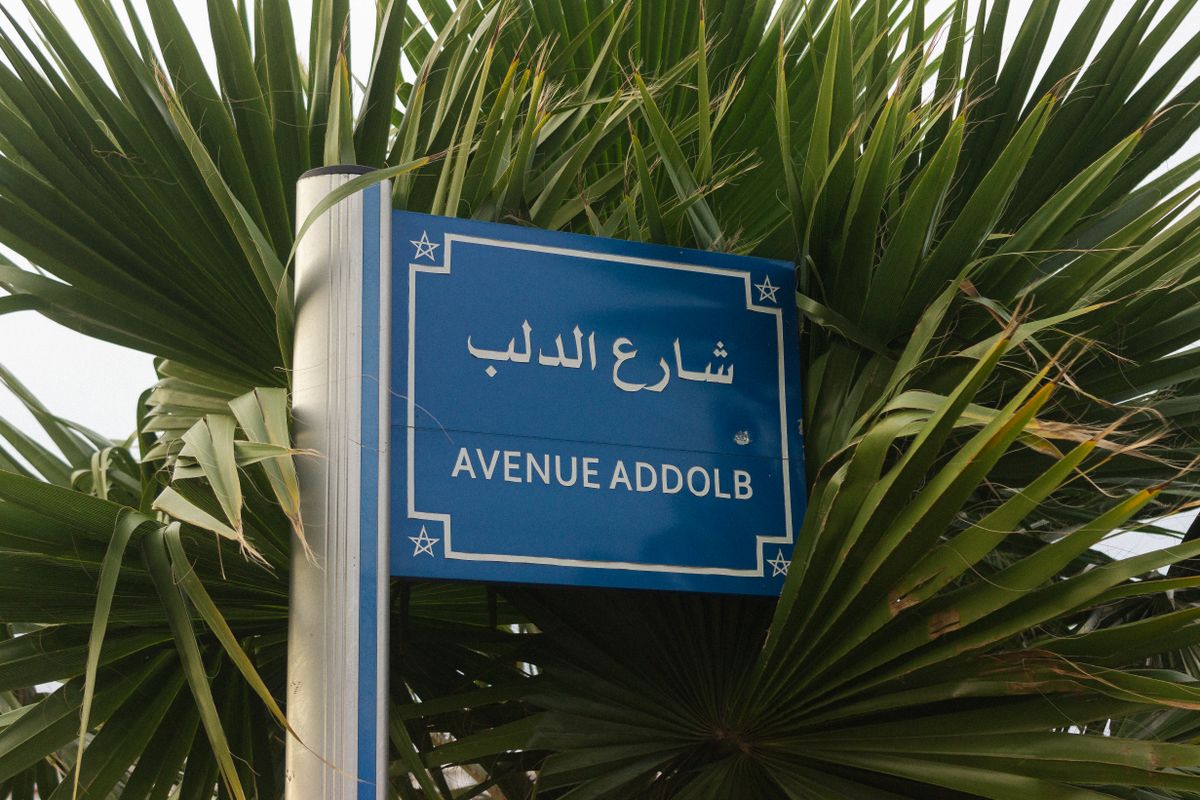
Photo: Hassan Bouamoud on Pexels
A single-language guardrail ruleset fails in the UAE market. A blocklist written in English does nothing against the same prohibited term in Arabic script, and nothing against Arabizi, where Arabic words appear in Latin characters with numerals standing in for missing letters.
UAE customers mix all three in a single WhatsApp thread. Model-based guardrails have their own problem: most classifiers were trained predominantly on English, and their reliability on Arabic drops. The fix is a dual-model approach (one classifier per language) or a multilingual model calibrated separately per language.
Content filtering carries the same requirement. If you block "hack", "exploit" and "malware" in English, you need Arabic-script equivalents and common Arabizi renderings loaded into the same middleware. Anything less is a systematic blind spot.
Red Teaming Your Agent Before a Real Customer Does
Red teaming means attacking your own agent on purpose. You feed it prompts designed to bypass its guardrails, extract data it should not release, or produce output that violates your policies. Do this before launch and again on a schedule, because behaviour changes every time you change the model, the prompt or the knowledge base.
Manual spot-checking does not scale. Purpose-built platforms now let you simulate thousands of realistic adversarial scenarios automatically, which is the right starting point for a serious test.
For UAE agents, design scenarios around real exposure: Arabic prompts that sidestep English-only filters, code-switching that breaks language detection, out-of-scope price requests, and social-engineering to pull another customer's data.
Building Your Guardrail Stack Without a Full Engineering Team
You do not need a security team to get this right at SME scale. You need four controls in the right order.
First, an input filter that catches banned keywords in both languages and detects PII before anything reaches the model.
Second, permission gates on every high-risk agent action, so nothing sensitive happens without human sign-off.
Third, an output validator that scores every reply against your knowledge base and routes low-confidence answers to a human. Fourth, an escalation path a customer can reach when the agent cannot handle the request.
Skipping this at small scale is a false saving. Shadow AI has been reported to add roughly USD 670,000 to the average cost of a breach. The exposure travels with the tool, not the headcount.
Or book a free 30-minute consultation and Lenoo AI will map the top gaps and tell you honestly whether the build makes sense.
Related reading
FAQ
What is an AI agent guardrail, and how is it different from a system prompt?
A system prompt tells the model how to behave; a guardrail enforces that behaviour with checks the model cannot ignore. Prompts are advisory. Guardrails inspect input and output separately, so a jailbreak that beats the prompt still gets stopped before the reply leaves.
Will guardrails slow down my agent's response time on WhatsApp?
Only marginally, if you order the layers right. Run cheap deterministic checks first (keyword filters, PII detection, permission checks) because they add milliseconds. Reserve the heavier model-based validator for what makes it through.
A well-tuned stack adds a small fraction of the total response time.
Which UAE laws apply if my AI agent collects or stores customer personal data?
The core federal law is the PDPL (Federal Decree-Law No. 45 of 2021), in force since 2 January 2022. If licensed in DIFC or ADGM, the free zone's own regime sits on top. For outbound marketing, Cabinet Resolutions 56 and 57 of 2024 apply.
How do I stop my agent from quoting a price or offer it cannot actually honour?
Wire an output validator that checks every price, offer and policy against your live knowledge base before sending. Anything unverified routes to a human with a "let me confirm" response. Never let the model generate a number without a retrieval step.
Do I need separate guardrail rules for WhatsApp conversations versus my website chatbot?
Core rules are the same; the surface is different. WhatsApp adds outbound telemarketing exposure under Cabinet Resolutions 56 and 57 of 2024, pre-approved message templates, and stronger session state carried across days.
Your permission gates need to reflect that. Validation and PII layers apply identically on both channels.
How often should I red-team or re-test my agent's guardrail setup?
Before every launch, after any model version change, after any prompt or knowledge-base update, and quarterly regardless. Attackers iterate; so should your tests. Automated adversarial simulation makes that schedule practical rather than heroic.
What is the minimum guardrail configuration a small UAE business should put in place before going live?
Four things: a bilingual input filter with PII detection, human approval gates on every write action, an output validator with a confidence threshold, and a working escalation route. Add red-teaming and audit logs for PDPL. Everything past that is refinement.


