

Your dispatcher just moved three jobs on a whiteboard, called two technicians who didn't pick up, and rebooked a customer who's now angry. It's 10:47 AM. The morning run went out at 08:00 and nothing about it looks the same anymore.
This is where ai scheduling dispatch earns its keep, and it's also where most UAE field service businesses discover their real problem isn't the software.
AI scheduling and dispatch is the layer that decides which technician, which job, and which route, in real time, as the day changes. It runs on top of your existing work orders. But the promise only lands if your job data is in a shape an algorithm can actually read.
Key Takeaways
- AI decides assignments, humans still own exceptions — The dispatcher's judgment call becomes an algorithm's assignment, but the team still sets the rules, escalations and overrides for the genuine judgment calls that don't fit a pattern.
- The real blocker is data, not the software — Job history lives in WhatsApp threads, technician skills are tracked on paper, and mixed Arabic-English or Arabizi messages break most Western dispatch platforms before they assign a single job.
- 60% of AI projects get abandoned by 2026 — Gartner attributes this to a lack of AI-ready data. In a Q3 2024 survey of 248 data management leaders, 63% either lacked the right data management practices or weren't sure if they had them.
- Electrolux cut travel time 15% with better scheduling — ServicePower reports Electrolux also saved $1M year-on-year using criteria-based scheduling optimisation once its data foundation was in place.
- Dispatch only pays off inside a connected workflow — It depends on inventory upstream so technicians arrive with the right part, and connects downstream to automated customer communication and compliance record-keeping.
What AI Scheduling and Dispatch Actually Does
AI dispatch takes over the deciding: which technician, which job order, which route. It works on top of your existing work orders without forcing you to change your system of record. The dispatcher's judgment call becomes an algorithm's assignment, and the dispatcher's job shifts to handling exceptions.
The core use cases are narrower than the marketing suggests. Same-day dispatch when the morning schedule breaks. Emergency and priority job response.
Crew-based and multi-day project scheduling. Route-dense operations where drive time is the margin. If your work sits in one of those buckets, ai scheduling dispatch has something to optimise.
Two boundaries matter. First, the AI decides, humans confirm or override. The team still owns the rules, the escalations, and the genuine judgment calls that don't fit any pattern.
Second, this is not a fancier calendar. A calendar shows you the day. Ai scheduling dispatch re-optimises the day as cancellations, add-ons and priority changes come in, without waiting for a human to catch up.
The same ministry sets the consumer protection rules that apply to automated sales contact just as they do to a human sales team.
The UAE Field Service Reality That Standard Dispatch Software Ignores

Photo: Ivan S on Pexels
Most dispatch platforms in the market were designed for a customer who emails a job request and expects a portal login. That's not how UAE field service runs. WhatsApp is the primary channel for job requests, technician check-ins, and customer updates.
A scheduling system that doesn't connect to WhatsApp starts with a data gap before it assigns its first job.
Then there's the language layer. Job instructions arrive in Arabic, English, and mixed Arabizi inside the same message thread. A supervisor writes "urgent, AC leaking in villa, ta3ali bsera3a" and expects the system to understand it.
Most Western dispatch platforms cannot parse that reliably, which means every message gets routed through a human translator before the AI sees it. That's not automation.
Roster patterns don't match Western defaults either. UAE field service runs on a Friday-Saturday weekend and prayer-time windows that a US calendar default doesn't know exist.
And technician certifications, trade licences and Emirates IDs are often held in WhatsApp forwards or paper folders rather than a structured database. Until that data is digitised, automated skills-matching is a demo, not an operation. Our guide to getting started with AI in Dubai covers the same problem across other functions.
Where AI Dispatch Outperforms Manual Scheduling
The customer side is the easiest place to see the gap. ServicePower reports that 89% of customers expect field service operators to use up-to-date on-demand scheduling technology, and say they are willing to pay more to companies that offer it.
It's a pricing conversation you're already losing if your dispatch runs on phone calls and a whiteboard.
The operational gains are just as concrete. ServicePower cites Electrolux reducing technician travel time by 15% and saving $1M year-on-year using criteria-based scheduling optimisation.
A 15% cut compounds through the year in a way that no amount of dispatcher heroics can match.
Retention closes the loop. ServicePower notes that a 5% increase in customer retention can lift profits by 25% to 95%, and hitting service windows accurately is the most direct driver of repeat business.
On the management side, nearly 40% of managers' time goes to admin and firefighting rather than decisions that move the business, per Deloitte's 2025 Global Human Capital Trends. AI dispatch removes a large share of that firefighting load and hands the manager back a full workday of decision time each week.
The Data Gap That Kills AI Dispatch Projects Before They Start
Here's the number that should be on every operations manager's whiteboard before they take a demo call. Gartner predicts organisations will abandon 60% of AI projects through 2026 for lack of AI-ready data. In a Q3 2024 survey of 248 data management leaders, 63% either did not have the right data management practices or were not sure if they did.
In UAE field service, the gap is specific and painful. Job history lives in WhatsApp threads. Technician attributes live in the operations manager's head.
Completion records are photos sitting on a phone. None of it is in a form an algorithm can learn from, and no software vendor is going to tell you that on a sales call.
Process mapping comes before purchasing. If you cannot describe your current dispatch rules in writing, the AI has nothing to learn from and no constraint to optimise against.
This is why 95% of enterprise GenAI pilots produce no measurable P&L return, per MIT Media Lab's Project NANDA GenAI Divide 2025 report. The cause is almost always a mismatch between the AI and the data it's given, not the technology itself.
What 'The Right Person' Actually Means in an AI Dispatch Model
Availability is the trivial part. The interesting matching happens across four variables, and each one exposes whether your data is really ready.
Skills and certification come first. The technician must hold the right qualification for the job type, and automated matching only works if those qualifications are stored in structured fields. If your gas-safety records are a WhatsApp photo of a certificate, the AI cannot use them.
Language is second. In a multilingual UAE workforce, matching a technician who speaks the customer's language reduces miscommunication, callbacks and rework. Zone and route come third: drive time is the margin in route-dense operations, and assigning the geographically nearest qualified technician is often the single highest-value decision the algorithm makes.
Priority logic is fourth and the one teams underweight. Emergency and same-day jobs need override rules the AI respects. Without them, a late-added urgent job queues behind routine work, and the team loses trust in the system inside a week.
Each of the four matching variables only works if the underlying data is structured, not scattered across messages and paper.
The Federal Tax Authority sets the invoice content and record-keeping rules that any finance automation has to produce output against.
| Matching Variable | What It Requires | Where It Breaks Down |
|---|---|---|
| Skills & certification | Qualifications stored in structured fields | A WhatsApp photo of a certificate can't be used by the AI |
| Language | Technician who speaks the customer's language | Reduces miscommunication, callbacks and rework |
| Zone & route | Geographically nearest qualified technician assigned | Drive time is the margin in route-dense operations |
| Priority logic | Override rules for emergency and same-day jobs | Urgent jobs queue behind routine work and the team loses trust |
How AI Scheduling Connects to Your Wider Operations Workflow
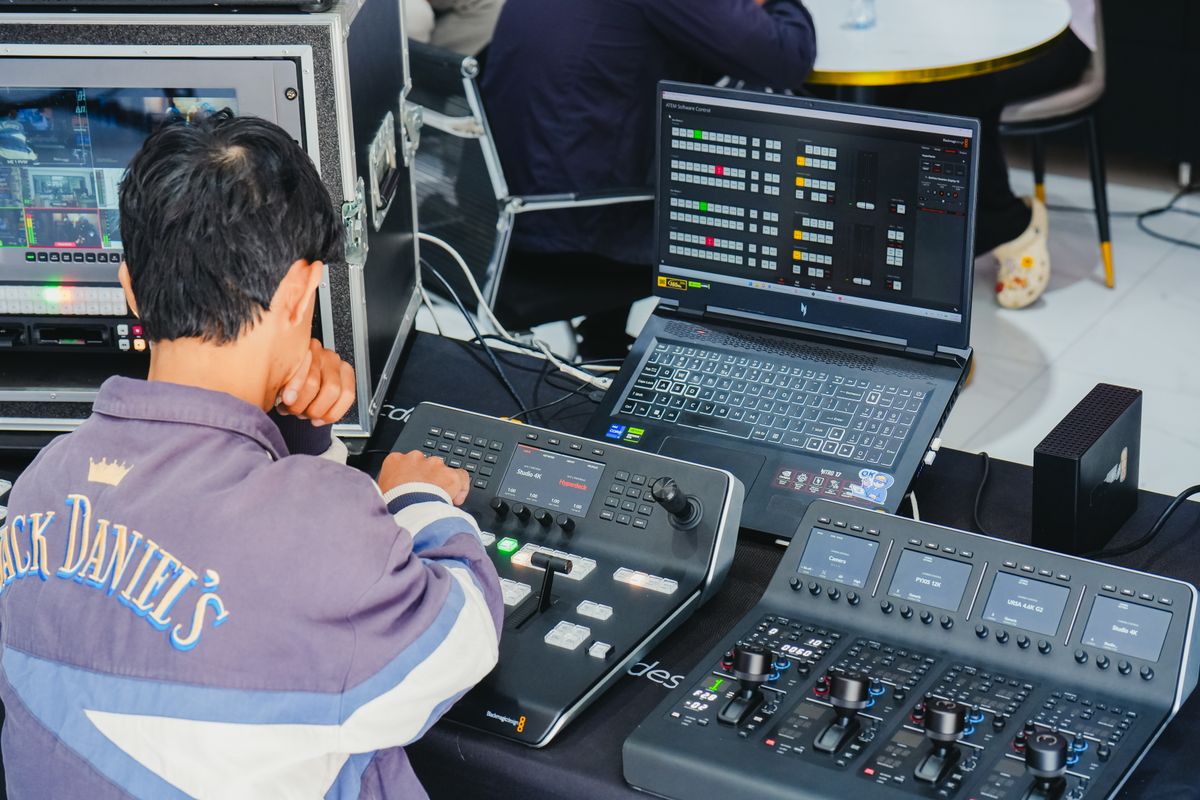
Photo: Sinan KRIYA on Pexels
Dispatch is one node in a connected operations system, not a standalone fix. Get the assignment right and the rest of the chain still has to hold.
Upstream, scheduling depends on inventory. If the technician arrives without the right part, the visit fails no matter how clean the assignment was.
Downstream, it connects to customer communication. The moment a job is booked, moved or completed, UAE customers expect a WhatsApp message, and automated status updates handle that message loop.
Compliance sits alongside all of it. Job completion records, technician certifications and visit logs are audit evidence under UAE regulations, and compliance automation builds those trails without pulling your dispatcher into evidence gathering every quarter.
If you're weighing where to start, dispatch is often the most time-sensitive node. It's rarely the smartest first move if the other nodes are still analog. A quick 30-minute call with our team will tell you which node to sequence first, and you can book that here with no pitch attached.
When AI Scheduling Is Not the Right First Move
Not every operation is ready, and pretending otherwise is how projects get abandoned. Three signals mean stop.
A small, static schedule with few technicians rarely has enough dispatch complexity to justify the system. The algorithm needs variation and volume to outperform a competent human, and if your dispatcher can hold the whole day in their head over a coffee, you don't have a dispatch problem yet.
No digital job record means no training data. If job history lives in WhatsApp and technician attributes live on paper, digitise those records before you configure any scheduling AI. Otherwise you're paying for a system that will optimise against a fiction.
And if dispatch works acceptably but quoting, invoicing or customer follow-up is your actual bottleneck, fix those first. Putting scheduling AI on top of a broken close process accelerates the wrong thing.
McKinsey's 2025 State of AI survey found that 88% of organisations now use AI in at least one function, but only 6% are classified as high performers. The gap is almost always sequencing, not ambition.
What Implementation Actually Looks Like for a UAE Field Service Business
The work starts before any software is configured. You map current dispatch rules and technician attributes into a structured written format: skills, zones, certifications, language, availability windows, priority rules. This is the deliverable most vendors skip.
Multilingual setup is not optional in the UAE. Arabic and English job descriptions, technician profiles, customer notifications and exception alerts need to be handled from day one. Retrofitting bilingual support later usually means rebuilding the data model.
Team training carries as much weight as the build. The dispatcher, the field supervisors and the technicians all need to understand what the AI decides and when they should override it. A system the team doesn't trust will not be used.
The system is live when the AI is making routine assignments unassisted and the dispatcher is handling only genuine exceptions. That shift in workload, not the go-live date on a project plan, is the real measure of success.
If you want an honest read on whether your operation is ready and where to start, book a free 30-minute consultation with Lenoo AI. We'll review your current dispatch process and tell you whether AI scheduling makes sense right now, including if it doesn't.
Related reading
FAQ
Does AI scheduling software handle Arabic and English job instructions in the same system?
It can, but only if the system was built for it. Most Western dispatch platforms cannot parse mixed Arabic-English or Arabizi messages reliably, so bilingual handling has to be designed into the data model from day one.
What data does my business need before AI dispatch will actually work?
You need structured records of technician skills, certifications, zones, languages and availability windows, plus a digital job history the algorithm can learn from. If those live in WhatsApp threads and paper folders, you have a data project before you have a software project.
Will an AI dispatch system replace my human dispatcher?
No. The dispatcher's role shifts from making routine assignments to handling genuine exceptions, priority overrides and escalations.
How does AI scheduling handle emergency or same-day job changes after the morning run?
The system re-optimises the day in real time as cancellations, add-ons and priority changes arrive, respecting the override rules you've set. A late-added urgent job jumps the queue automatically instead of waiting for a dispatcher to reshuffle by hand.
Can AI dispatch connect to WhatsApp, which is how we currently assign and update jobs?
Yes, and in the UAE it has to. WhatsApp is the primary channel for job requests, technician check-ins and customer updates, so connecting to it is usually the first integration we build.
Does AI scheduling comply with UAE data protection rules under Federal Decree-Law No. 45 of 2021?
It can and should. Job records, technician data and customer contact information all fall under the PDPL, so your dispatch system needs to store and process that data in line with the law.
How long does it take to implement AI scheduling in a UAE field service business?
The build itself is rarely the long part. Data preparation, process mapping and team training usually take longer than the software configuration, and the timeline depends on how digitised your current operation is.