

Arabic content moderation AI fails in the UAE for one reason: most systems were built for a language that does not exist. They assume Arabic is one register, spoken in one dialect, written in one script. A Dubai customer opening a WhatsApp chat writes Gulf Arabic, English, and Arabizi in the same paragraph.
If your filter cannot read that, it will silence real customers and let real harm through. That is a builder's problem, and it's fixable.
Key Takeaways
- Arabic moderation over-blocks and under-blocks at once — A 2024 Harvard Kennedy School study by researcher Mona Elswah found Arabic posts were frequently over-moderated while genuinely harmful content slipped through, because classifiers rely on thin datasets and keyword lists instead of context.
- Gulf Arabic, English, and Arabizi collide mid-message — A typical Dubai WhatsApp message like 'Yalla habibi can we reschedule to bukra 3ashan I have a meeting later' shifts between Gulf Arabic, English, and Arabizi within two sentences, and moderation tuned for one register misfires on the rest.
- Arabizi replaces letters with numbers, not noise — The digit 7 stands for ح and 3 stands for ع in everyday UAE messaging, so filters that read digits as garbage tokens either wave the message through on the wrong grounds or block it outright, misreading an entire register of what UAE users write.
- Working moderation needs three layers, not one — A pre-processing layer normalises script and decodes Arabizi, a classifier trained on UAE-specific corpora covering Gulf dialect, MSA, and code-switching handles the decision, and a human reviewer takes ambiguous cases like satire or dual-meaning slang instead of an automated block.
- Moderation logs count as personal data under PDPL — Federal Decree-Law No. 45 of 2021 covers flagged content, moderation decisions, and reviewer notes, and DIFC and ADGM add their own rules on automated decision-making, so retention periods and access controls need to be defined before the system goes live, not after.
Why Arabic Content Moderation AI Keeps Getting It Wrong
The failure mode is well documented. In a 2024 Harvard Kennedy School report, researcher Mona Elswah found Arabic posts were frequently over-moderated while genuinely harmful content slipped through, because algorithms rely on limited datasets and keyword lists rather than context. Both errors happen at once, on the same platforms.
Most classifiers treat Modern Standard Arabic, Gulf dialect, and Arabizi as one homogeneous language. They are not.
A Gulf Arabic compliment can share letters with a slur pulled from a Levantine dataset. A greeting written in Arabizi looks like random noise to a filter that only knows the Arabic alphabet.
The problem is not the Arabic language. It is models trained on thin, dialect-blind corpora that were never tested against real UAE input.
The OECD AI Policy Observatory tracks how different countries are regulating AI, which matters as soon as you operate in more than one market.
Arabizi: When Your Filter Cannot Read the Numbers
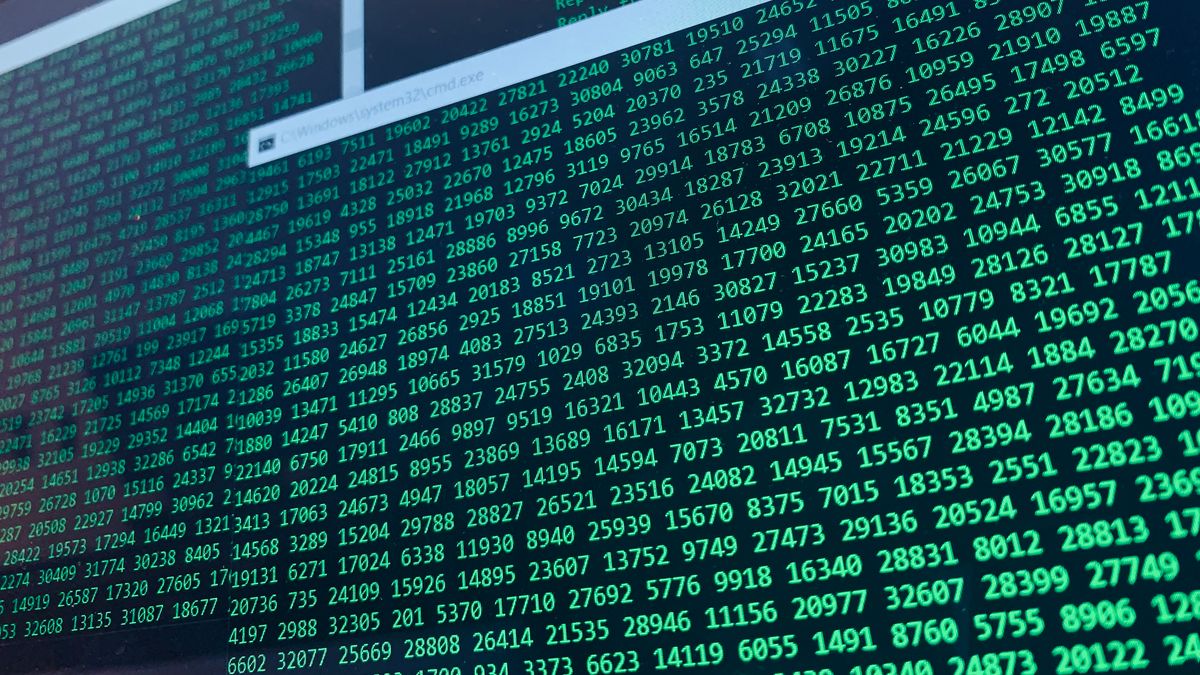
Photo: Tibe De Kort on Pexels
Arabizi is a phonetic system that substitutes numbers for Arabic sounds absent in English. The digit 7 stands in for ح. The digit 3 stands in for ع.
Writing "7abibi" instead of "حبيبي" is standard UAE digital communication, not evasion.
Keyword-based filters miss this entirely. They read the number as noise and let the message pass on wrong grounds, or they treat it as a garbage token that trips a low-confidence block. Either way, the classifier is not really reading what the user wrote.
The consequence is severe. An Arabizi greeting flagged as gibberish is a customer whose first message to your business got a canned rejection.
A moderation stack that cannot decode Arabizi misreads an entire register of what UAE users produce.
Code-Switching and Gulf Dialect: The UAE Conversation Reality
Code-switching is standard Arabic digital communication, not adversarial behaviour. Scholars Reham Hosny and Mohamed A Nasef, writing in a 2025 Sage journal article, identify the pattern of shifting between languages mid-sentence as a normal register in Arabic online conversation.
A typical Dubai WhatsApp message can mix Gulf Arabic, English, and Arabizi across two sentences. "Yalla habibi can we reschedule to bukra 3ashan I have a meeting later." Moderation trained for one register fails on all three, because each fragment triggers different classifier rules on different weights.
Gulf dialect and MSA also carry different social registers and different risk profiles. Slang that reads as casual in Gulf Arabic can look offensive when interpreted through an MSA-tuned lexicon.
Treating the two as one corpus produces decisions that are wrong in both directions.
The International Telecommunication Union publishes the connectivity statistics that most regional benchmarks are built on.
What Over-Moderation Actually Costs a UAE Business
Over-moderation silences legitimate content at scale. Industry reporting on Arabic moderation has documented individual creators whose usual 2,500 views dropped to 1,500, and sometimes down to 300, after miscalibrated filters suppressed their posts. That same dynamic runs through customer service pipelines whenever an Arabic filter is too blunt.
In the UAE, WhatsApp is the primary customer channel. A chatbot that blocks normal Gulf Arabic greetings or Arabizi phrases damages the relationship at the first touchpoint.
The customer does not know your filter fired. They know your business ignored them.
Customers whose messages are wrongly flagged rarely complain. They open a competitor's chat instead. False-positive costs stay invisible until the churn shows up in revenue, and by then the pattern is months old.
Context-Aware Safety Filters: What the Architecture Looks Like
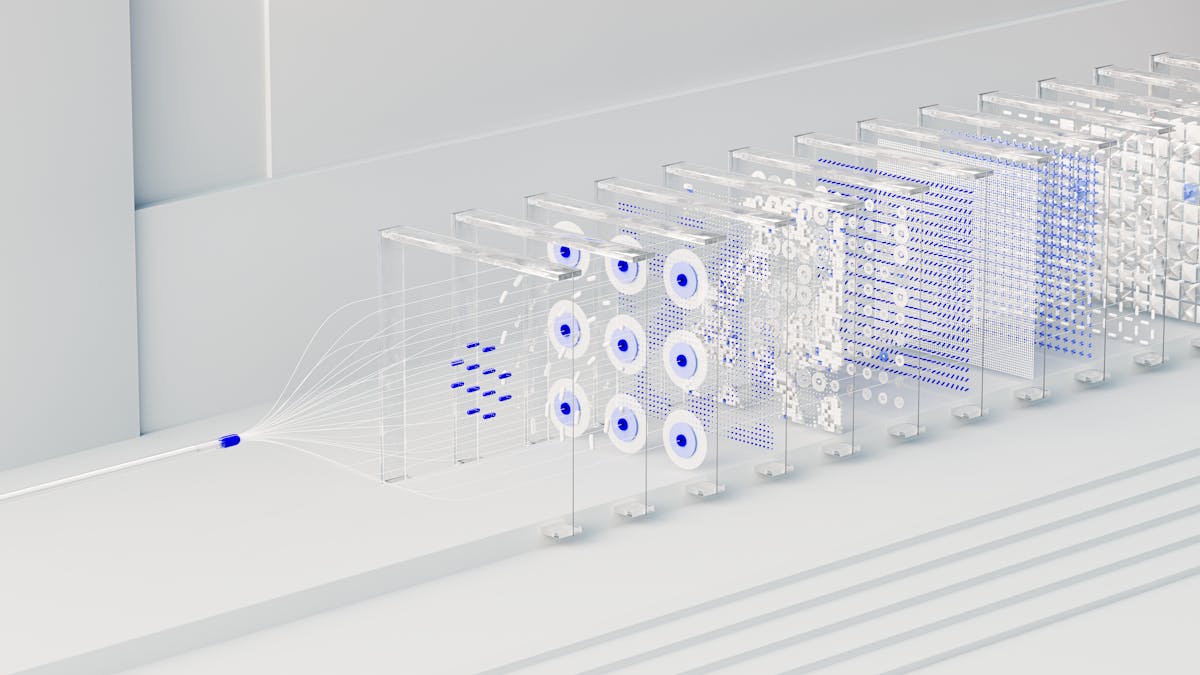
Photo: Google DeepMind on Pexels
Working Arabic moderation runs three layers in sequence.
The pre-processing layer normalises script variants, decodes Arabizi number substitutions, and identifies the language mix in each message before classification begins. Skipping this step is why generic pipelines fail on UAE input.
The classification layer runs a model trained on UAE-specific corpora covering Gulf dialect, MSA, Arabizi, and code-switched input. A generic Arabic NLP model tuned on Egyptian or Levantine data will not deliver here. The training distribution has to match the traffic distribution.
The escalation layer routes ambiguous cases to a human reviewer. Gulf slang with dual meanings, satire, cultural idioms: these should never receive automated blocks.
Human-in-the-loop is not a fallback, it is a designed component.
If you suspect your current moderation is producing false positives, book a free 30-minute consultation with Lenoo AI.
Each layer in the stack targets a different failure mode described above, and lining them up side by side shows how they divide the work.
Retrieval-augmented generation was set out by Lewis and colleagues in a 2020 paper that paired a language model with a separate document index.
| Layer | What it does | What it prevents |
|---|---|---|
| Pre-processing | Normalises script, decodes Arabizi number substitutions, identifies the language mix | Generic pipelines misreading Arabizi and mixed-language messages |
| Classification | Runs a model trained on UAE-specific corpora covering Gulf dialect, MSA, Arabizi, and code-switching | Mismatch between training data and actual UAE traffic |
| Escalation | Routes ambiguous cases, like Gulf slang, satire, and idioms, to a human reviewer | Automated blocks on content with dual meanings |
UAE Compliance: What Federal Decree-Law No. 45 of 2021 Means for Your Moderation Logs
Federal Decree-Law No. 45 of 2021, the UAE's Personal Data Protection Law, governs how personal data is stored, processed, and retained inside the country. That includes flagged user content, moderation decisions, and reviewer notes.
If your system records what was blocked, why, and by whom, you are processing personal data under PDPL.
DIFC and ADGM operate their own data-protection regimes on top of the federal law. Businesses in those free zones face additional obligations, some of which touch automated decision-making directly. An AI moderation pipeline that blocks content without human review is an automated decision, and those rules apply.
Retention periods and access controls for moderation logs must be defined before the system goes live. Retrofitting them after the fact means a data audit finds unstructured records you cannot map, and remediation costs more than the original build. For mid-size UAE businesses, the AED 50,000 to 200,000 engagement band typically covers a build that satisfies PDPL requirements from day one.
Testing and Tuning Arabic AI Moderation Before You Go Live
Test with real UAE input. Not synthetic samples, not translations from an English test set. Gulf Arabic compliments that keyword lists mistake for insults.
Arabizi greetings using number substitutions. Mixed-language sentences typical of Dubai WhatsApp threads. Use anonymised messages your own customers have actually sent wherever possible.
Measure false-positive and false-negative rates separately. A filter that blocks nothing harmful is not safe. One that blocks everything is not usable.
Reporting a single accuracy percentage hides which failure mode is dominant, and that is exactly the number you need.
Run adversarial tests using documented evasion patterns: deliberate code-switching, Arabizi number substitutions such as 7 for ح, and diacritics-stripped Arabic that confuses phoneme-based classifiers. If your system passes clean input but fails adversarial input, it will fail in production the first week.
Plan for post-launch iteration. Moderation models drift as language evolves, and Gulf slang shifts meaning quickly. A filter calibrated at launch needs a scheduled review cycle to stay accurate, quarterly at minimum, monthly if traffic is high.
For teams new to this work, our primer on getting started with AI in Dubai covers the operating rhythm.
If you want an outside read on an Arabic moderation stack you are building or auditing, book a free 30-minute consultation with Lenoo AI.
Related reading
- Best LLM for Arabic: Jais, Falcon, GPT and Claude Compared for UAE Business
- Arabic-first AI Development
- What Arabic LLM Benchmarks Do and Do Not Tell You
FAQ
What makes Arabic content moderation harder for AI than English moderation?
Arabic is not one register. UAE users write MSA, Gulf dialect, Arabizi, and often mix them with English in a single message. Most classifiers were trained on limited Arabic datasets and treat the language as homogeneous, which produces false positives on normal messages and missed harms on subtler content.
How does Arabizi affect Arabic AI safety filters, and what can UAE operators do about it?
Arabizi substitutes numbers for Arabic phonemes English lacks (7 for ح, 3 for ع), so filters that read digits as noise misread a large share of UAE traffic. The fix is a pre-processing layer that decodes Arabizi into Arabic before classification, plus training data that includes real Arabizi samples.
Does UAE law require businesses to keep records of AI content moderation decisions?
Federal Decree-Law No. 45 of 2021 treats flagged content and moderation decisions as personal data, with obligations on retention, access, and processing. DIFC and ADGM add layered requirements on automated decision-making. Retention periods and access controls should be specified before the system goes live, not added later.
Can a single AI moderation model handle Gulf dialect, MSA, and code-switched Arabic in the same conversation?
Only if it was trained on all three. Generic Arabic models tuned on Egyptian or Levantine data underperform on Gulf usage, and most models handle code-switching poorly. A UAE deployment needs corpora that reflect Gulf usage plus a pre-processing step that flags language mixes so the classifier applies the right weights.
What is the difference between keyword-list moderation and context-aware moderation for Arabic?
Keyword lists match strings against a banned vocabulary and act on hits. Context-aware moderation reads the surrounding message, identifies register, and interprets meaning before deciding. Keyword systems over-block Gulf compliments that share letters with slurs and under-block harmful content phrased carefully.
How do I know if my Arabic chatbot is over-moderating legitimate customer messages?
Look for silent drop-offs. If Arabic conversations end abruptly at a specific step, or if your response rate on Arabic threads is measurably lower than English threads, the filter is probably the cause. Sampling flagged messages weekly and having a bilingual reviewer read them will catch it.
What budget should a UAE business expect to spend on compliant Arabic content moderation?
For mid-size UAE businesses, the AED 50,000 to 200,000 engagement band typically covers a build that satisfies PDPL requirements from day one, including dialect-aware classification, Arabizi handling, human escalation, and audit-ready logging. Smaller pilots are possible for narrower scope.


