

A UAE customer taps out "3andek maqas medium?" on WhatsApp at 9pm. Your chatbot reads it as gibberish and sends a canned "sorry, can you rephrase".
You just lost a sale, and never saw it happen. That is the arabizi chatbot handling problem, repeated thousands of times a week across UAE inboxes. This guide explains what arabizi is, why standard NLP pipelines fail on it, the three approaches that work, and how to test a vendor before you sign.
Key Takeaways
- Arabizi uses numerals shaped like Arabic letters — The "3" mirrors ع (ayn), the "7" stands for ح (haa), and the "2" carries the hamza. Chatbots that treat these as ordinary digits mangle the surrounding letters and never see a coherent word.
- Gulf and Egyptian arabizi encode differently — The two communities diverge on several letters, and both are large in the UAE, so a single WhatsApp queue can show both conventions within the same hour. A bot trained on only one will misread the other.
- Arabizi failures are invisible in your analytics — A translation-layer or MSA-only bot does not throw an error on arabizi. It returns a bland "I did not quite catch that" or a generic FAQ link, so nothing tells you how many messages it misread.
- Test with real phrases like 3andek maqas medium — The reply should return a specific size answer, not a redirect to a size guide. Test "fein el order?" and "wesh sar 3ala talabi?" too, and check both Gulf and Egyptian variants on a live demo.
- Arabizi almost always mixes with English or Arabic script — A common pattern is "3andek Nike Air Max size 42?" — English product name, arabizi question. Splitting the message across separate pipelines destroys the meaning, so the bot must parse all three in one turn.
What Arabizi Is and Why UAE Customers Default to It
Arabizi is Arabic written phonetically with Latin letters plus a handful of numerals that stand in for Arabic letters with no Latin equivalent. It emerged when mobile keyboards did not support Arabic input, and it stuck. An entire generation of Gulf users learned to text this way, and the habit outlived the technical reason for it.
WhatsApp is the primary customer channel in the UAE, and a large share of messages arrive in arabizi rather than Arabic script. This is not a fringe register. It is how customers type on the move or on iOS.
Modern Standard Arabic sits in a different world. As one industry source puts it, "nobody messages a salon in MSA".
Customers write in dialect, and dialect on a phone often means arabizi. There is no single standard: the UAE hosts large Gulf and Egyptian communities that encode differently, so a single WhatsApp queue will show both conventions side by side within the same hour.
The OECD AI Policy Observatory tracks how different countries are regulating AI, which matters as soon as you operate in more than one market.
The Number-Letter Substitutions Gulf Users Actually Write
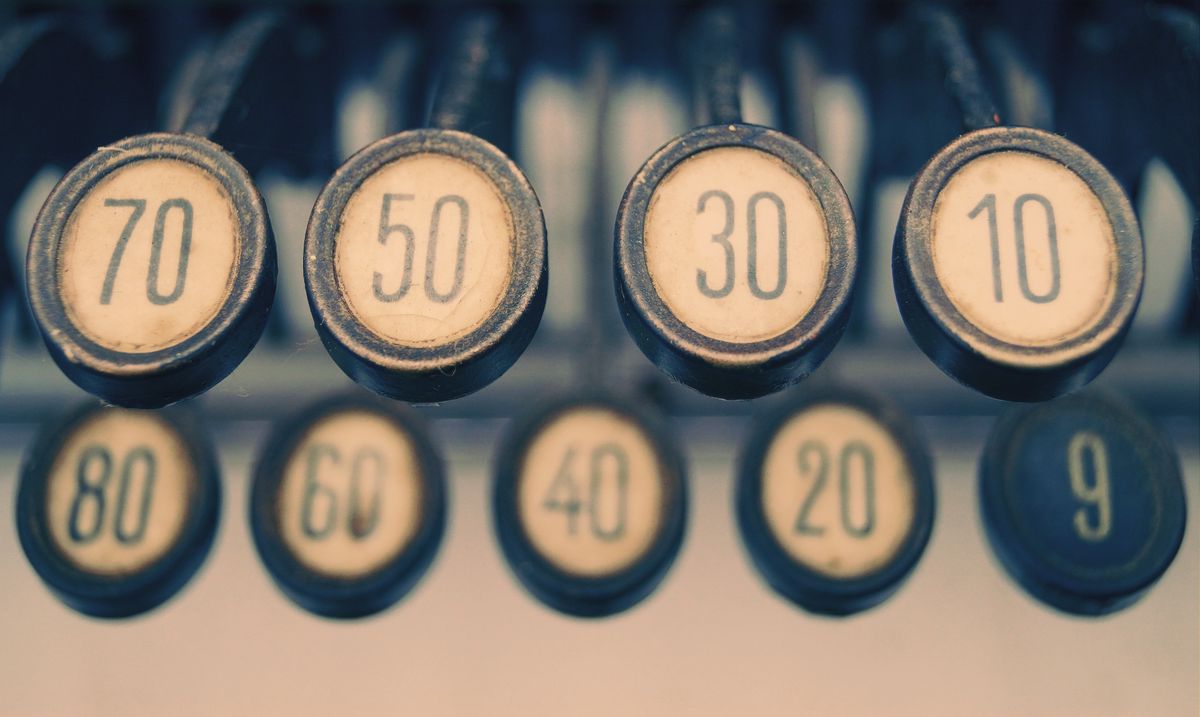
Photo: Pixabay on Pexels
The numerals in arabizi are not arbitrary. Each was picked because it looks like the Arabic letter it replaces. The "3" mirrors the shape of ع (ayn).
The "7" stands in for ح (haa). The "2" carries the hamza. Once you see it, you cannot unsee it, and once a customer learns it, they use it reflexively.
Real UAE customer messages make the pattern concrete. Industry sources document lines like "3andek maqas medium?" (do you have a medium?), "wesh sar 3ala talabi?" (what happened to my order?), and "fein el order?" (where is the order?).
None parses cleanly as English, Arabic script, or MSA. All three are typical WhatsApp traffic.
Gulf and Egyptian arabizi diverge on several letters, and the same Arabic sound can be encoded differently by two customers in the same inbox. That variance matters.
A rigid lookup table that maps "3" to ع and calls it done will miss the customer who typed "a" instead. Arabizi handling has to tolerate spelling drift, not just decode a fixed key.
The International Telecommunication Union publishes the connectivity statistics that most regional benchmarks are built on.
Why Standard NLP Pipelines Break on Arabizi Input
Here is the failure mode nobody warns you about. A chatbot built for English with a translation layer reads arabizi numerals as noise. The "3" in "3andek" gets treated the way you would treat "3" in "buy 3 shirts".
The tokenizer strips it and mangles the surrounding letters, so the model never sees a coherent word. The bot deflects.
Tokenizers trained on clean Arabic script or clean Latin text have no schema for hybrid numeral-letter strings. They silently malform the input before the language model gets a chance. MSA-only training compounds the problem, layering a different encoding on top of an already limited vocabulary.
The reason this hurts so much is that the failure is invisible. The bot does not throw an error. It does not flag a low-confidence parse.
It returns a bland "I did not quite catch that" or a generic FAQ link, and the customer rephrases in frustration or leaves. Nothing in your analytics tells you how many arabizi messages you misread. Without deliberate testing, you will not know.
Retrieval-augmented generation was set out by Lewis and colleagues in a 2020 paper that paired a language model with a separate document index.
Three Technical Approaches to Arabizi Chatbot Handling
There are three ways vendors actually solve this.
Preprocessing transliteration. A rule-based or ML layer converts arabizi into Arabic script before the main model touches it. Fast to build and cheap to run.
Brittle on regional encoding variation, and it needs constant maintenance when users invent new spellings. If the transliterator gets it wrong, the downstream model receives a plausible-looking but incorrect Arabic string and answers confidently in the wrong direction.
Fine-tuned multilingual models. The base model is exposed to large arabizi corpora during training or fine-tuning. It learns the encoding as a native register rather than treating it as noise to normalise.
This handles spelling drift and regional variation more reliably, with no separate preprocessing layer to maintain. It costs more upfront and demands training data that reflects both Gulf and Egyptian conventions.
Hybrid detection and routing. The system detects script type per message segment and routes each piece to the appropriate sub-pipeline.
This becomes essential when a single conversation contains Arabic script, Latin arabizi, and English at once, the reality on UAE WhatsApp. The mechanics sit inside the broader code-switching problem, and the same architectural choices apply.
Whichever approach, one UAE-specific requirement is non-negotiable: the system must handle both Emirati Khaleeji and Egyptian arabizi. Train on only one, and you will underperform for a large chunk of local customers.
Each approach trades off build effort against how well it holds up on regional spelling variation.
Abu Dhabi's Technology Innovation Institute publishes the Falcon family of open models, several of which carry Arabic in the training mix.
| Approach | Build effort | Handles regional variation | Maintenance |
|---|---|---|---|
| Preprocessing transliteration | Fast to build, cheap to run | Brittle on regional encoding variation | Needs constant upkeep for new spellings |
| Fine-tuned multilingual models | Costs more upfront, needs Gulf and Egyptian training data | Handles spelling drift and regional variation reliably | No separate preprocessing layer to maintain |
| Hybrid detection and routing | Routes each message segment to its own sub-pipeline | Essential when Arabic script, arabizi and English appear together | Shares architecture with code-switching handling |
When Arabizi and English Arrive in the Same Message
Photo: Serge Lavoie on Pexels
Arabizi rarely turns up alone. A common UAE pattern looks like this: "3andek Nike Air Max size 42?"
The product name is English, the question is arabizi. A model that cannot hold both registers in a single parse will read that as three fragments and answer none.
You cannot solve this by routing arabizi to one system and English to another. Splitting the message destroys the meaning.
A chatbot that handles Arabic script well but has no arabizi layer will also fail on arabizi-plus-English mixes, because neither pipeline recognises the numeral encoding.
See the code-switching guide for full mechanics. For arabizi, the encoding layer and the code-switching layer are the same problem wearing two hats.
Arabic-language model research in the UAE is concentrated at MBZUAI in Abu Dhabi.
How to Test Arabizi Handling Before You Sign a Contract
The good news: this is one of the easiest categories to test on a demo call. You do not need a data science team, just a phone and five phrases.
Send real dialect arabizi and watch the reply. "3andek maqas medium?" should return a specific size answer, not a redirect to a size guide. "Fein el order?" should trigger an order lookup, not a generic "please provide your order number in English".
"Wesh sar 3ala talabi?" should behave the same way. If the vendor cannot pass this on a live demo, they will not pass it in production.
Test both Gulf and Egyptian variants. A bot that answers Egyptian but blanks on Saudi will publicly fail with half your customers. Cover both, from a real phone.
Then check the escalation. When the bot cannot parse, does it hand off to a human or loop on a deflection?
Graceful escalation is a feature, not a fallback. The Arabic testing methodology guide covers native-speaker QA end to end.
Not sure whether yours passes any of this? Book a free 30-minute consultation and we will run the tests with you. If it already handles arabizi cleanly, we will tell you.
What a Production-Ready Arabizi Chatbot Requires in the UAE
Your bot must decode arabizi numerals across Gulf and Egyptian conventions, without leaning on a lookup table you babysit constantly. It must handle arabizi, Arabic script, and English in the same conversation turn, not toggle between modes based on a language flag that guesses wrong on mixed messages.
It should also match register. A customer writing informally in arabizi is not looking for a stiff MSA reply.
The reply should sound like the message it is answering, a question of tone, greetings and formality as much as language. It needs to escalate honestly when it hits the edge of what it can parse.
If you are ready to evaluate architecture options, the pillar guide on building Arabic AI chatbots walks through dialect support, arabizi handling and testing requirements. Or book a free 30-minute call and we will give you an honest read on your current setup.
FAQ
What does the number 3 mean in an arabizi message from a UAE customer?
The 3 stands in for ع (ayn), an Arabic letter with no Latin equivalent, because it resembles the letter's shape. "3andek" means "do you have".
Will a general-purpose large language model understand arabizi without any special training?
Partially. Current models handle some arabizi from broad web exposure, but performance drops on Gulf-specific spellings and messages that mix arabizi with English product names. Reliable production use needs targeted training data or a preprocessing layer.
Is arabizi written the same way by Gulf and Egyptian users in the UAE?
No. Gulf and Egyptian arabizi diverge on several letters and vocabulary, and both communities are large in the UAE.
A chatbot trained only on Egyptian will misread Emirati and Saudi messages. Coverage of both is a requirement.
How do I test whether a chatbot genuinely understands arabizi?
Send real phrases like "3andek maqas medium?" or "fein el order?" on a live demo. Check the reply is specific, not a template redirect. Test both Gulf and Egyptian variants.
Does arabizi handling need to be built separately from code-switching support?
They overlap but are not identical. Arabizi handling decodes a specific encoding.
Code-switching processes multiple languages in the same message. In UAE production you need both.
Should a chatbot reply in arabizi, or always respond in Arabic script?
Match the customer. Replying in formal MSA to an arabizi message feels cold and off-register.
A short arabizi or dialect Arabic-script reply reads as human.
What is the practical difference between arabizi and Modern Standard Arabic for training data?
MSA is formal written Arabic used in news and official documents. Arabizi is informal, phonetic, and reflects spoken dialect.
Training data for one does not transfer. A bot trained only on MSA will misread almost every arabizi message.


