

You open your phone at 6:45 on a Sunday morning. Before your feet hit the floor, you already know which crews turned up, which materials landed overnight, and which incident on the C2 tower needs a call before you start the drive to site.
No WhatsApp scroll. No spreadsheet chase. One email, already read, already actionable.
That is what automated reporting for construction companies actually delivers when it is built for how UAE sites really operate. Not a prettier PDF. A decision-making window between the report landing and your first meeting starting.
Key Takeaways
- Automation cuts report creation time by 90% — Industry sources put automated report creation at up to 90% faster than manual methods, with claims of up to 25,000 work hours saved annually across a mid-sized operation. The recovered time matters because it lands in the window before your 09:00 meeting, not because of the hours themselves.
- Pipeline must parse Arabic, English and WhatsApp photos — Site crews submit data in Arabic, English and mixed Arabizi, often through WhatsApp rather than a dedicated app. Delivery notes and VAT invoices arrive as phone photos, and the system has to read the amount, date and reference number without a manual translation step.
- The 7am report splits collection from decision-making — Data collection happens overnight and automatically, via a refresh around 04:00, while decisions happen in the two hours between the 7am report landing and your 09:00 meeting. That gap is what lets you redirect a delivery truck or reschedule a pour before the day starts.
- Roll out with the 5 to 7 numbers first — Start by listing the numbers that actually drive daily decisions, then connect one data source at a time: the site-entry app first, run for a week, then materials tracking, then subcontractor timesheets, testing each integration against the live report before adding the next.
- Track hours per week saved on reporting — Baseline the hours your team spends on manual compilation now, then measure monthly. Industry sources call this the most honest measure of leverage: if it does not drop meaningfully within four weeks of going live, the system is not working, whatever the report looks like.
The Morning Reporting Problem UAE Construction Managers Are Living With
Your first hour of the day is spent reconstructing yesterday. It shouldn't be. Industry research finds managers spend nearly 40% of their time on admin and firefighting, and daily report compilation is a large slice of that on a construction operation.
Here is the manual sequence most UAE contractors still run. Scroll through 40 overnight WhatsApp messages from site supervisors. Cross-check what materials the storekeeper says arrived against what procurement said was dispatched.
Chase the subcontractor foreman who never sent his headcount. Paste it all into a spreadsheet. Draft a summary.
Then, finally, make a decision.
The Sun to Thu working week makes this worse. By the time your office opens at 09:00, crews on site have already been working for two hours. Without an overnight summary waiting for you, the first calls of the day about labour reshuffles, urgent deliveries and critical-path slippage are made blind, or not made at all.
A 2021 Project Management Institute study cited by industry sources found around 12% of projects globally fail partly due to communication breakdowns. Late data is exactly that failure mode, dressed up as busyness.
Clinics licensed in Dubai answer to the Dubai Health Authority for how patient information is collected, stored and communicated.
What a Useful 7am Construction Summary Actually Contains

Photo: Mikael Blomkvist on Pexels
The summary that changes your morning is short. Five to seven numbers that drive a decision, each paired with a variance flag when reality diverged from the plan overnight.
Here is what belongs in it:
- Labour headcount versus planned. Which crews confirmed arrival, which are short, and by how many.
- Materials received versus expected. Delivery notes captured overnight, shortfalls flagged as exceptions.
- Safety and incident flags from the previous shift. Anything that needs action before work resumes.
- Yesterday's productivity against the plan. Concrete pours completed, blockwork lifts, MEP first fixes signed off.
- Cash and invoice movements. Subcontractor certifications approved, VAT invoices booked, payments released.
Industry sources put the useful count at 5 to 7 numbers. Beyond that, the report becomes a document to be read rather than a signal to be acted on.
Each of the five to seven numbers works the same way: what was planned against what actually happened overnight.
In Abu Dhabi the equivalent regulator is the Department of Health, and its licensing conditions differ from Dubai's in the detail.
| Report Element | What It Compares | Example Exception Flagged |
|---|---|---|
| Labour headcount | Crews confirmed on site vs planned | Crew arrives short by a number of workers |
| Materials received | Delivery notes vs expected dispatch | Shortfall flagged, e.g. rebar missing from delivery |
| Safety and incident flags | Previous shift events vs normal operation | Incident needing action before work resumes |
| Productivity | Work completed vs the plan | Concrete pours, blockwork lifts, MEP first fixes signed off |
| Cash and invoice movements | Certifications and invoices vs approvals due | Subcontractor certifications approved, VAT invoices booked, payments released |
How the System Builds the Report Without Anyone Compiling It
Nobody sits at a laptop at 06:30. The report assembles itself overnight from the systems your operation already runs on.
The pipeline connects your project management software, site-entry app, materials tracking system and subcontractor timesheets into one data flow. An overnight refresh pulls the latest state from each source at, say, 04:00, when nothing on site is moving. A rules layer compares actual against planned and tags the exceptions.
Then an AI summary layer writes the movement in plain language, so you read "MEP crew 3 arrived 4 short, storekeeper flagged 8 tonnes of rebar missing from yesterday's delivery" rather than parsing a table.
The scheduling side is worth reading alongside. Which crews should have been where comes out of the same job-assignment layer described in Dispatch Without a Dispatcher: AI Scheduling for Construction Operations.
The report fires at 07:00 GST, formatted for phone reading. That is it.
Every brokerage transaction in the emirate passes through the Dubai Land Department, which is also where the registration and listing rules come from.
What Automated Reporting Actually Saves, And Where the Time Goes Instead
Industry sources put automated report creation at up to 90% faster than manual methods, with claims of up to 25,000 work hours saved annually across a mid-sized operation. Take those figures as directional. The shape is real.
Finance-adjacent automation shows sharper savings, quoted at 35% to 46% cost reduction. For a UAE contractor that means payment summaries, VAT reconciliation and progress-claim tracking.
But savings framed as hours are the wrong close. The right question is where the recovered time goes. Answer: to the two hours between the 7am report landing and your 09:00 meeting, during which you can call the subcontractor about the labour shortfall, redirect the materials truck, and reschedule the concrete pour before any of those decisions turn into a day of slippage.
That window is the whole point. The report is the input; the decisions are the output.
If you want the wider view of how this fits alongside your other operational systems, the pillar guide on AI Automation for Construction Companies in the UAE sets out the full framework.
The Ministry of Human Resources and Emiratisation publishes the labour laws and regulations that any HR automation has to work inside.
UAE-Specific Setup: Bilingual Data, WhatsApp Capture and Arabic Site Inputs
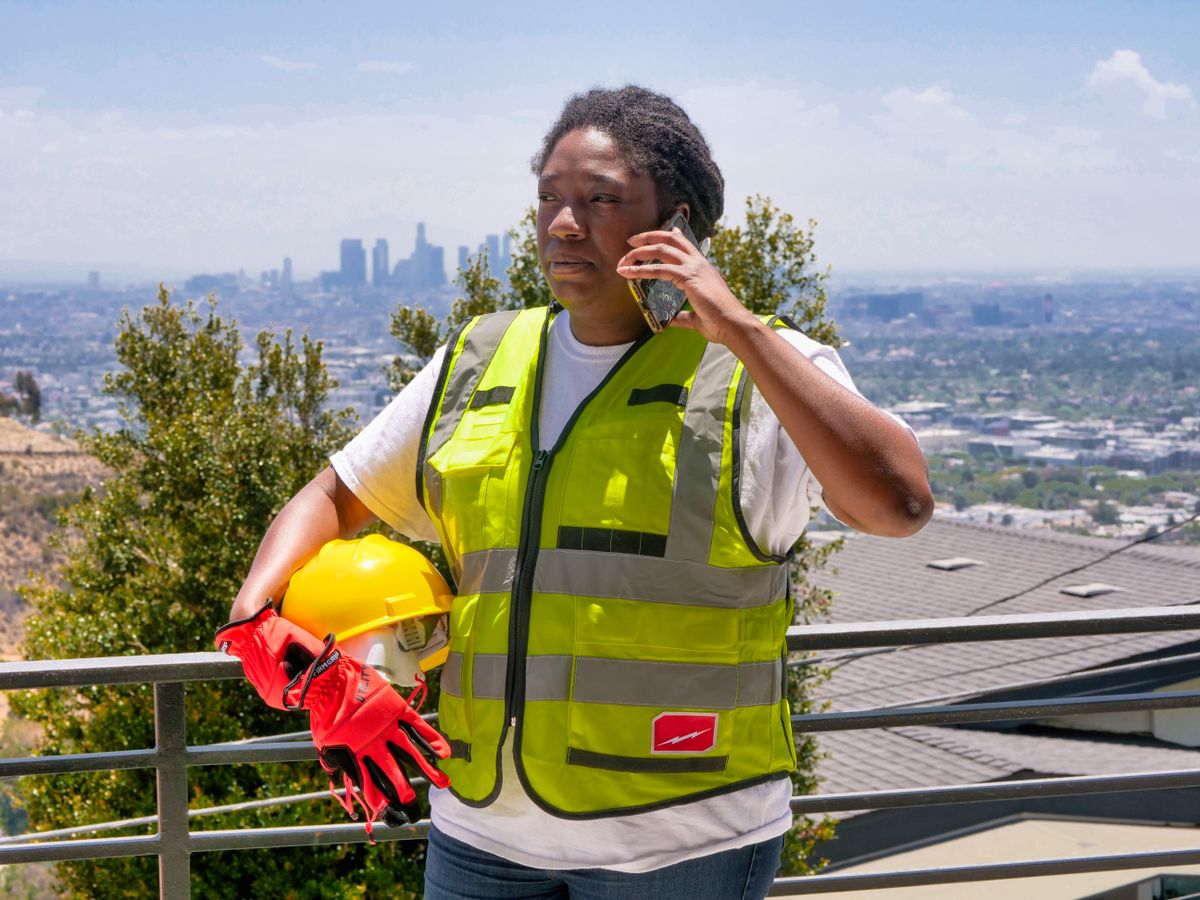
Photo: Kindel Media on Pexels
A generic reporting stack fails in UAE construction. It assumes clean, English, structured inputs from a single app the whole crew uses. That is not the reality on any Dubai site.
Site crews submit data in Arabic, English and a mix of both in the same message, sometimes in Arabizi. The data capture layer has to parse all three without a translation step, because that means a person, and a person at 04:00 means the report is late.
WhatsApp is where the messages actually arrive. Your foremen already run their crews from it, your storekeepers already send delivery photos through it, your subcontractors already send end-of-shift updates through it. Forcing a new app on a site team that has run on WhatsApp for years is how automation projects die in month two.
The pipeline should meet the team on WhatsApp and pull structured data out of what they already send, not ask them to change habit for the reporting system's convenience. The same channel-first principle applies to your inbound customer traffic, which is covered in How Construction Companies Route Customer Emails Automatically to the Right Person.
Then there is the document mess. Trade licences, VAT invoices and delivery notes arrive as phone photos and PDFs, frequently mixing Arabic and English on the same page. The system has to read them reliably, extract the amount, date and reference number, and drop those fields into the daily summary.
That is table stakes in this market, not a premium feature.
Rolling It Out on an Active Construction Project Without Breaking What Already Works
A live project cannot pause for a system rebuild. The rollout has to happen underneath the work.
Start narrow. List the 5 to 7 numbers that actually drive your daily decisions, industry sources agree that is the right scope for the first version. Not a full data audit.
Not every system your business touches. The seven numbers that, if you had them at 07:00, would change what you did that day.
Connect the sources one at a time. Wire in the site-entry app first. Run the report for a week.
Add materials tracking. Run it for another week. Add subcontractor timesheets.
Every integration is tested against the live report before the next one is added, so when something breaks you know exactly which pipe is leaking.
Train the site team on data submission before the automation goes live. This is where most rollouts stall. Tools are easy to swap; an untrained team is the thing that kills the project.
Show the foremen the exact WhatsApp format that produces a clean data extract, show the storekeepers how to photograph delivery notes so the OCR reads them first time, and give it two weeks of shadowed operation before the report replaces anything.
Structured daily data becomes a compounding asset. Audit trail benefits described in Compliance Automation for Construction Companies: Deadlines, Evidence and Audit Trails start showing up as a free byproduct.
How to Know the Automated Report Is Actually Working
Pick one number before you start, and watch it for a month. Industry sources call this out as the most honest measure of leverage, and they are right: hours per week your team spends on reporting. Baseline it now.
Measure it monthly. If that number does not drop meaningfully within four weeks of the automated report going live, the system is not working, regardless of how good the email looks.
Two other signals matter alongside that.
Accuracy, spot-checked. Once a week, compare the report against what supervisors actually observed. One silently wrong number will cost the confidence of the whole management team.
Escalation rate. How often does the 7am summary trigger a call or a decision before the working day opens? If the answer is "never", the report is just formatted data.
If it is two or three times a week, you have real operational intelligence. That is the point at which you can safely expand the report's scope, add the next data source, and not before.
Related reading
FAQ
What data sources can an automated daily construction report pull from on a UAE site?
Project management software, site-entry apps, materials tracking, subcontractor timesheets, WhatsApp messages, and photo or PDF documents like delivery notes and VAT invoices. The pipeline reads them overnight and assembles a summary by 7am.
Can the automated summary be delivered in Arabic as well as English?
Yes. The report can be generated in Arabic, English or both, and can be sent to different recipients in different languages from the same underlying data.
How long does it take to set up automated daily reporting for a construction company?
A first version covering the 5 to 7 core numbers typically runs in weeks rather than months when you connect one source at a time. Full coverage takes longer, but the first useful email is achievable well before that.
Ready to see where the reporting hours could go? Book a free 30-minute consultation with Lenoo AI.


