

Every UAE business handles the same daily pile: supplier invoices in Arabic and English, Emirates ID photos taken on someone's phone, trade licences with mixed script, contracts that need a first read, and quotations that all look similar but never quite the same. It reads, writes, and routes that paperwork without anyone retyping fields into three systems. Done well, it cuts the busywork eating managers' time and creates an audit trail your finance and compliance teams will trust.
Key Takeaways
- Extraction accuracy determines everything downstream — Document automation has three layers: extraction, generation, and approval routing. Each depends on the accuracy of the one before it, so weak extraction breaks generation and approval routing even when those layers are built well.
- UAE document automation faces problems Western tools ignore — Bilingual pages, phone-camera photos with glare, FTA VAT field requirements, and personal-data duties under Federal Decree-Law No. 45 of 2021 (UAE PDPL) all trip up generic extraction tools built for clean single-language PDFs.
- Proposal generation can cut drafting time drastically — Vendor case studies report proposal creation falling from around four hours to twenty minutes when dynamic templates pull from live CRM and product data, but only once template logic and extraction are solid before the first draft goes out.
- 95% of AI pilots show no return — MIT Media Lab's Project NANDA found the recurring cause: teams skip extraction accuracy and jump straight to generation or approval routing on unreliable data. Sequencing extraction before generation before approval routing is what avoids that outcome.
- Start with one high-volume document type, not three — Supplier invoices, Emirates ID onboarding, and customer quotations are the usual starting points. Initial extraction or generation builds typically run AED 10,000 to 50,000; a multi-step approval flow with ERP integration runs AED 50,000 to 200,000.
What AI Document Automation Actually Covers, and Why UAE Businesses Have It Harder
Any build has three separate jobs: extraction (pulling structured data out of documents), generation (creating documents from templates and live data), and approval routing (moving documents through defined sign-offs). This page walks all three, and links to the broader stack in our guide to business workflow automation.
UAE businesses face a harder problem than Western case studies suggest. Documents arrive as WhatsApp photos, and Arabic and English often sit on the same page. Nearly 40% of managers' time goes on admin and firefighting per Deloitte's 2025 Global Human Capital Trends, and document handling is a big share of it.
Generic tools are built for clean single-language PDFs, and stumble on Arabic script and phone-camera glare. They know nothing about FTA VAT requirements or the personal-data rules in the UAE PDPL. This pillar maps six document types, each covered in its own supporting article.
Each document type carries its own extraction challenge and its own review requirement, which is worth laying out before going section by section.
The US National Institute of Standards and Technology organises its AI Risk Management Framework around four functions: govern, map, measure and manage.
| Document Type | Core Output | UAE-Specific Challenge | Review or Compliance Requirement |
|---|---|---|---|
| Supplier VAT invoices | Vendor name, tax amount, due date | Scanned images, photo PDFs, bilingual line items | Must match FTA-defined VAT fields |
| Emirates ID | Name, ID number, nationality, date of birth, expiry | Phone-camera photos, glare, partial obstruction | Governed by UAE PDPL as personal data |
| Contracts | Flagged clauses, missing provisions, dates, liability caps | Bilingual or fully Arabic documents | Qualified person makes the final call |
| Sales proposals | Scope, pricing, legal language merged from templates | Arabic and English versions needed together | Salesperson reviews before sending |
AI Invoice Data Extraction: Eliminating Manual Entry on UAE VAT Invoices
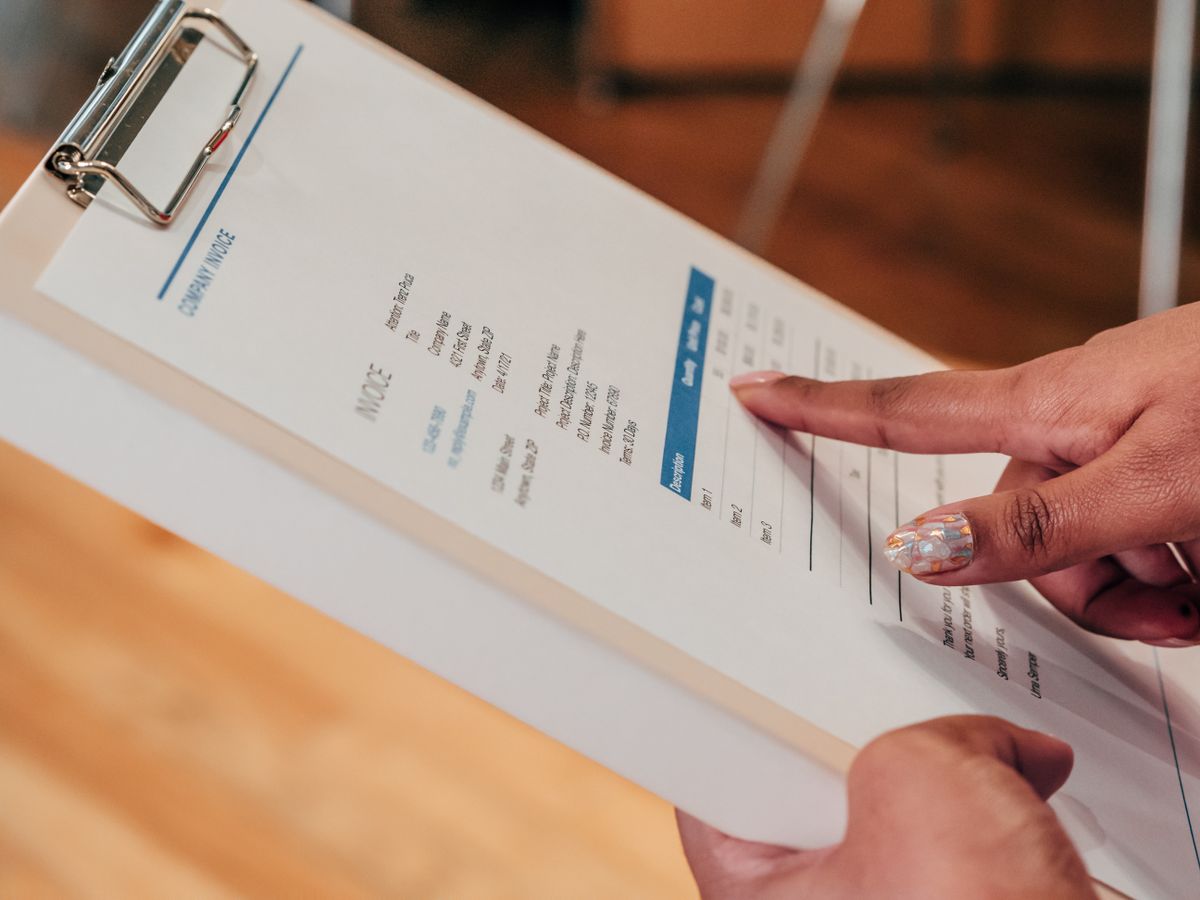
Photo: Kindel Media on Pexels
AI invoice data extraction reads a supplier VAT invoice, identifies each field, and posts it into your accounting system without anyone retyping. UAE VAT invoices carry specific fields defined by the FTA, and manual mistakes create compliance exposure plus reconciliation work that costs more than the entry itself.
The technology handles scanned images, photo PDFs, and bilingual line items rather than only clean digital files. Vendors quote high accuracy on unstructured documents, but those figures come from their own testing and your real-world number depends entirely on your document mix. Run a sample of your own invoices before you believe any of them. A solid extraction layer routes vendor name, tax amount, and due date each to the right destination in your ERP without a middle step.
That is the difference between basic OCR and AI extraction: OCR reads characters, while AI extraction understands what a field means and where it belongs. Our full workflow for AI invoice data extraction walks through the moving parts, and the same architecture powers automated bank statement processing on the treasury side.
Arabic OCR for UAE Business Documents: Why Standard Tools Fall Short
Standard OCR fails on Arabic because the script is right-to-left, cursive, and context-dependent. Many characters change shape based on their position within a word, and character-level models don't handle that. Run a supplier quotation through a general-purpose tool and you often get garbled fragments.
Most UAE business documents mix Arabic and English on the same page: trade licences, supplier quotations, tenancy contracts, employment letters. A bilingual OCR model is a requirement, not an upgrade. Skip that layer and everything downstream breaks quietly.
Accuracy here gates the workflow. A garbled vendor name in an ERP field blocks payment, triggers a support ticket, and eats more time than the manual keying it replaced. See our Arabic OCR business guide for tool selection, and connecting AI agents to UAE ERPs, CRMs and portals for the plumbing.
Emirates ID OCR Automation: Onboarding, KYC and Trade Licence Processing
Emirates ID OCR automation is one of the most common entry points for UAE HR, compliance, and vendor onboarding teams. The extraction pulls the fields you need (full name, ID number, nationality, date of birth, expiry date) and drops them into your onboarding or KYC flow. Forms pre-populate, the next step triggers, and nobody retypes anything.
Emirates IDs and trade licences show up as phone-camera photos far more often than clean scans. The extraction layer must handle variable image quality, partial obstruction, and glare without asking the applicant to resubmit. Anything less kills adoption on the customer side.
Data extracted from an Emirates ID is personal data under Federal Decree-Law No. 45 of 2021, the UAE PDPL. Storage, processing, and retention must comply with that law, and the right time to design that in is before you go live, not after.
Our step-by-step workflow for Emirates ID OCR automation covers extraction, validation, and routing end to end.
Unsure which document to automate first? Book a free 30-minute consultation and we'll tell you honestly if it makes business sense or if a different starting point is stronger.
AI Contract Review: First-Pass Triage Without the Legal Bottleneck
AI contract review flags non-standard clauses, missing provisions, renewal and termination dates, and liability caps on a first-pass read. It shortens the time a person spends before escalating to legal. It does not replace the escalation.
UAE contracts are frequently bilingual or fully in Arabic, so the model must handle both languages on the same document. That single requirement eliminates a large slice of general-purpose tools that only process English. Whatever you pick has to earn its keep here.
Frame this correctly with your team: AI handles volume and flags risk, but a qualified person still makes the call. That matters legally in the UAE, where disputes resolve under UAE law and framing AI output as authoritative legal advice creates real liability. Our AI contract review workflow covers clause coverage and tool comparison for UAE commercial contracts.
Automated Proposal Generation: From Brief to Sent Draft in a Fraction of the Time

Photo: Mikhail Nilov on Pexels
Automated proposal generation shortens the path from client brief to a review-ready draft dramatically. Vendor case studies commonly report proposal creation time falling from around four hours to twenty minutes when dynamic templates pull from live CRM and product data. The salesperson reviews and adjusts rather than building from scratch.
Templates merge client-specific data, scope, pricing, and legal language automatically, so the human edits the top of a good draft instead of hunting for last quarter's version. More time in front of clients. Less time formatting.
UAE sales proposals often need Arabic and English versions at the same time. A generation workflow produces both from one trigger rather than two tasks assigned to two people. Our automated proposal generation guide covers template design, and our platform comparison across n8n, Make, Zapier and Power Automate explains which we deploy for UAE builds.
Approval Workflow Automation: Replacing Email Chains With Structured Sign-Off
Approval workflow automation defines each step, the responsible party, a time limit, and an escalation path. It replaces the email thread where approvals get lost, forgotten, or signed off by someone who wasn't meant to. The workflow enforces the rule your policy already states.
Common UAE scenarios: purchase order sign-off, contract authorisation before execution, trade licence renewal routing through finance and legal, and HR approvals for offer letters and termination paperwork. Each step has a clear owner and a timer.
Audit trails from automated approvals matter for UAE entities under internal procurement policy or external audit. An email chain is not an audit trail, and reconstructing one after the fact is expensive and error-prone. See our approval workflow automation guide for the design patterns, and connecting approval flows to your existing UAE ERP or CRM for the integration side.
How to Sequence Your First AI Document Automation Project in the UAE
Pick the document type that is highest in volume and most repetitive. For most UAE SMEs that is supplier invoices, Emirates ID onboarding, or customer quotations. Automate one end-to-end before layering the next.
Realistic UAE cost bands: an initial extraction or generation build typically runs AED 10,000 to 50,000, and a multi-step approval flow with ERP integration typically runs AED 50,000 to 200,000. Scope drives the number more than the platform choice.
Here is the honest failure pattern to avoid. 95% of enterprise AI pilots produce no measurable P&L return per MIT Media Lab's Project NANDA. The recurring reason is skipping extraction accuracy and jumping to generation or approval routing on top of unreliable data.
To self-host on UAE infrastructure, our n8n practical guide covers the setup. Book a free 30-minute consultation and we'll identify your highest-value opportunity and give you an honest recommendation, including if it isn't the right move yet.
Related reading
FAQ
What types of UAE business documents can AI document automation extract data from?
VAT invoices, purchase orders, Emirates IDs, trade licences, tenancy contracts, employment letters, supplier quotations, and bank statements are all in scope. Any structured or semi-structured document where the fields are consistent enough to define can be automated. Bespoke one-offs are harder and usually not worth the build.
Can AI workflows handle Arabic text and mixed Arabic-English pages on the same document?
Yes, but only with a bilingual OCR model. Standard character-level tools fail on Arabic because the script is cursive and context-dependent. For any UAE deployment, treat bilingual handling as a base requirement, not an add-on.
How does Emirates ID OCR fit into employee onboarding and customer KYC workflows?
The OCR pulls the fields (name, ID number, nationality, date of birth, expiry) and pre-populates the onboarding or KYC form. The workflow then triggers the next step, whether that is a background check, an offer letter draft, or a vendor account creation. Staff review flagged fields instead of typing everything.
Does automated document processing comply with the UAE PDPL?
It can, if compliance is designed in from the start.
Federal Decree-Law No. 45 of 2021 governs personal data including Emirates ID fields, and your workflow must handle storage, processing, and retention accordingly. Retrofitting after go-live is more expensive than building it in on day one.
Which document type should a UAE SME automate first to see the fastest return?
Whichever type is highest in volume and most repetitive for you: often supplier invoices, Emirates ID onboarding, or customer quotations. Automate one end-to-end before layering the next. Attacking three produces surface-level automation on all three and durable results on none.
How long does it take to build and deploy a document automation workflow in the UAE?
A single-document extraction or generation flow typically ships in a few weeks. A multi-step approval workflow with ERP integration takes longer because it depends on the target system and the sign-off rules. Scope, not tooling, drives the timeline.