

Your automation greeted customers politely and suppressed sales pings on the flagged dates. Then Eid moved by a day.
The Cabinet's moon-sighting confirmation dropped 36 hours before the holiday, and your WhatsApp campaign fired at 10am on the first morning off. A gulf holidays automation calendar built on hardcoded Gregorian dates behaves like this every year.
Key Takeaways
- UAE has 8 public holidays in 2026 — Most are Islamic dates confirmed by moon sighting, and the Cabinet's announcement can arrive only one to two days before the holiday itself.
- Multi-day Eid spans need three message states — Day one gets a warm greeting, mid-holiday days suppress sales and service chases while inbound support stays active, and the return day starts with acknowledgement before business and transactional messaging resume.
- National Day is fixed but still needs bilingual care — December 2 to 3 commemorates the 1971 unification of the seven emirates and can be configured months ahead, but a generic English-only template still reads as a system not built for the UAE market.
- Telemarketing rules don't pause for holidays — The 09:00 to 18:00 calling window and DNCR checks under Cabinet Resolutions 56 and 57 of 2024 still apply on a public-holiday weekday, with fines of AED 50,000, AED 75,000 and AED 150,000 for a first, second and third breach.
- Separate live and hardcoded calendar layers — Fixed civil dates like New Year's Day and National Day can ship hardcoded, while Islamic dates need a live lookup at runtime with a fallback that holds messaging until the Cabinet confirms.
Why the Gulf Calendar Breaks Standard Automation Logic
Standard automation platforms default to the Gregorian calendar and treat holidays as single, fixed dates. The UAE calendar is neither. Most Islamic holidays span multiple days, and their dates are set by moon sighting, not by a fixed rule.
The UAE observes 8 public holiday occasions in 2026, and most are Islamic and shift with the lunar cycle. The Islamic dates can move by a full day from the anticipated schedule. The Cabinet has not yet issued its 2026 announcement at time of writing, so every published date remains a prediction.
Here is the failure mode. A workflow that hardcodes March 20 as the start of Eid Al Fitr looks correct in staging and executes cleanly in production. If the official announcement moves the first day by 24 hours, the automation sends "back to normal" service messages while offices are still closed.
A gulf holidays automation calendar built without runtime lookup never knows it was wrong.
Abu Dhabi's Technology Innovation Institute publishes the Falcon family of open models, several of which carry Arabic in the training mix.
The 8 UAE Public Holidays in 2026, Fixed Versus Moon Sighting

Photo: Towfiqu barbhuiya on Pexels
Which of the 2026 dates can you actually hardcode? Fixed civil holidays can be hardcoded safely. Islamic holidays cannot.
| Holiday | Anticipated 2026 date | Category |
|---|---|---|
| New Year's Day | January 1 (Thursday) | Fixed civil |
| Eid Al Fitr | March 20 to 22 (Friday to Sunday) | Moon sighting |
| Arafat Day | May 26 (Tuesday) | Moon sighting |
| Eid Al Adha | May 27 to 29 (Wednesday to Friday) | Moon sighting |
| Islamic New Year | June 16 (Tuesday) | Moon sighting |
| Prophet Muhammad's Birthday | August 25 | Moon sighting |
| UAE National Day | December 2 to 3 | Fixed civil |
Both Eids are multi-day spans. Eid Al Fitr 2026 runs March 20 to 22, Eid Al Adha May 27 to 29. When those spans land against a Friday and Saturday weekend, the disruption to outbound flows extends into the following working week.
The official public holidays list on u.ae is authoritative once the Cabinet confirms each date.
The Moon-Sighting Problem: Why Hardcoded Dates Break
UAE Islamic holiday dates are confirmed by moon sighting and officially announced by the UAE Cabinet. That confirmation can arrive one to two days before the holiday itself.
A workflow built at the start of the year picks up the anticipated date from a spreadsheet or config file. It fires on that date regardless of what the Cabinet later announces. Only a dynamic lookup against a live source at runtime absorbs a last-minute shift.
Weekend adjacency compounds the problem. When Eid falls across a Friday and Saturday, the working-day impact differs from a midweek fall. That interaction with the UAE working week logic covered here is where most schedules break in ways nobody notices until a customer complains.
Arabic-language model research in the UAE is concentrated at MBZUAI in Abu Dhabi.
Multi-Day Eid Spans Need Day-Specific Messaging Logic
An Eid greeting sent on the third day reads as automated. A service chase sent at 2pm on the second day reads worse. Treating a multi-day span as a single suppression flag is the most common Gulf automation defect.
Engineer three states, not one. Day one is a warm greeting, sent early in the morning, ideally bilingual. Mid-holiday days suppress outbound sales, reminders and service chases entirely, while keeping inbound support active.
The return day is a controlled ramp up: acknowledgement first, business messaging second, transactional pushes only later in the day.
WhatsApp is the UAE's primary customer channel, and customers mix Arabic, English and Arabizi in the same thread. An English-only "Happy Holiday" from an automated sender reads worse than silence. Bilingual greeting logic is not optional, which is why the fuller Arabic AI capability sits at the service level.
National Day and Fixed Holidays, Predictable Dates and Still Culturally Sensitive
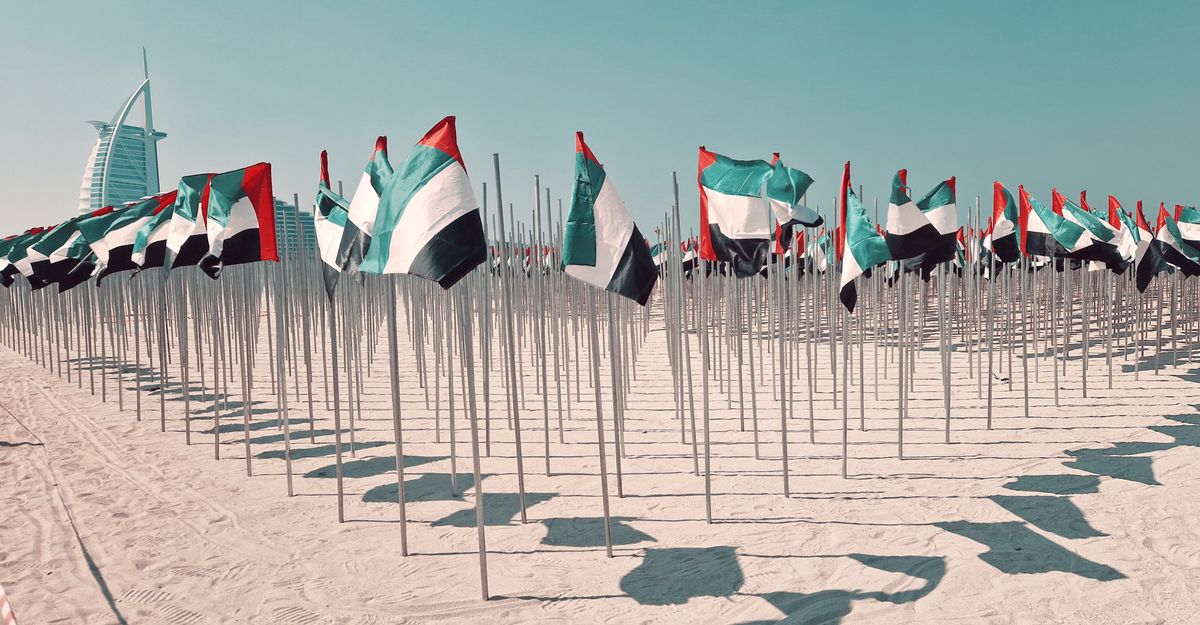
Photo: Milan Kiro on Pexels
There is no moon-sighting risk on December 2. UAE National Day commemorates the unification of the seven emirates in 1971, and the date is fixed year after year. Automation can be configured months in advance, and the mechanics are the easiest part of the year to get right.
Tone is where fixed-date holidays still catch teams out. A generic English-only "Happy Holiday" template lifted from a global holiday library signals a system not built for the UAE market. National Day expects Arabic-first or bilingual messaging, calibrated to the local celebration culture visible across every emirate through the first week of December.
The language choice question is worth thinking through in full, and the honest read sits in this piece on bilingual sites for the UAE.
Fixed does not mean thoughtless. Fixed means you have no excuse to get it wrong.
The architecture underneath all of these models was introduced in the 2017 transformer paper.
UAE Telemarketing Rules Don't Take a Holiday
Cabinet Resolutions 56 and 57 of 2024, effective 27 August 2024, set the calling window at 09:00 to 18:00 and require Do Not Call Registry checks before any outbound call to a consumer. Fines run AED 50,000 for a first breach, AED 75,000 for a second and AED 150,000 for a third. These rules do not pause on public holidays.
If a holiday falls on a working weekday, the calling window still applies, the DNCR check still needs to happen, and the fines still bite. An automated outbound sequence that fires on a public-holiday weekday without a suppression rule and a fresh DNCR check carries the same legal exposure it would on any ordinary Tuesday.
Message volume drops on holidays, but the legal floor does not. A compliance officer reviewing a fine notice will spot that the call went out on Eid.
If you want an outside read on whether your outbound stack respects both the calendar and the DNCR rules, Lenoo AI's free 30-minute audit call starts with your existing setup, not a pitch.
Building a Holiday-Resilient Gulf Automation Calendar
Three architectural principles carry most systems through the year without incident. A resilient gulf holidays automation calendar isn't complicated, but it is deliberate.
One: separate the calendar layers. Fixed civil holidays (New Year's Day, National Day) live in a hardcoded config that ships with the workflow. Anticipated Islamic holidays (Eid Al Fitr, Arafat Day, Eid Al Adha, Islamic New Year, Prophet's Birthday) come from a live source at runtime, with a defensive fallback that holds messaging rather than firing on an unconfirmed date.
Working-week logic sits in its own layer, and the working week piece covers the full engineering picture.
Two: state, not flag. Every day of a multi-day holiday span carries its own state: opening day, mid-holiday, return day. Message templates map to the state, not the calendar date.
When a moon sighting moves the span, only the state-to-date mapping shifts.
Three: bilingual as a parameter. Language selection (Arabic, English, both) is a customer-level attribute, not a workflow-level one. Customer preference decides what the automation sends, and the fallback for unknown preferences is bilingual.
Public-facing web content follows the same principle at the SEO layer, and the Arabic SEO piece is the natural companion read.
If that describes your current setup, book a free 30-minute consultation with Lenoo AI for an honest read on what would need to change.
FAQ
How do you handle moon-sighting uncertainty in automated message scheduling for UAE holidays?
Pull Islamic dates from a live source at runtime, and add a fallback that holds outbound sends until the Cabinet confirms. Static configs baked in at build time cannot self-correct.
Which 2026 UAE public holidays have confirmed dates and which depend on moon sighting?
New Year's Day and UAE National Day are fixed civil dates. Eid Al Fitr, Arafat Day, Eid Al Adha, Islamic New Year and Prophet Muhammad's Birthday are moon-sighting dependent, and the Cabinet has not yet issued its 2026 announcement.
Do UAE telemarketing compliance rules under Cabinet Resolutions 56 and 57 of 2024 apply during public holidays?
Yes. The 09:00 to 18:00 calling window and DNCR requirements stay in force on any public holiday that falls on a working weekday, and fines of AED 50,000 to AED 150,000 still apply.
Should automated Eid greetings in the UAE be sent in Arabic, English, or both languages?
Match the customer's preference where you have it. Where you do not, send both, because UAE customers mix Arabic, English and Arabizi in the same WhatsApp thread.
How far in advance does the UAE officially confirm the Eid Al Fitr date each year?
The Cabinet confirms by moon sighting, and the announcement can arrive one to two days before the holiday itself. Earlier published dates are predictions, not confirmations.
What is the difference between Eid Al Fitr and Eid Al Adha for automated communication scheduling?
Both are three-day spans that need day-specific messaging states, and both are moon-sighting dependent. The dynamic lookup pattern applies identically to both.
How does the UAE working week affect outbound automation scheduling around public holidays?
The UAE works Sunday to Thursday, so when an Islamic holiday span lands against the Friday and Saturday weekend, the disruption to outbound flows extends into the following week. Weekend adjacency and moon-sighting drift compound each other.


