

A prospective client messages your firm on WhatsApp at 22:40 on a Friday. She wants a family law consultation, ideally Sunday morning. By Sunday at 09:15 nobody has replied.
She has already booked with the firm that answered at 22:47. This is what law firms appointment booking automation exists to fix: capturing enquiries the second they arrive, on the channel the client uses, and writing them into one calendar so nothing gets double-booked.
Most UAE firms still run three intake channels in parallel. WhatsApp goes to a partner's phone. The landline goes to reception.
The website form goes to an inbox nobody owns. Each channel keeps its own version of the truth, and the diary is whichever one shouted loudest that morning.
Key Takeaways
- WhatsApp-first intake beats web-only forms — UAE clients open on WhatsApp expecting a reply in minutes; a firm offering only a web form loses enquiries before the conversation even starts.
- Outbound calls carry strict legal limits — Cabinet Resolutions 56 and 57 of 2024, in force since 27 August 2024, require TDRA approval, locally registered numbers, and Do Not Call Registry compliance within a 09:00 to 18:00 calling window; fines run AED 50,000, then AED 75,000, then AED 150,000 for repeat breaches.
- Shared availability ends double-bookings and no-shows — One engine behind WhatsApp, phone and web means a slot booked on one channel is instantly unavailable on the others; automated reminders take no-show rates from 20 to 25 percent down to under 5 percent.
- Booking data falls under UAE's PDPL law — Name, contact number, WhatsApp ID and case description collected at booking are personal data under Federal Decree-Law No. 45 of 2021; DIFC and ADGM firms must also satisfy their own layered data protection regimes on top of the federal one.
- Booking is the entry point, not the endpoint — Once an appointment is confirmed, the same system feeds directly into document collection, client onboarding and inbox triage, connecting intake to the rest of the firm's operations.
Why appointment booking is broken at most UAE law firms
Three channels, three calendars, no shared availability. That is the root of the problem.
In the UAE, WhatsApp is where clients start. They send a voice note or a two-line message and expect a reply in minutes, not a link to a web form.
A firm without a WhatsApp booking path is losing enquiries before the conversation begins. The phone still matters for older clients and corporate contacts, and the website form catches international enquiries. All three are legitimate, but none see each other.
The result is predictable. A partner accepts a Wednesday 10:00 slot on WhatsApp while reception offers the same slot to a walk-in caller.
The web form drops a booking for 09:30 that nobody notices until Sunday morning. Fix the three-channel problem and most of the symptoms disappear at once.
In Abu Dhabi the equivalent regulator is the Department of Health, and its licensing conditions differ from Dubai's in the detail.
WhatsApp booking automation: the channel your UAE clients are already using
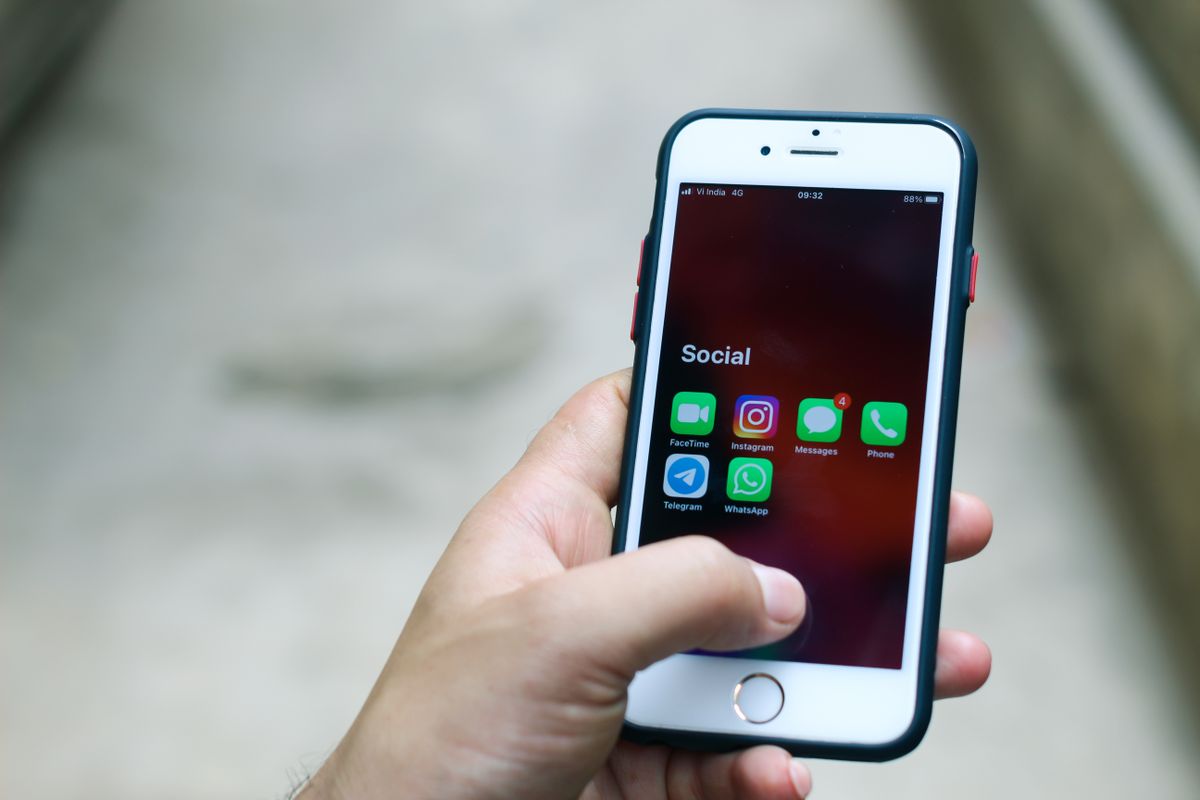
Photo: Ravi Roshan on Pexels
Your clients message on WhatsApp whether your firm is set up for it or not. The question is whether that message hits an AI booking agent or a partner's phone checked at lunch.
An AI agent on WhatsApp can run the full intake conversation without human involvement. It asks the case type (commercial, family, employment, arbitration), offers real slots from the practice calendar, and confirms the appointment on the spot.
When a corporate lead lands at 23:00 asking about a shareholder dispute, it books a Monday slot before the client shops elsewhere.
Bilingual handling is not a feature, it is a requirement. UAE clients write in Arabic, English, and often a mix of both, sometimes in Arabizi (Arabic written with Latin letters).
The agent has to handle all three in a single thread without switching bots. If a client opens in Arabic and switches to English to paste a contract clause, the flow continues without a hiccup.
The confirmed slot writes to the same calendar as phone and web bookings. A separate WhatsApp diary hides double-bookings inside a channel nobody audits.
Phone intake and UAE telemarketing law: what you can and cannot automate
Inbound and outbound phone automation are treated very differently under UAE law.
Inbound is straightforward. An AI voice agent answers the landline, qualifies the caller, checks availability, and confirms a booking without a receptionist.
Callers who prefer a human can be transferred at any point. Nothing about inbound answering runs into telemarketing rules, because the client initiated the call.
Outbound is where the regulation bites. Cabinet Resolutions 56 and 57 of 2024, effective 27 August 2024, require TDRA prior approval for outbound telemarketing, the use of locally registered numbers, and full compliance with the Do Not Call Registry.
The calling window is 09:00 to 18:00. Fines for DNCR breaches run AED 50,000 for a first breach, AED 75,000 for a second, and AED 150,000 for a third.
An AI calling a confirmed client is not outbound telemarketing under these resolutions. An AI calling a list of leads to pitch a consultation is. The fines are not hypothetical.
Web booking: the 24/7 intake window that works alongside WhatsApp and phone
The website form is the third leg. It catches overnight and weekend enquiries and serves clients who prefer a structured form.
An embedded booking widget writes confirmed slots straight into the shared calendar. International clients and corporate contacts who want a formal record reach for it first.
Use the form to collect what the lawyer needs before the meeting: case type, preferred language, and documents to bring. That way the first session starts with the file in front of you. This is the natural handoff into document collection automation and client onboarding automation.
Buffer rules, minimum notice periods, and maximum daily caps are configured once and apply to all three channels. Change the rule in one place, it changes everywhere.
Each channel carries a different role and a different constraint before everything lands in the same calendar.
| Channel | Best for | Regulatory constraint | Availability |
|---|---|---|---|
| Fast-moving, bilingual enquiries | None for client-initiated chats | 24/7, AI agent replies instantly | |
| Phone (inbound) | Older clients, corporate contacts | None, client initiated the call | Answered anytime by AI voice agent |
| Phone (outbound) | Confirming an existing booking only | Cabinet Resolutions 56 and 57 of 2024, DNCR rules | 09:00 to 18:00 calling window only |
| Web form | International and corporate clients wanting a record | None specific | 24/7, catches overnight and weekend enquiries |
One calendar: how three channels merge without double-bookings

Photo: RDNE Stock project on Pexels
One availability engine sits behind WhatsApp, phone and web. A slot booked on WhatsApp at 22:47 is immediately unavailable on the other channels. No slot can be offered twice.
That single source of truth unlocks the no-show reduction. Published law firm data reports no-show rates dropping from 20 to 25 percent to under 5 percent once automated reminders are in place, and WhatsApp reminders outperform SMS in this market.
Conflict detection also protects the lawyer, not just the calendar. Back-to-back consultations, same-day overloads, and last-minute slots can be blocked across every channel.
If Wednesdays are court days, they disappear from every channel automatically. The multi-channel view connects to the shared inbox problem, which is why we cover inbox triage for law firms as a sibling piece.
PDPL compliance: what booking data you are collecting and how to handle it
A booking flow collects personal data on every enquiry: name, contact number, WhatsApp ID, and a case description. All of that is regulated under Federal Decree-Law No. 45 of 2021 (PDPL), which came into force on 2 January 2022, with the UAE Data Office established under Federal Decree-Law No. 44 of 2021 as the federal regulator.
DIFC and ADGM firms operate under separate layered regimes on top of the federal PDPL. If you are registered in either free zone, you satisfy both, not just the federal one.
Data collected for booking cannot be repurposed for outbound marketing without separate, explicit consent. A phone number captured at intake is not a telemarketing opt-in, and treating it as one exposes the firm to both PDPL enforcement and DNCR fines.
Minimise data collected at booking to what the appointment requires. Set a retention policy for no-show and cancelled records. Store data securely and log every access.
How to measure whether the automation is actually working
Pick a small set of numbers and track them weekly for the first four weeks. If they move, keep going. If they do not, something in the configuration is wrong.
No-show rate is the headline metric. The pre-automation baseline sits at 20 to 25 percent. With automated WhatsApp reminders, under 5 percent is the target.
Track enquiry-to-confirmed-appointment conversion by channel separately. The gap between WhatsApp, phone and web conversion tells you exactly where the intake flow leaks.
Watch staff time per booked appointment. Industry evidence suggests AI handles a large majority of repetitive booking enquiries automatically, so coordination overhead drops noticeably.
Appointment booking is the intake layer of a broader legal operations stack, and the pillar guide on AI automation for UAE law firms covers the full picture. Book a free 30-minute consultation at lenooai.com.
Related reading
FAQ
Can a WhatsApp agent handle Arabic and English in the same conversation?
Yes. A properly built agent handles Arabic, English and Arabizi in one thread, keeping context when the client switches mid-message. Splitting into two language-specific bots breaks the experience.
Do Cabinet Resolutions 56 and 57 of 2024 apply to automated appointment reminders sent to clients who have already confirmed a booking?
No. The resolutions target outbound telemarketing, meaning unsolicited calls to prospective clients. A reminder to a client who booked a slot is not telemarketing under these rules.
What data does a booking flow collect, and does it fall under Federal Decree-Law No. 45 of 2021?
Name, contact number, WhatsApp ID and a case description are the standard fields. All of it is personal data under the PDPL, which has been in force since 2 January 2022. The case description is often sensitive, so tighter access controls apply.
Does a DIFC or ADGM firm face different compliance requirements than a mainland UAE firm?
Yes. DIFC and ADGM run their own data protection regimes on top of the federal PDPL. A firm in either zone satisfies both regimes at once, not one instead of the other.
What is a realistic no-show rate once automated booking reminders are in place?
Under 5 percent is the target. Published law firm data reports the pre-automation baseline at 20 to 25 percent and reductions to under 5 percent after automated reminders are added.
Can one calendar handle multiple lawyers, practice areas, or offices without separate booking links?
Yes. The booking engine routes based on case type, language, and lawyer availability, so a single intake path can serve the whole firm. Separate links per lawyer are the legacy pattern that unified booking replaces.
How long does it take to connect WhatsApp, phone, and web enquiries into one calendar?
Most implementations at a small to mid-size UAE firm complete in a few weeks, not months. The bottleneck is usually agreeing the internal rules, not the technical integration.


