

UAE cloud regions for AI workloads look busier on paper than in a provisioning console. This piece maps what's available and what PDPL demands.
If you're choosing where prompts and inference logs will live, you need the state of play, not the investment thesis.
Key Takeaways
- UAE data centre capacity passed 376 MW in 2025 — Microsoft and G42 are adding 200 MW by end of 2026, and du and Microsoft are building a $544 million hyperscale site in Dubai.
- Your entity's domicile decides which privacy law applies — DIFC and ADGM entities answer to their own free-zone data protection regimes first; federal PDPL under the UAE Data Office covers onshore-licensed entities, and groups with mixed domiciles must run more than one framework in parallel.
- Almost all UAE cloud capacity runs through colocation — About 95% of capacity is third-party colocation, with more than 85% of hyperscaler IT power deployed via colo. Self-built centres account for only 5.44%, roughly 65 MW, so your DPA is with the cloud provider but a colocation operator's terms govern the actual racks.
- UAE grid power costs nearly double Saudi Arabia's — At about $0.11 per kWh, UAE power is more than double Qatar's rate too. The gap is manageable for always-on inference but material for multi-week training runs pulling tens of megawatts.
- Map your AI data flows before choosing a region — Prompts, transcripts, embeddings and inference logs each carry a different residency obligation, so the map should determine which region, DPA and subprocessor chain you pick, not the other way around.
Which Cloud Providers Have UAE Regions Available for AI Today
Several hyperscalers show UAE regions on their maps, but "a region exists" and "GPU-backed AI services run there today" differ. AI-accelerated SKUs often trail general compute by months.
Microsoft is the most materially committed. With Abu Dhabi-based G42 it has announced a 200 MW expansion for end of 2026, and du and Microsoft have agreed on a $544 million Dubai facility.
Khazna's 100 MW AI-optimised centre in Ajman is different from a hyperscaler region. It's a purpose-built AI compute site, not a multi-service cloud zone with managed databases and PaaS.
Abu Dhabi and Dubai rank as the top two emerging data centre markets worldwide in 2025.
The Telecommunications and Digital Government Regulatory Authority is the body that licenses telecom services in the UAE and sets the rules for unsolicited marketing contact.
What PDPL and Free-Zone Rules Actually Require for Your AI Data

Photo: Markus Winkler on Pexels
Choosing a UAE cloud region doesn't automatically make you PDPL-compliant. Federal Decree-Law No. 45 of 2021, in force since 2 January 2022, applies to personal data processed in or from the UAE, and the UAE Data Office (established under Federal Decree-Law No. 44 of 2021) is the federal regulator you answer to.
The residency of the compute is one input. Your data processing agreement, cross-border transfer safeguards and record-keeping duties are all separate.
Free-zone rules add a layer on top. DIFC and ADGM each run their own data protection regimes, and if your entity is domiciled inside either free zone, those rules govern you first.
A federal-only mindset misses this. Your office address in Business Bay doesn't decide it; the licence your entity holds does.
AI carves out no exemption. Prompts, transcripts, embeddings and inference logs are personal data the moment they contain, or can be reasonably linked to, an identified person.
The regulator looks at the nature of the data, not the label on the workload. If your support agent stores 30 days of chat transcripts to fine-tune a model, that is personal data processing under PDPL, and the same rules on lawful basis, purpose limitation and cross-border transfer apply.
For the full residency trade-off, including when in-country compute is the right answer versus when a foreign region with a proper transfer mechanism does the job, see the pillar on where your AI data should live in the UAE.
The Colocation Reality: How UAE Cloud Capacity Is Actually Structured
Close to 95% of UAE cloud capacity runs through third-party colocation, with more than 85% of hyperscaler IT power deployed via colo. Self-built centres account for only 5.44%, roughly 65 MW.
This matters for the contract you sign. Your data processor agreement is with the cloud provider, but the physical custody chain runs through a colocation operator whose own terms apply to the racks and the building.
Subprocessor disclosures should name that operator, and you should read them before you assume residency is guaranteed. A DPA that says "region: UAE North" and a colo that sub-leases hall space to multiple tenants aren't the same reassurance.
Evaluate whether a colocation-backed region meets your residency needs by first mapping your AI data flows.
The US National Institute of Standards and Technology organises its AI Risk Management Framework around four functions: govern, map, measure and manage.
Power Costs and Capacity Constraints That Shape UAE AI Workloads
UAE capacity surpassed 376 MW in 2025 as operators raced to lock in power ahead of 2026 expansions. Against a single frontier training cluster, it's not much.
Power pricing is the constraint most buyers underestimate. UAE grid power for data centres runs at approximately $0.11 per kWh, nearly double Saudi Arabia and more than double Qatar.
For always-on inference at moderate scale, that cost delta is manageable. For a multi-week training run pulling tens of megawatts, it's the difference between running the project in-country and running it somewhere else and shipping the model file back.
Renewable energy sits at just 5% of the UAE's energy mix, even with the country hosting the world's largest solar-powered data centre at Moro Hub Solar Park. If your AI programme carries ESG reporting obligations, you can't assume UAE-hosted equals green.
You have to ask for it specifically and see it in the contract. Global data centre construction costs are climbing at around 7% a year, so waiting for cheaper capacity rarely pays off; the newer builds price to the new construction curve.
A practical rule falls out of these numbers. Keep inference in-country where residency and latency matter.
Think twice before running large training jobs on UAE-metered power when a neighbouring Gulf grid is half the price and a model file crosses borders under different rules than personal data does. If sovereign or on-premise makes sense for your case, the trade-offs are in when sovereign and on-premise LLMs are worth the cost.
The 2026 Expansion Pipeline: New AI Capacity Confirmed for the UAE
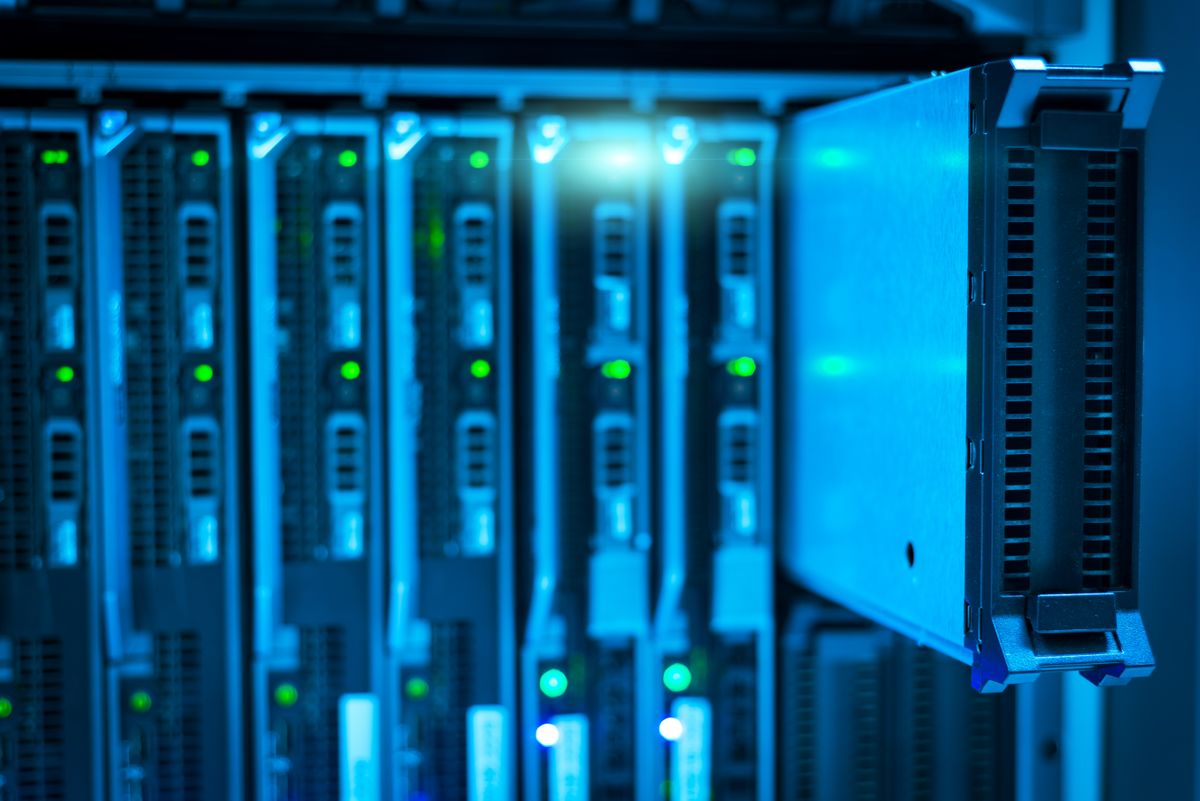
Photo: panumas nikhomkhai on Pexels
The next twelve months matter more than the previous three for anyone timing an infrastructure decision. Microsoft and G42's 200 MW UAE expansion is targeted for end of 2026.
The du and Microsoft $544 million hyperscale build for Dubai adds another materially AI-ready site. Both change the maths on whether waiting is sensible.
Khazna's Ajman AI facility is the concrete example. It's a large building with 20 data halls at 5 MW each, 100 MW total, broken ground in October 2024 and on track for completion within 15 months of that announcement.
That's the timeline for one site. Multiply across several announced projects and the picture in late 2026 is genuinely different from today's.
Stargate is the outlier in scale. A 10-mile square AI campus and infrastructure cluster is slated for a 2026 launch, eventually targeting 5 gigawatts of data centres.
Early stage, but the number tells you where committed capital thinks the region is going. Ownership structures are shifting too: E& UAE's $2.2 billion stake sale in Khazna Data Center Holdings changes who controls a large share of the underlying infrastructure, which matters for procurement teams sensitive to an operator's shareholder base.
If you can wait 12 months, late 2026 will look different. Otherwise sovereign or colocation gets you moving now.
The OECD AI Policy Observatory tracks how different countries are regulating AI, which matters as soon as you operate in more than one market.
Matching Your AI Workload to the Right UAE Region and Architecture
Three realistic architectures are on the table. An API call to a model hosted abroad is lowest-friction and weakest on residency guarantees. A UAE hyperscaler region gives you residency without custody control.
A sovereign or colocation-hosted setup gives you maximum control at higher operational cost. The right choice depends on the data types you're handling and what your DPA can defensibly say about them. For the head-to-head detail, read open-source models hosted locally versus API models abroad.
Picking a UAE region isn't the end of the compliance work. The DPA, the subprocessor chain and the cross-border transfer mechanism for anything that leaves the country all need verification.
DIFC and ADGM entities have to check that their free-zone rules are explicitly covered by the region's DPA or BAA, not assume federal PDPL coverage is enough. A generic "GDPR-plus" statement from the vendor isn't the same as coverage of DIFC's or ADGM's data protection regimes.
Order of operations matters. Map your AI data flows first: prompts, transcripts, embeddings and inference logs each behave differently and each carries a different residency obligation.
Then pick the region that fits the map, not the other way around. Close the loop by reading the pillar on UAE data residency for AI so the trade-off you land on is the one you meant to make.
Each of the three realistic architectures trades residency guarantees against custody control differently.
| Architecture | Residency Guarantee | Trade-off |
|---|---|---|
| API call to a model hosted abroad | Weakest | Lowest friction |
| UAE hyperscaler region | Residency | No custody control |
| Sovereign or colocation-hosted setup | Maximum control | Higher operational cost |
FAQ
Does Microsoft Azure have an active UAE cloud region, and does it support GPU or AI-optimised workloads today?
Microsoft has UAE cloud capacity and has committed with G42 to a 200 MW expansion by end of 2026, plus a $544 million Dubai build with du.
Does storing AI data in a UAE cloud region automatically satisfy PDPL data residency requirements?
No. PDPL compliance depends on the lawful basis, the data processing agreement, the subprocessor chain and any cross-border transfer safeguards.
Physical location is one factor, not the full test. If you are a DIFC or ADGM entity, your free-zone data protection rules apply first and the region's DPA needs to cover them explicitly.
What is the practical difference between a UAE hyperscaler cloud region and a UAE colocation-hosted AI cluster?
A hyperscaler region gives you managed cloud services in a UAE location. A colocation-hosted AI cluster is racks you or a specialist operator manage in a third-party building.
How do DIFC and ADGM data protection rules differ from federal PDPL, and which governs my company's AI workloads?
Your entity's legal domicile decides. A DIFC entity is governed by DIFC's data protection regime and its regulator, an ADGM entity by ADGM's.
Federal PDPL under the UAE Data Office applies to entities licensed onshore. Group companies with mixed domiciles have to run more than one framework in parallel.
Is GPU-accelerated compute actually available in UAE cloud regions now, or is most of it still being built out for 2026?
Some GPU capacity is live and more is arriving. UAE data centre capacity passed 376 MW in 2025, and confirmed 2026 expansions add materially to what's available.
AI-optimised sites like Khazna's Ajman facility are being commissioned. Check each provider's current SKU list rather than reading press releases.
How do UAE power costs compare to running the same AI workloads in Saudi Arabia or Qatar?
UAE grid power for data centres is around $0.11 per kWh, nearly double Saudi Arabia and more than double Qatar. For always-on inference the delta is small; multi-megawatt training makes it material.
Should I wait for the confirmed 2026 UAE expansions before committing to in-country AI infrastructure, or is there enough capacity to act now?
Enough to start real workloads if requirements are moderate and residency needs clear. Wait if you need very large AI-optimised GPU allocations that only 2026 builds will supply.


