

Your operations team opens WhatsApp on a Sunday morning and sees 40 unread threads. A shipper in Jebel Ali wants a rate to Riyadh. Another wants to change a booking.
A third has sent four photos of a bill of lading and asked, half in Arabic and half in English, whether the cargo can move this week. Nobody has moved a container yet, and half the shift is already gone.
That is the WhatsApp problem for UAE logistics companies. And no, adding another dispatcher does not fix it. What fixes it is an AI automation layer built for the way UAE logistics actually runs, starting on the channel where enquiries actually land.
This article walks through what a WhatsApp AI agent does for a freight operation, what it does not, and where the real operational gain sits. If you want a scoped view of your own workflows, there's a free 30-minute consultation at the end.
Key Takeaways
- The real WhatsApp gain is inbound, not outbound — Most logistics companies only automate outbound alerts. The bigger win is an AI agent handling rate requests, cargo questions, and booking changes on the inbound side before they reach ops.
- Enquiries arrive in three languages plus photos — UAE customers write in Arabic, English, and Arabizi, and send document photos like bills of lading. The agent has to handle all of it without escalating every message to a human.
- New WhatsApp rules carry escalating fines — Cabinet Resolutions 56 and 57 of 2024, effective 27 August 2024, regulate outbound commercial messaging. DNCR breaches cost AED 50,000, then AED 75,000, then AED 150,000 for repeat violations.
- System integration decides answer accuracy — Connecting the agent to a TMS, rate card, or ERP is what separates a chatbot from an agent. Without it, a spreadsheet updated weekly means the agent quotes weekly-old rates.
- Training your team is part of the build — Ops staff need to know what the agent handles on its own, when it hands a thread off, and how to update its rates and knowledge.
Why UAE Logistics Teams Are Drowning in WhatsApp Enquiries
WhatsApp is where UAE shippers land first. Rate requests, cargo questions, booking changes, ETAs at 22:00 on a Thursday, they arrive on WhatsApp before email. And the sender expects a reply in minutes, not the next morning.
The cost is not in the messages themselves. It is in who reads them. Every hour your ops team spends triaging threads is an hour it does not spend on dispatch, coordination, and the commercial decisions that move freight.
Add three staff and the queue still grows, because the queue is the customer channel now, not a side inbox. The inbound triage load bleeds straight into every other operational function, which is why hiring your way out of it stops working past a certain volume.
Then there's the language layer. UAE threads come in Arabic, English, and Arabizi, sometimes all three inside a single message with a photo attached. Manual triage under those conditions is slow, and it is wrong more often than anyone wants to admit.
A rate request misread as a tracking query goes to the wrong person and dies in a queue.
The same ministry sets the consumer protection rules that apply to automated sales contact just as they do to a human sales team.
What a WhatsApp AI Agent Does That a Chatbot Cannot
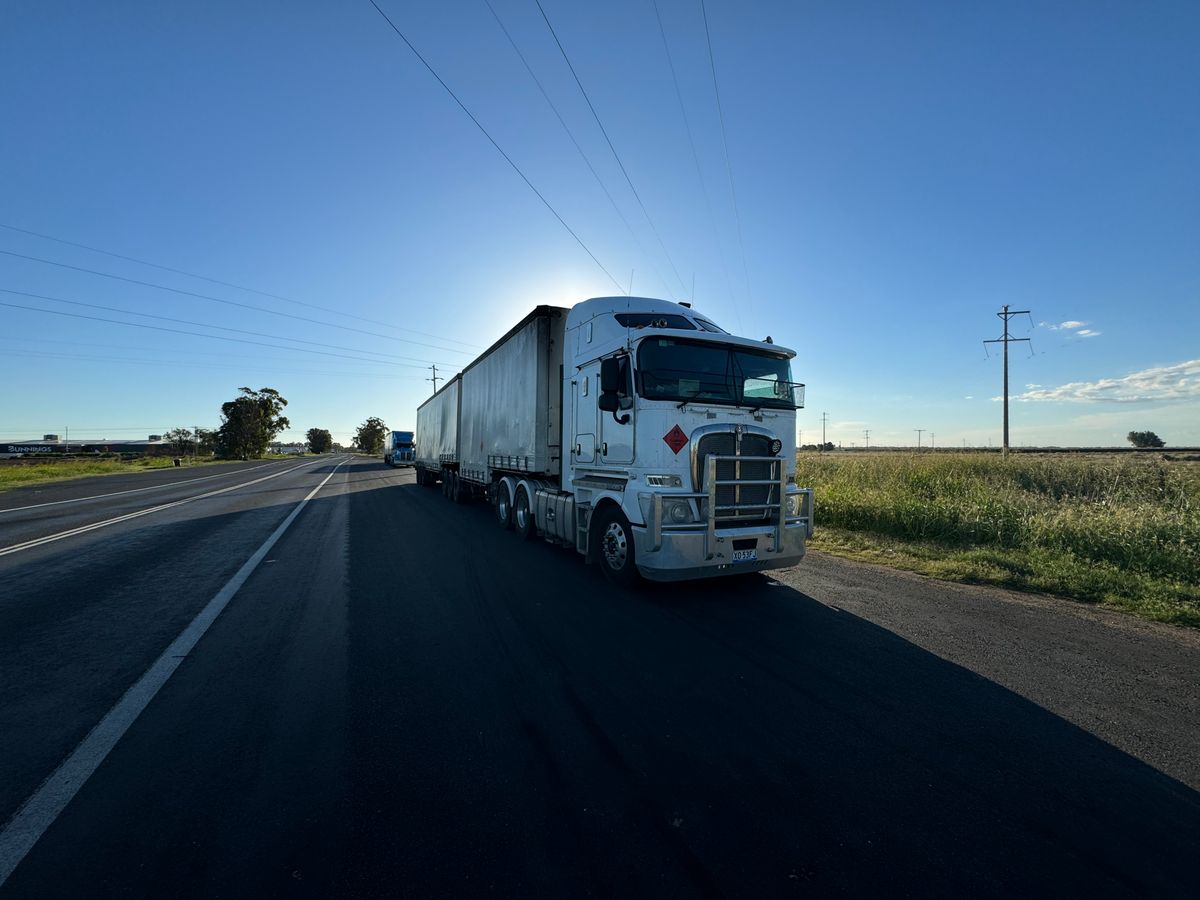
Photo: hitesh Sarain on Pexels
A chatbot matches a keyword to a fixed reply. Type "tracking", get a link. Type "quote", get "our team will get back to you".
That is not automation for a freight operation, that is a voicemail with buttons.
An AI agent reads the intent of an enquiry across multiple messages, holds the conversation in memory, and decides what to do next. If a shipper sends cargo details in one message and destination in the next, the agent understands they belong to the same request. It can pull a rate from a live rate card, check a shipment status in your TMS, ask a clarifying question about dimensions or IMO class, or confirm a booking.
It takes action, it doesn't just reply.
When a thread needs a human, say special cargo or a live dispute, the agent routes it to the right person with the full context loaded. Your ops lead reads a summary, not eleven messages spread across three days.
The Inbound Freight Enquiry Workflow From First Message to Qualified Lead
A customer sends: "Need rate for 2x20ft DC, Jebel Ali to Dammam, ready Monday." Two minutes later: "actually make it 3 containers, one reefer, temp -18." The agent reads both, checks the rate card with the reefer surcharge, and replies with a specific quote and validity window.
Not "our team will get back to you", a number the shipper can decide on.
If the enquiry is a booking change, the agent verifies the TMS reference and confirms. If it is a status question, it reads the latest milestone. Inbound enquiries duplicate what is sent by email, and the same triage logic on the email side needs to talk to WhatsApp.
When the enquiry requires a commercial call, credit exposure, unusual cargo, discount requests, the agent flags the thread with a reason and routes it to the right desk with the conversation summary. It does not send a dead-end reply and it does not silently drop the thread.
Outbound Status Updates and Payment Reminders Without Manual Work
Automated shipment confirmation the moment a booking is placed. Milestone updates at gate-in, vessel departure, arrival, customs release, out for delivery. Payment reminder sequences for outstanding invoices, sent on a schedule that respects the customer's payment terms.
All of it worth automating, all of it standard for a modern freight operation.
The demand is there. Industry figures commonly cited put customer expectation for instant assistance around 71%, and in the UAE that expectation lands on WhatsApp first. The events that fire those outbound notifications tend to come from your dispatch and scheduling systems, so the pipeline triggering the notification is the same pipeline running your operational calendar.
Build one, get the other in reach.
Bilingual Messages, Document Photos, and the UAE Operational Reality

Photo: cottonbro studio on Pexels
UAE shippers send Emirates ID photos, bills of lading, VAT invoices, cargo photos with a scribbled Arabic note. The agent needs to read these, extract the fields that matter, and act on them. Reject them with "please send as PDF" and you have not automated anything, you have added a step.
Arabizi is the second trap. A shipper writes "el shipment wasal el port emta?" and a monolingual agent classifies it as English gibberish and drops it into a review queue. It is a straightforward status question, and the agent has to know that.
Bilingual handling in the UAE is not a feature bullet, it is table stakes.
Trade licences and bank statements arrive as mixed-language photos with Arabic in one column and English in the other. The agent has to parse both without error, hand the extracted data to the workflow, and either action the request or route it forward.
UAE Compliance: What Cabinet Resolutions 56 and 57 of 2024 Mean for Your WhatsApp Outreach
Outbound commercial messaging on WhatsApp is regulated in the UAE, and the penalties are not trivial.
Cabinet Resolutions 56 and 57 of 2024, effective 27 August 2024, govern automated commercial messaging and telemarketing. They require TDRA prior approval, locally registered numbers, Do Not Call Registry compliance, and restrict outbound commercial calling to 09:00 to 18:00.
Fines for DNCR breaches run AED 50,000 for a first breach, AED 75,000 for a second, and AED 150,000 for a third. Those add up quickly across a customer base of a few thousand shippers.
On the data side, Federal Decree-Law No. 45 of 2021 (PDPL), in force 2 January 2022, governs how customer data collected through WhatsApp can be stored and used. Opt-in consent is required before automated outbound messages go out.
A properly built WhatsApp agent has opt-in capture, consent logging, and messaging-window compliance from day one. Retrofitting after a warning letter is significantly more expensive.
DNCR fines escalate fast with each repeat breach, which is worth laying out plainly.
| DNCR Breach | Fine |
|---|---|
| First breach | AED 50,000 |
| Second breach | AED 75,000 |
| Third breach | AED 150,000 |
What to Expect When You Build a WhatsApp Agent for Your Logistics Operation
The agent connects to the WhatsApp Business API, not WhatsApp Web. That distinction matters, WhatsApp Web scraping breaks and violates platform terms.
From there it integrates with your TMS, ERP, or rate-card system. The data layer decides what the agent can answer accurately. If rates live in a spreadsheet updated weekly, the agent quotes weekly-old rates.
If they live in a system with live surcharges and lane pricing, the agent quotes those. The integration work is where the honest scope of a project lives.
Team training is part of the build. Ops staff need to know when the agent hands off, how to review its decisions, and how to update its knowledge when a lane rate changes. The same data pipeline can feed daily operational summaries to your management team.
Investment typically falls in the AED 10,000 to 50,000 band for a focused workflow, and the AED 50,000 to 200,000 band for a broader build with multiple integrations, bilingual document handling, and compliance work included.
Want a straight answer on what your operation should build first? Book a free 30-minute consultation and we'll map your highest-volume WhatsApp workflows and give you an honest recommendation.
Related reading
FAQ
Can a WhatsApp AI agent handle freight rate requests automatically, or does every quote still need a human?
Standard lanes with a live rate card can be quoted automatically, with a validity window. Non-standard cargo, credit-sensitive customers, or requests outside published lanes get flagged and routed to your commercial team.
What happens when the AI agent cannot answer a customer's question, does the conversation stop?
No. The agent routes the thread to the right person with the full context loaded and a tag explaining why it handed off.
Does the agent handle Arabic messages and documents sent as WhatsApp photos?
Yes. It parses Arabic, English, and Arabizi in the same thread, and reads photos of bills of lading, Emirates IDs, VAT invoices, and trade licences.
What are the UAE compliance rules for sending automated WhatsApp messages, and what are the fines?
Cabinet Resolutions 56 and 57 of 2024, effective 27 August 2024, require TDRA prior approval, DNCR compliance, and a 09:00 to 18:00 outbound window. DNCR fines run AED 50,000, AED 75,000, and AED 150,000 for successive breaches.
Does WhatsApp automation replace the operations team, or does it work alongside them?
It works alongside them. The agent takes the repeatable triage load so your team spends its hours on dispatch, coordination, and commercial decisions.


