

A UAE guest doesn't call your host stand. She opens WhatsApp, types "Table for 4 at 8?", and waits four minutes. If nothing comes back, she messages the place across the road.
That's the customer journey now, and it's why UAE operators have stopped treating WhatsApp automation for restaurants as a marketing experiment and started building it as operational plumbing.
Key Takeaways
- An unanswered WhatsApp message is a lost booking — UAE guests expect a reply within minutes. During rush hours staff are seating tables and can't keep up, so calls and messages go unanswered while tables sit empty.
- Four flows cover the full guest journey — Reservation confirmation, direct ordering with zero aggregator commission, a post-meal loyalty loop, and an escalation gate that hands complaints to a named staff member.
- Direct WhatsApp orders skip the aggregator cut — Third-party aggregators typically take 20 to 30 percent commission per order. An order placed through your own WhatsApp number carries no aggregator fee, and on a high-volume Friday the savings can pay for the whole build within a quarter.
- Opt-in is mandatory before any automated message — Outbound promotional broadcasts fall under Cabinet Resolutions 56 and 57 of 2024, requiring TDRA approval and adherence to the 09:00 to 18:00 window. Do Not Call Registry breaches carry fines of AED 50,000, 75,000, and 150,000 for a first, second, and third offence.
- The free WhatsApp app doesn't scale — It can't manage approved outbound templates, log a consent audit trail, or separate transactional from promotional messages, so the WhatsApp Business API is the only foundation that meets TDRA requirements for all four flows.
Why WhatsApp Owns the UAE Restaurant Customer Journey
WhatsApp is where your customer already is. In the UAE she uses it for family, for work, for booking her dentist, and now for reserving her dinner. Guests message and expect a reply in minutes; an unanswered thread isn't a delayed booking, it's a lost one.
Global usage figures are commonly quoted above 2 billion users, but the UAE story is stickier: this is the channel your guest won't switch away from.
There's a second twist that catches most out-of-market playbooks off guard. UAE guests write in Arabic, English, and Arabizi, often inside the same sentence. "Habibi 2 people 8pm يوم الجمعة تمام؟" is a real message a real restaurant will get.
Bilingual handling is a non-negotiable. That framing is why a broader look at AI automation across the full UAE restaurant stack starts with WhatsApp: get this channel right and everything downstream gets easier.
The Federal Tax Authority sets the invoice content and record-keeping rules that any finance automation has to produce output against.
The Reservation Flow: Confirmed Tables Without a Phone Call
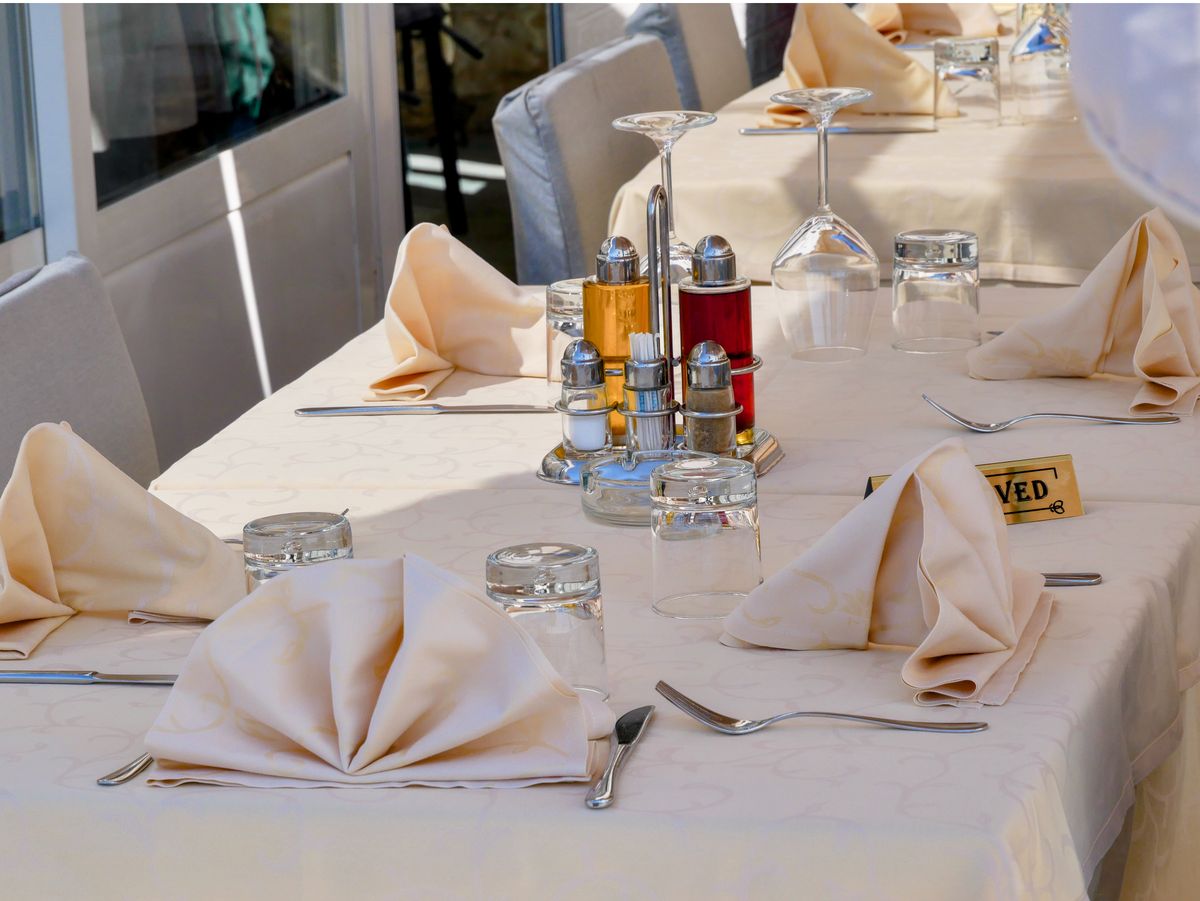
Photo: Lena Netkach on Pexels
The reservation flow captures, validates, and confirms a table without a human touching the thread. A customer messages your WhatsApp number or scans a QR code at the entrance or on the menu. The bot captures party size, date, time, and any special requests, confirms instantly, and sends a timed pre-visit reminder the day before.
Restaurants running this sequence typically see reservation confirm rates around three times higher than phone-only intake.
Here's the operational reason it matters. During rush hours your host is seating tables, sorting a walk-in, and calming a waitlist. Calls ring out while tables sit empty because nobody had the bandwidth to write back.
The bot fills that gap without adding headcount, at the same speed at 20:04 as at 15:00.
Language routing has to sit inside the very first branch. Detect the language of the opening message and respond in Arabic or English, with a fallback for mixed-script input. Bolt this on later and you'll be re-plumbing the whole tree.
The Direct Order Flow: WhatsApp Ordering at 0% Aggregator Fee
Direct ordering is where the margin lives. Third-party aggregators typically take 20 to 30 percent commission on every order they push you. A WhatsApp order coming through your own number costs no aggregator fee.
On a high-volume Friday, the delta pays for the entire build inside a quarter.
Around 70 percent of customers say they prefer to order food online. A WhatsApp ordering flow captures that demand on a channel your guest already checks, without handing a platform your customer relationship.
The order-taking piece of WhatsApp automation for restaurants has three branches: the menu or catalogue display, an order validation and modification loop, and a confirmation with an estimated preparation and delivery time. Payment coordination sits in its own branch, worth designing after the ordering loop is stable.
This is also where the technical foundation stops being optional. Catalogues, order state, and any meaningful volume require the WhatsApp Business API, not the free app. If you're unsure which side of that line your setup is on, the getting-started guide for AI in Dubai is a fair place to sanity-check yours, or Lenoo AI runs a no-pitch 30-minute call to map it live.
The Post-Meal Loop: WhatsApp Loyalty and the Review Request Sequence
What happens after the meal decides whether the guest comes back. A short automated thank-you paired with a targeted loyalty offer for the next visit is the single highest-yield sequence you can run: operators using this loop see roughly 40 percent more repeat orders than those who stop the conversation at the bill. The offer has to be specific: the system identifies a returning WhatsApp number and sends a personalised discount, not the same coupon blasted to everyone.
Timing on the review request matters more than most operators think. Send it at checkout and the guest is still counting change; send it two hours after the meal and she's remembering how the biryani was.
One distinction to hold on to: the reply window allows free-form messaging, but outbound promotional broadcasts outside that window are regulated. That boundary is why a loyalty flow lives half inside the reply window and half outside it.
Deloitte Middle East publishes regional research on how AI adoption is actually landing across GCC sectors.
The Escalation Gate: When the Bot Must Hand Off to a Human
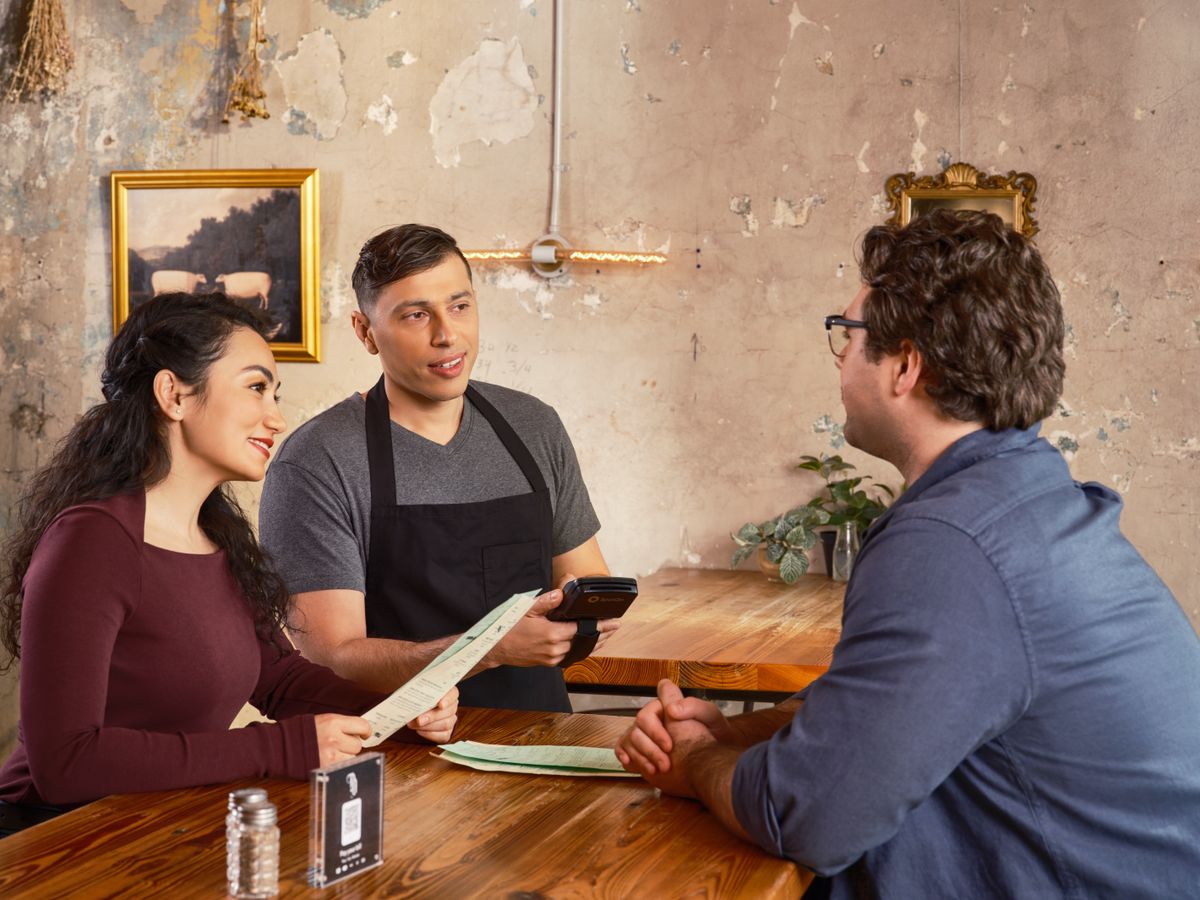
Photo: SpotOn POS on Pexels
Automation earns its keep by knowing when to get out of the way. Complaint triggers such as an allergy issue, a wrong order, or a billing dispute must bypass the bot immediately and land on a named staff member's screen.
The second handoff rule is quieter but equally important. If the bot cannot parse intent after two attempts, it routes to a human instead of looping. Nothing torches goodwill faster than a guest feeling trapped in a script that won't let her out.
Frame automation the way your team should hear it: capacity and speed, not headcount reduction. The bot handles volume; your staff handle relationship and judgment.
Lined up together, the four flows split cleanly between what they automate and what each one saves or earns.
| Flow | Trigger | What It Does | Key Benefit |
|---|---|---|---|
| Reservation Flow | Message or QR code scan | Captures party size, date, time; sends pre-visit reminder | ~3x higher confirm rate than phone-only intake |
| Direct Order Flow | Customer messages to order | Shows catalogue, validates order, confirms prep and delivery time | Zero aggregator fee vs 20-30% commission |
| Post-Meal Loop | Automatic after the meal | Sends thank-you plus personalised loyalty offer | ~40% more repeat orders |
| Escalation Gate | Complaint, or bot fails to parse intent twice | Hands the thread to a named staff member | Protects goodwill, frees staff for judgment calls |
Going Live: What UAE Law Requires Before You Turn On WhatsApp Automation
UAE compliance isn't a footnote to a WhatsApp build; it's the shape of the build. Federal Decree-Law No. 45 of 2021, the PDPL, governs how any customer data captured through WhatsApp must be stored and processed.
In practice that means opt-in has to be explicit at the booking or ordering step and cannot be assumed from a prior visit.
Cabinet Resolutions 56 and 57 of 2024 came into force on 27 August 2024 and reshaped outbound messaging. Promotional broadcasts require TDRA prior approval, calls and messages must respect the 09:00 to 18:00 window, and any breach of the Do Not Call Registry carries a fine of AED 50,000 for a first offence, AED 75,000 for a second, and AED 150,000 for a third. Those numbers make an unmanaged marketing broadcast a serious operational risk.
This is why the WhatsApp Business API is the only defensible foundation. The free app cannot manage approved outbound templates, log a consent audit trail, or separate transactional from promotional messages the way TDRA expects. Pre-launch checklist for any WhatsApp automation for restaurants in the UAE: capture opt-in at the reservation or ordering step, use approved templates for outbound sends, log every consent timestamp, and keep promotional messages inside the 09:00 to 18:00 window.
If you'd like a second pair of eyes before you spend a dirham on the build, book a consultation with Lenoo AI. We name the two or three flows that will move revenue for your setup, and tell you honestly which ones don't make business sense for you yet.
Related reading
FAQ
Do I need the WhatsApp Business API or can the free WhatsApp Business app handle restaurant automation?
The free app is a phone-based tool with quick replies and a basic catalogue; it can't support automated flows, template approvals, or the consent audit trail UAE regulation expects. Running WhatsApp automation for restaurants at any meaningful volume requires the WhatsApp Business API. Treat the free app as a starting point for a solo operator.
How does the bot handle a message that mixes Arabic and English in the same sentence?
A well-built flow detects mixed-script input including Arabizi and responds in the dominant language, with a switch option offered up-front. Language detection has to sit in the very first branch, before intent parsing, so the guest never has to repeat herself.
Can customers pay for their order inside WhatsApp in the UAE?
WhatsApp Pay isn't currently rolled out in the UAE, so payment inside the app itself isn't the norm. Restaurants coordinate payment through a linked hosted checkout page sent inside the thread, or through cash and card on delivery.
What happens when the bot cannot understand what a customer wants?
The rule is two strikes, then a human. If the bot cannot parse intent after two attempts, it routes the conversation to a named staff member instead of looping through the same clarifying question. This is the single most important guardrail against automation damaging a guest relationship.
How do outbound loyalty messages fit within UAE telemarketing rules under Cabinet Resolutions 56 and 57 of 2024?
Outbound promotional messages require TDRA prior approval, must respect the 09:00 to 18:00 window, and must not go to any number on the Do Not Call Registry. Loyalty messages that fire inside the reply window are treated differently from cold broadcasts, so structure your flows to trigger inside that window where possible.
Does running WhatsApp automation mean my front-of-house team handles fewer conversations?
No. It means they handle the ones that need a human, faster, and stop handling the ones that don't. Routine confirms, menu questions, and order status checks come off their plate; complaint handling and judgment calls stay with them.
How long does it typically take to build and go live with these flows?
A single-branch flow like reservation intake can be live inside a few weeks. The full four-flow stack, with bilingual routing, catalogue integration, loyalty triggers, and a compliant opt-in framework, is a multi-week engagement rather than a same-day install. The compliance layer is what stretches the timeline.


