

Your agent went live last quarter. It worked. The demo was clean, the first week of tickets got handled, and someone in leadership called it a win.
Then what?
That "then what" is the whole game. AI agent lifecycle management is the operational discipline of monitoring, evaluating, updating and redeploying a live agent so it keeps doing the job you built it for.
Most UAE teams treat go-live as the finish line. It is closer to the starting line for the work that protects the investment.
Key Takeaways
- Go-live is the start, not the finish — The post-launch loop of monitoring, evaluating, updating and redeploying is what sustains agent value, or lets it leak away.
- Drift and decay are predictable, not emergencies — Model drift, prompt decay and provider model deprecations are known triggers. A structured loop turns them into scheduled maintenance instead of firefighting.
- Every update needs a PDPL check first — Any change to an agent's data access or output scope must be checked against Federal Decree-Law No. 45 of 2021 before redeployment. Agents in DIFC or ADGM face separate framework review on top.
- Most enterprises lack mature AI governance — Only 21% of enterprises surveyed have a mature governance model for agentic AI risks, per IBM's 2026 Tech Leader Study reporting.
- Most AI pilots never pay off — 95% of enterprise GenAI pilots produce no measurable P&L return, per MIT Media Lab's Project NANDA. Post-launch discipline is what separates the businesses that do see returns.
What AI Agent Lifecycle Management Actually Means After Go-Live
AI agent lifecycle management is the end-to-end process of designing, developing, deploying, monitoring and refining AI agents. The definition is uncontroversial.
The problem is where most teams stop reading it: at "deploying". Everything after that word is where value either compounds or quietly leaks away.
Static software does not learn. An agent does, responding to a shifting model, a shifting business context, and users who change how they ask questions week by week.
Standard application lifecycle management asks whether the code still runs. Agent lifecycle management asks whether the entire agent, its model, permissions, actions and business context, is operating safely, reliably and as intended.
Once your agent is talking to real customers on WhatsApp in Arabic and English, the maintenance question is not "is the service up" but "is it still the same agent we shipped".
ISO/IEC 42001 is the international management system standard for artificial intelligence, and it is the certification enterprise buyers in the region ask about most often.
The Four Stages of the Post-Launch Loop
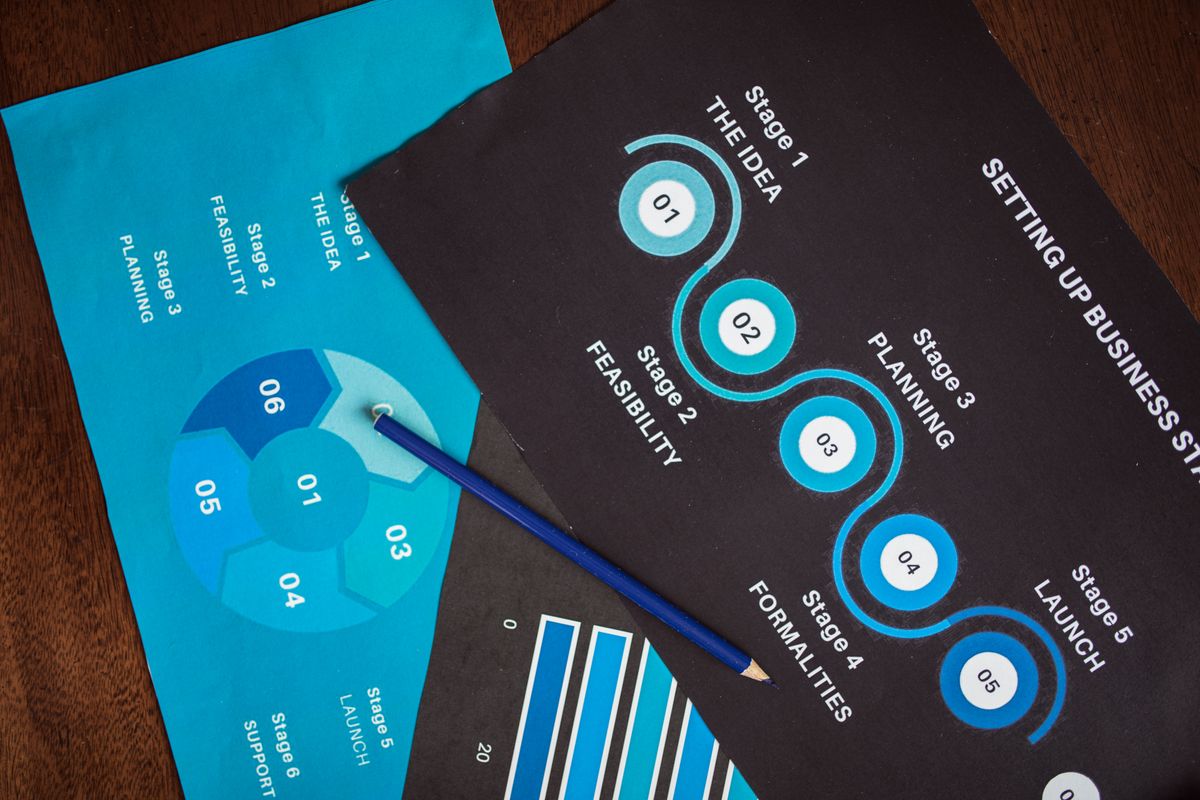
Photo: RDNE Stock project on Pexels
Four stages. Monitor, Evaluate, Update, Redeploy. Draw them as a circle, not a line, because redeployment feeds straight back into monitoring the next morning.
Monitor is passive observation of live behaviour and usage patterns. What is the agent doing, how often, and how is that changing?
Evaluate is the active decision: given what monitoring shows, is the agent still meeting its goal? Update is the intervention: prompt changes, model swaps, data refreshes. Redeploy is the disciplined push, with rollback capability, that puts the new version in front of customers.
The failure mode of every AI programme in market right now is treating the launch as terminal.
IBM's 2026 Tech Leader Study found only 11% of surveyed CIOs and CTOs said they are fully prepared for the scale of agents expected by 2027, and 77% of surveyed organisations said AI adoption is outpacing their current governance. An explicit loop closes that gap. The loop is the governance.
Monitoring: What to Watch and What Most Teams Miss
Watch usage patterns, behaviour anomalies, containment rates, escalation rates and output quality over time. Those five signals are the minimum. Miss any of them and you are flying blind on the one that will hurt you.
For UAE deployments, add one more line to that dashboard: WhatsApp channel health. WhatsApp is the primary customer channel here.
An agent degrading on WhatsApp goes undetected far longer than one on email, because volume is higher, conversations shorter and the failure signature subtler. A ten-second delay looks like nothing on a ticket. On WhatsApp it looks like the business ignoring you.
Bilingual output needs its own monitoring stream. A response that reads correctly in English can be structurally broken in Arabic, or fail to handle the Arabic-English code-switching UAE customers routinely use inside a single message. If you evaluate output quality on an English-only sample, you are auditing half the product.
Monitoring observes; evaluation decides. Dashboards without a cadence are just wallpaper.
Evaluation: Turning Usage Data into a Decision
Set a cadence. Weekly triage to catch anything sharp, monthly structured review to catch anything slow.
Do not wait for something visible to break. By the time it breaks visibly, it has usually been broken quietly for a fortnight.
The decision criteria are narrower than teams expect. Is the agent still meeting its original goal? Has the business context changed: new products, new pricing, a new policy the agent has never seen?
Are error rates or escalation rates trending in the wrong direction, even slightly? Three honest answers tell you whether this month's review ends in "leave it" or "schedule an update".
Evaluation is also how you catch drift before it becomes costly. A structured cadence catches drift while it is still cheap to fix.
Per IBM's 2026 Tech Leader Study reporting, only 21% of enterprises surveyed said they have a mature governance model for agentic AI risks. In the UAE market, a real evaluation rhythm is a competitive differentiator.
Update Triggers: Drift, Prompt Decay, and Model Deprecations

Photo: Andrey Matveev on Pexels
Three triggers cover almost every real update to a live agent. Treat them as scheduled events, not emergencies.
Model drift. Agents may start behaving unpredictably if their logic or data is not regularly updated. Put it on the maintenance calendar and it stays boring.
Prompt decay. Instructions that worked at launch lose their edge as model behaviour shifts and your business context evolves. Prompts are code: every change tracked, every rollback available, every deployment tied to a known-good version.
Provider model deprecations. When your provider retires the version your agent was built on, the agent breaks unless the lifecycle process has prepared a migration path in advance. The timeline is rarely as generous as the provider's announcement suggests.
All three belong on a maintenance calendar. That is what the post-launch loop does: it converts firefighting into routine operations.
Each trigger follows the same pattern once it is scheduled instead of discovered.
| Trigger | What happens | How the loop handles it |
|---|---|---|
| Model drift | Logic or data goes stale, behaviour turns unpredictable | Regular updates to logic and data |
| Prompt decay | Instructions lose their edge as model and business context shift | Every change tracked, rollback always available |
| Provider model deprecations | Provider retires the model version the agent was built on | Migration path prepared, model swapped, redeployed with rollback |
Redeployment and UAE Compliance: What Must Happen Before Every Push
Redeployment is not a technical push alone. Before an updated agent is live, you re-verify permissions, data access scope and output behaviour against the current governance baseline. Without that check, "update" and "incident" become synonyms.
The UAE compliance layer sits on top of every one of those checks. Federal Decree-Law No. 45 of 2021, the Personal Data Protection Law, applies to any agent processing personal data.
Every update that changes what the agent can see or say needs a PDPL check before it ships. Agents inside DIFC or ADGM face those zones' frameworks on top of the federal law, needing separate review on any material change.
If your agent makes outbound calls or messages, add another layer. Cabinet Resolutions 56 and 57 of 2024, effective 27 August 2024, set the rules for outbound communication, including a calling window of 09:00 to 18:00 and Do Not Call Registry checks.
A redeployed agent must still satisfy those rules on every version. Compliance debt compounds silently. Catch it at the push, not at the complaint.
The Governance Cadence That Makes the Loop Self-Sustaining
Name an owner. One person per agent, responsible for the monitoring review, the evaluation decision and the redeployment sign-off. Distributed accountability is no accountability, and "the AI team" is not a person.
Set the minimum cadence in writing. A monthly performance review covering the five monitoring signals. A quarterly deep audit covering compliance status, model version health and prompt version history.
Both go on the calendar with the same seriousness as a board pack, because for anyone using the agent, they are the board pack.
Bias and compliance checks belong inside the quarterly audit as a standing line item, not a project you run once. Agents must be audited and retrained to meet governance standards. That is the operating cost of running an agent.
The alternative is well documented. 95% of enterprise GenAI pilots produce no measurable P&L return, per MIT Media Lab's Project NANDA. The gap between that 95% and businesses that do see returns is post-launch discipline.
If you have an agent in production and none of this cadence exists yet, that is normal and fixable. Book a free 30-minute consultation and we'll map the post-launch gaps in your setup.
Related reading
- AI Service Level Agreement
- AI Agent Maintenance Cost
- AI Agent Metrics to Track
- AgentOps: monitoring and maintenance
FAQ
How often should I update my AI agent after it goes live?
Run a weekly triage on the monitoring signals, a monthly structured evaluation, and a quarterly deep audit. Ship updates when evaluation says the goal is slipping or the business context has changed.
What is model drift and how will I know if my agent is affected?
Model drift is when an agent behaves unpredictably because its logic or data has not been kept current. You catch it in evaluation: rising escalation rates, falling containment rates, and output quality degrading slowly.
Does my AI agent need a compliance check under UAE law every time I push an update?
Any update that changes data access or output scope needs a PDPL check under Federal Decree-Law No. 45 of 2021. Agents inside DIFC or ADGM need separate framework review. Outbound communication is governed by Cabinet Resolutions 56 and 57 of 2024.
What is the difference between monitoring an AI agent and evaluating it?
Monitoring observes what the agent is doing: usage patterns, anomalies, containment and escalation rates. Evaluation is the decision built on that data: whether the agent still meets its goal.
When should I retire an AI agent rather than update it?
Retire it when the underlying business goal no longer exists, when the compliance perimeter has shifted beyond current design, or when the cost of updating repeatedly exceeds the value delivered.
What happens to my agent if the provider deprecates the underlying model?
Without a prepared migration path, the agent breaks on the deprecation date. With a lifecycle process in place, deprecations become scheduled updates: swap the model, re-run evaluation, redeploy with rollback.
How is AI agent lifecycle management different from ordinary software maintenance?
Application lifecycle management asks whether the code still runs. Agent lifecycle management asks whether the whole agent, its model, permissions, actions and business context, is still operating safely, reliably and as intended.


