

Your customer service bot just sent an Arabic reply that mixed up two clients' account balances. Or your CRM's AI lead scorer flagged a real enquiry as fraud and killed the deal. This kind of playbook is what tells your team what to do in the next sixty minutes, before anyone knows why it happened.
Key Takeaways
- Few AI users have a formal response plan — Roughly 30% of organisations using AI report having a formal plan for algorithmic failures, even though UAE AI adoption is exceptionally high — that gap is where regulatory exposure sits.
- Containment starts within the first 60 minutes — At least one containment action, such as isolating the AI system, must be executable within 60 minutes of declaring the incident, before the root cause is known.
- UAE data rules stack on top of each other — Federal Decree-Law No. 45 of 2021 (PDPL) applies nationally, while DIFC and ADGM run their own separate regimes on top, and repeated Do Not Call Registry breaches escalate from AED 50,000 to AED 75,000 to AED 150,000.
- The response timeline has five owned phases — Detect within 1 hour, triage within 4, investigate within 24, mitigate within 48, and report within 72 — each phase needs a named owner, not a shared responsibility.
- Logging failures blind every later phase — If outputs, timestamps and affected users were not captured before the incident, the investigation phase starts without the evidence it needs.
What Counts as an AI Incident in the UAE Context
An AI incident is not only a hack. It also covers harmful outputs, bias amplification, model drift and data poisoning, and one public dataset tracking these events has logged more than 560 separate cases across those categories.
A model trained on data that predates a major event will keep producing flawed predictions until someone notices. For a UAE business using AI in finance, HR or customer service, that is a live operational risk, not a theoretical one.
When the incident touches personal data, obligations kick in. Federal Decree-Law No. 45 of 2021, the UAE's PDPL, sets the baseline, and DIFC and ADGM run their own layered regimes on top.
Adoption in the UAE is exceptionally high, but preparedness is not. Around 30% of organisations using AI report having a formal response plan for algorithmic failures or ethical violations, and the space between "we use AI everywhere" and "we know what to do when it breaks" is exactly where fines happen.
The First 60 Minutes of AI Incident Response: A Containment Checklist
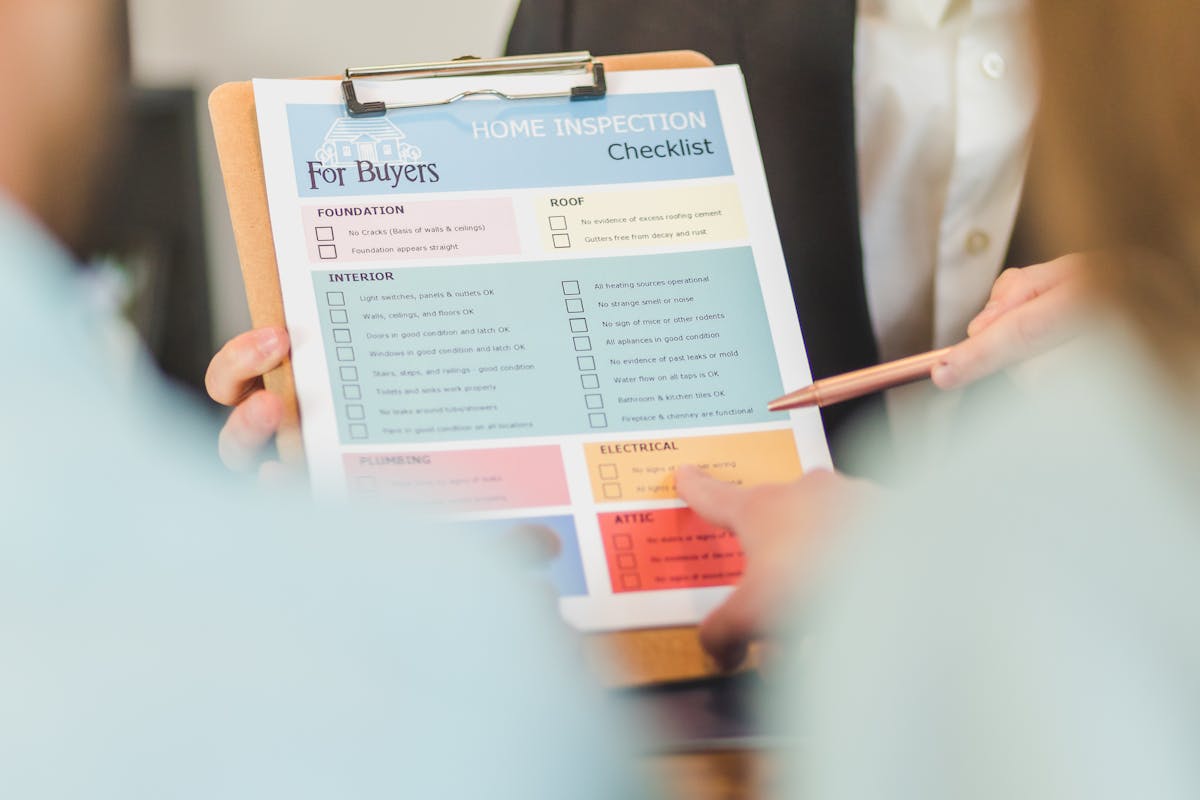
Photo: RDNE Stock project on Pexels
At least one containment action must be executable within 60 minutes of incident declaration, without waiting for root-cause determination. This is Stage 1, and it is non-negotiable.
Isolate the affected AI system or disable the specific feature first. Acting before diagnosis is the correct sequence, not the reverse; a WhatsApp agent misbehaving on live traffic gets muted, then investigated.
Capture evidence inside that same hour: timestamps, raw model outputs, the affected user list, WhatsApp conversation logs, and any customer-facing messages the system has already sent. Gaps in this record will hurt in a regulatory review, so log conversations responsibly from day one.
Alert your pre-named incident owner and open a dedicated incident channel, separate from day-to-day chat. Even in a lean UAE team where one person holds three roles, that owner needs unambiguous authority to hit the kill switch.
Who Owns Your AI Incident Response Plan: Assign Roles Before You Need Them
Pre-establish channels spanning security, engineering, legal and customer communications. In a UAE SME under 200 employees, one person often covers more than one of those functions, so name them explicitly in the plan document so nobody hesitates when the clock starts.
Bilingual capacity inside the response team is not optional. UAE customers contact you in Arabic, English and mixed-language messages, sometimes Arabizi, and your incident communications must match the language the customer used.
Twenty-four-hour coverage may be needed for critical AI systems, particularly customer-facing automation running on WhatsApp outside office hours. A single incident owner with authority to halt the system prevents decision-by-committee, which is what wastes the first hour.
What UAE Law Requires Your Response Plan to Cover
Federal Decree-Law No. 45 of 2021 governs personal data breach notification at the federal level, administered by the UAE Data Office established under Federal Decree-Law No. 44 of 2021.
If your AI incident exposes or misuses personal data, your response plan should treat this as your primary federal reporting obligation.
If your business operates inside DIFC or ADGM, layered data and AI governance regimes apply on top of the federal PDPL. Identify which regulator you answer to before an incident, not while you are drafting a notification at midnight.
AI used for outbound outreach carries its own regime. Under Cabinet Resolutions 56 and 57 of 2024, effective 27 August 2024, TDRA enforces prior approval, a Do Not Call Registry and a calling window of 09:00 to 18:00. A misconfigured AI outreach agent can trigger fines inside a single campaign:
| Do Not Call Registry breach | Fine |
|---|---|
| First breach | AED 50,000 |
| Second breach | AED 75,000 |
| Third breach | AED 150,000 |
If you process EU residents' data, Article 62 of the EU AI Act adds a further layer: providers must notify regulators about serious incidents involving high-risk systems, with report-phase targets across standard frameworks sitting under 72 hours. Confirm where you fit inside the EU regime before you draft any notifications.
If you are not sure whether your current AI setup could survive the first hour, talk to the Lenoo AI team. We can give you a read of what you have and what is missing.
Connecting Your Plan to the Wider Governance Framework

Photo: Ann H on Pexels
An AI incident response plan is a chapter inside a larger governance document, not a standalone file. It aligns with frameworks like ISO/IEC 42001 and the NIST AI RMF by building structured accountability into the response cycle, and for companies under 200 employees it slots inside a lightweight AI governance kit that defines who owns what across the AI stack.
Customer-facing AI in the UAE also carries compound risk. Voice cloning and deepfake fraud target finance teams directly, so your incident plan needs a fraud escalation path alongside the standard containment steps, and the current threat picture belongs in the same governance review.
Mapping your plan to ISO/IEC 27035 alongside NIST AI RMF simplifies regulatory evidence packs. It also demonstrates due diligence to any auditor, bank or enterprise counterparty asking for proof that you take AI failure seriously.
After the First Hour: Triage, Investigation, and Fixing the Source
The standard response timeline runs across five phases: detect under 1 hour, triage under 4 hours, investigate under 24 hours, mitigate under 48 hours, report under 72 hours. Each phase needs a distinct owner and a defined deliverable inside a working plan.
Stage 2 expands and strengthens remediation during the first 24 hours. Broaden the evidence sweep, notify internal stakeholders, and prepare customer communications in Arabic and English before customers reach out to you.
Stage 3 fixes the source over the coming days and weeks. Update the training data, adjust monitoring thresholds and retest before the system goes live again; skip this step and you will be containing the same incident twice.
Run a structured post-incident review after every event: what the model did, why it did it, and what in the governance policy failed to catch it. For UAE companies with cross-border reporting obligations, that review also documents anything the EU regime expects.
The honest test of an AI incident response plan is whether an ops lead who has never seen it can execute Stage 1 in under an hour. If you are not sure yours would pass that test, get in touch with the Lenoo AI team. We will look at your current setup and flag where the gaps are.
Related reading
- Prompt Injection Attacks on Chatbots
- AI Agent Guardrails: Stop Your Agent From Promising What You Cannot Deliver
FAQ
Does the UAE PDPL require me to notify the Data Office when an AI incident exposes personal data?
Yes. Federal Decree-Law No. 45 of 2021 sets a personal data breach notification obligation administered by the UAE Data Office, so treat any AI-driven exposure of personal data as a federal reporting trigger.
Confirm the current notification timeline in the Data Office guidance in force at the time of the incident.
Do I need a separate response plan if I already have a cybersecurity incident response plan?
Yes. AI failures are probabilistic and produce novel harm categories, such as harmful outputs, bias amplification and model drift, that a security-only plan does not cover. Extend your existing plan rather than duplicate it.
What detection window should my AI monitoring aim to hit?
Under one hour from the moment something goes wrong to the moment the incident is declared. That is what makes the one-hour containment rule realistic; if your monitoring cannot see a bad output inside that window, work on detection before response.
Does the plan apply if I only use third-party AI tools like ChatGPT, a CRM plugin, or a no-code automation?
Yes. You are responsible for what the tool does inside your business even when a vendor operates the underlying model, and vendor terms of service will not remove your PDPL exposure. The scope should cover every AI touchpoint, in-house or third-party.
What should I do if my AI customer support agent sends incorrect information to a client on WhatsApp?
Disable the automation immediately, capture the full conversation with timestamps, and reach out to the affected customer in the language they originally used. Escalate to your named incident owner, open a dedicated incident channel, then investigate the cause.
How do DIFC and ADGM rules differ from the federal PDPL when an AI incident occurs?
DIFC and ADGM run their own data protection regimes with their own regulators, and both sit on top of the federal PDPL rather than replacing it. Identify which regulator applies to which entity before an incident, not during one.


