

Every UAE business owner deploying an AI agent hits the same fork. Which decisions still need a person to sign off, and which are safe to run without one? That's what human in the loop AI is really about.
Not a compliance checkbox, not a feature your vendor toggles for you. It's a design choice you make about your own workflow, one task at a time, and getting it wrong costs you either speed or money.
Key Takeaways
- Human oversight is a design choice, not a vendor setting — Your vendor doesn't know which of your workflows carry legal, financial or reputational risk. That call sits alongside choosing the model and the tools, and it has to be made before you deploy anything.
- UAE telemarketing rules already force a human checkpoint — Cabinet Resolutions 56 and 57 of 2024, effective 27 August 2024, set fines of AED 50,000, AED 75,000 and AED 150,000 for the first, second and third breach of the Do Not Call Registry. A human approval gate on any AI-driven outbound send list is what stands between the business and that second or third fine.
- Most businesses put the human check in the wrong place — The typical failure looks like this: staff stuck approving routine tasks a model handles fine, while the same model rewrites a customer contract with nobody watching.
- Aim for value, not maximum automation or maximum oversight — The goal is the trade-off the human-in-the-loop, human-on-the-loop, human-out-of-the-loop spectrum makes possible: keep the efficiency of automation without losing the precision, nuance and ethical judgment a person brings to the highest-risk calls.
- Automate the routine once validated, keep humans on judgment calls — Appointment confirmations, invoice status replies, standard FAQs and lead routing can run fully automated once the error rate has been checked. Contract exceptions, pricing disputes, bilingual or culturally sensitive replies, and regulated outputs like medical triage or financial recommendations still need a person regardless of volume.
What 'human in the loop' actually means
A human-in-the-loop AI setup is one where a person actively participates in the operation, supervision or decision-making of an automated system. The word "loop" matters. It is not a one-time review gate bolted onto the end of a pipeline; it's the continuous cycle of interaction and feedback between the AI system and the humans working with it.
Reframe it that way and the operational point becomes obvious. This is a design choice you make before you deploy anything, sitting alongside the choice of model, the choice of tools, and the choice of what the AI agent is even allowed to do. Your vendor cannot make that choice for you, because your vendor does not know which of your workflows carries reputational, legal or financial weight.
Get it wrong and you end up with two failure modes at once. Staff drowning in approval queues for tasks a model handles perfectly well, while the same model rewrites a customer contract with nobody looking.
Chain-of-thought prompting comes from a 2022 paper by Wei and colleagues, which showed that asking a model to work through intermediate steps improves multi-step reasoning.
The spectrum: from fully automated to fully supervised

Photo: Amir Ghoorchiani on Pexels
Human involvement in an AI workflow is not a switch. It's a gradient with three named positions, and most workflows should sit at a deliberate point on it rather than the extremes.
Human-in-the-loop means a person acts on each AI output before it proceeds. Human-on-the-loop means a person monitors the system and can intervene when something looks off, but the AI runs by default. Human-out-of-the-loop is full automation with no human gate at all.
Picking the wrong position for a given task is the most common mistake we see in Dubai deployments. The point of designing across this spectrum is the trade-off it lets you make: allowing AI systems to achieve the efficiency of automation without sacrificing the precision, nuance and ethical reasoning of human oversight. You're optimising where a human adds value, not choosing a team.
A concrete example. A UAE retailer running an AI agent on WhatsApp lets it answer product availability and delivery windows fully automated, because the answers are structured and the cost of getting one wrong is small. The same agent flags any refund dispute or bulk-order enquiry to staff before responding.
If you're wondering where the gate sits inside the agent's own decision cycle, that mechanic is covered here.
The three positions on the spectrum differ in who acts, who watches, and who's absent.
| Position | Who acts first | Human role | Best fit |
|---|---|---|---|
| Human-in-the-loop | AI proposes, human decides | Acts on each output before it proceeds | Contract exceptions, pricing disputes |
| Human-on-the-loop | AI acts by default | Monitors and intervenes when something looks off | WhatsApp product availability, delivery windows |
| Human-out-of-the-loop | AI acts alone | No gate at all | Rule-based, high-volume, low-stakes tasks once validated |
What UAE regulation already requires from your oversight design
Compliance in the UAE forces certain human checkpoints whether you want them or not, so any human in the loop AI design starts with the regulator, not the model.
Federal Decree-Law No. 45 of 2021 (the PDPL) and the UAE Data Office govern automated decisions that touch personal data at the federal level. DIFC and ADGM operate additional layered regimes on top, which means a business active across those jurisdictions may face overlapping obligations for the same workflow.
There is no single national statute that names AI directly. The obligation lives in sector-by-sector regulator guidance, which is what makes UAE oversight design different from the generic global playbook.
Telemarketing is the clearest case. Cabinet Resolutions 56 and 57 of 2024, effective 27 August 2024, carry fines of AED 50,000, AED 75,000 and AED 150,000 for the first, second and third breach of the Do Not Call Registry. If your AI system dials, sends SMS or triggers an outbound WhatsApp campaign, a human approval gate on that send list is what stands between the business and the second fine.
Elsewhere in the world, AI regulations mandate certain levels of HITL directly. In the UAE the mandate is distributed instead.
Before an AI agent sends an outbound message, produces a credit recommendation, drafts a document with legal effect, or triages a patient, ask which regulator owns that action and what human sign-off it demands. The answer decides the checkpoint.
Tasks where a human must stay in the seat
Some categories of work should never leave a person's desk, no matter how good the model gets. The pattern is high stakes, low volume, or high context.
High-stakes, low-volume decisions come first. Contract exceptions, pricing disputes, formal complaint responses, anything that creates a legal or financial commitment on behalf of the business. A wrong automated answer here is a liability, not an inconvenience.
The volume is low enough that human review does not create a bottleneck, and the cost of a mistake is high enough that automation is a bad trade.
Bilingual and cultural nuance is the second category, and in the UAE it's acute. A human in the loop lets people, who have better understanding of norms, cultural context and ethical gray areas, pause or override automated outputs.
A single WhatsApp thread here can mix Arabic, English and Arabizi in the same message. A tone error on a family-owned account in Al Ain reads differently from the same error in Business Bay, and the model will not always catch that difference on its own.
Regulated sector outputs form the third. A medical triage suggestion, a financial product recommendation, a legal document destined for a UAE court. These belong to a regulator, and agentic systems built for UAE businesses should have those checkpoints wired in by design rather than added after the first incident.
Tasks where full automation is the right call
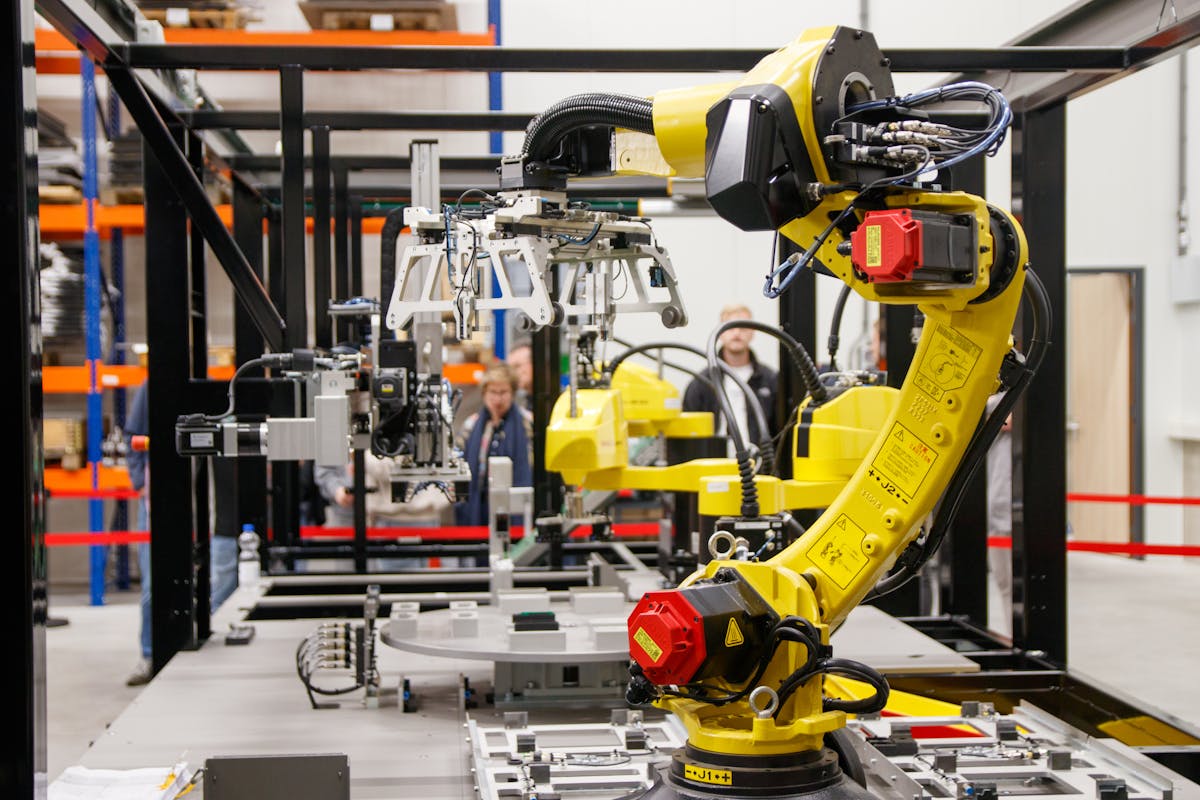
Photo: Freek Wolsink on Pexels
The opposite pattern also holds. Rule-based, high-volume, low-stakes work is exactly where a human checkpoint burns capacity for nothing.
Appointment confirmations, invoice status replies, standard FAQ responses, inbound lead routing, receipt acknowledgements. These are safe candidates for human-out-of-the-loop operation once accuracy has been validated against real data.
The proven sequence: an HITL approach lets humans fix incorrect inputs and gives the model the chance to improve over time. Start with a human in the loop, watch the error rate, release the checkpoint once the number is boring.
The capacity argument for removing unnecessary gates is strong. The Deloitte finding that managers spend nearly 40% of their time on admin and firefighting puts a number on what over-supervision actually costs. Every senior person queued behind an approval button for a task the model handles reliably is time not spent on the exception that only they can handle.
There's a category boundary worth flagging. Fully autonomous agentic tasks are one thing. Generative outputs, drafted emails, proposals, marketing copy, are another, and those often still need a human review step before they leave the building even when the underlying task is repetitive.
If that distinction matters for your budget, it's covered here.
Related reading
- How to Start with AI Automation
- How to Run an AI Pilot Project That Actually Proves Something
- From AI Pilot to Production
FAQ
What is human in the loop in AI, in plain terms?
It's any workflow where a person actively participates in the AI system's decisions, supervision or output. In practice that means the human either signs off on each result, monitors and steps in when needed, or trains and corrects the model over time. Which pattern you use is a design decision, not a default.
What is the difference between human-in-the-loop and human-on-the-loop?
Human-in-the-loop means a person acts on each AI output before it proceeds, so the human is a required step in every cycle. Human-on-the-loop means the AI runs by default and a person monitors it, ready to intervene when something looks wrong. The first is slower and safer; the second is faster and depends on the monitoring being real.
Does UAE law require human oversight for certain automated AI decisions?
Yes, in specific sectors. Cabinet Resolutions 56 and 57 of 2024 on telemarketing carry fines of AED 50,000, AED 75,000 and AED 150,000 for successive DNCR breaches, which makes a human approval gate on any AI-driven outbound campaign a compliance requirement. The PDPL and the DIFC and ADGM regimes add further obligations for automated decisions touching personal data.
How do I decide which tasks in my workflow still need a human sign-off?
Score each task on three dimensions: stakes if the AI is wrong, volume of decisions per day, and how much cultural or contextual judgment the answer needs. High stakes or high context keeps the human in the seat. High volume with low stakes and clear rules is where you can remove the gate, once you've watched the error rate long enough to trust it.
What happens if I remove human oversight from a task before the model is reliable enough?
You catch the errors later, when they've already reached customers, regulators or your accountant. The right sequence is to run with a human in the loop first, log where the model is wrong, correct those cases, and only remove the checkpoint when the residual error rate is low enough that the occasional miss is cheaper than the approval overhead.
Talk it through with someone
Lenoo AI runs a free 30-minute consultation that maps where human oversight belongs in your specific workflows. Bring one or two processes you're weighing up. You'll get an honest read on which tasks can run without a human gate, which need one for regulatory reasons, and where full automation isn't the right call yet.


