

A missed call at a Dubai clinic is not an admin footnote. It is a patient who dialled, waited, hung up, and opened Google. Missed call automation turns that dead end into a WhatsApp conversation before the patient scrolls past you, then hands reception a summary they can book from.
Key Takeaways
- Missed calls become lost patients within minutes — A caller who isn't answered moves to the next clinic on their list within minutes; the WhatsApp follow-up has to land before that happens, not after voicemail the next morning.
- One 150,000-patient network saw 60 percent drop rates — The published case covered 40 practitioners across roughly 150,000 patients; peak-hour call drop rates reached 60 percent before automation, then effectively disappeared once the rollout stabilised.
- Reply-to-missed-call is not the same as outbound telemarketing — A patient-initiated WhatsApp reply sits outside Cabinet Resolutions 56 and 57 of 2024; any added outbound calling layer needs TDRA prior approval, DNCR checks, and a 09:00 to 18:00 window, and DNCR breach fines run from AED 50,000 up to AED 150,000 for a third offence.
- WhatsApp beats voicemail for UAE patient recovery — Arabic, English, and Arabizi handling is a functional requirement, not a premium feature, since patients often mix languages in the same message and the intake summary must be legible to whichever staff member reads it.
- Keep the first version narrow, then measure — V1 should only detect the missed call, send a bilingual WhatsApp follow-up, capture intent and preferred slot, and hand staff a structured summary; add voice AI or more channels only after recovery rate and handoff quality are tracked for four to six weeks.
The real cost of a missed call at a UAE clinic
A missed clinic call rarely disappears into a queue you can catch up on later. The patient moves to the next clinic on their list within minutes, and the lost appointment revenue compounds every day the phones keep dropping.
One published clinic network case, covering roughly 150,000 patients and 40 practitioners, reported peak-hour call drop rates reaching 60 percent before automation was deployed. That is not a niche outlier. It is what any clinic with more demand than lines hits during morning rush.
In the UAE the pressure is sharper. Patients expect a reply in minutes on WhatsApp, not a callback the next morning after voicemail. A voicemail box means the slot is already gone.
The internal cost is quieter but just as expensive. When your reception team spends the morning chasing yesterday's callbacks, they cannot run today's schedule.
Deloitte's 2025 Global Human Capital Trends research found managers spend close to 40 percent of their time on admin. In a clinic, that is the 40 percent you cannot afford to lose.
What the automation does the moment a call goes unanswered
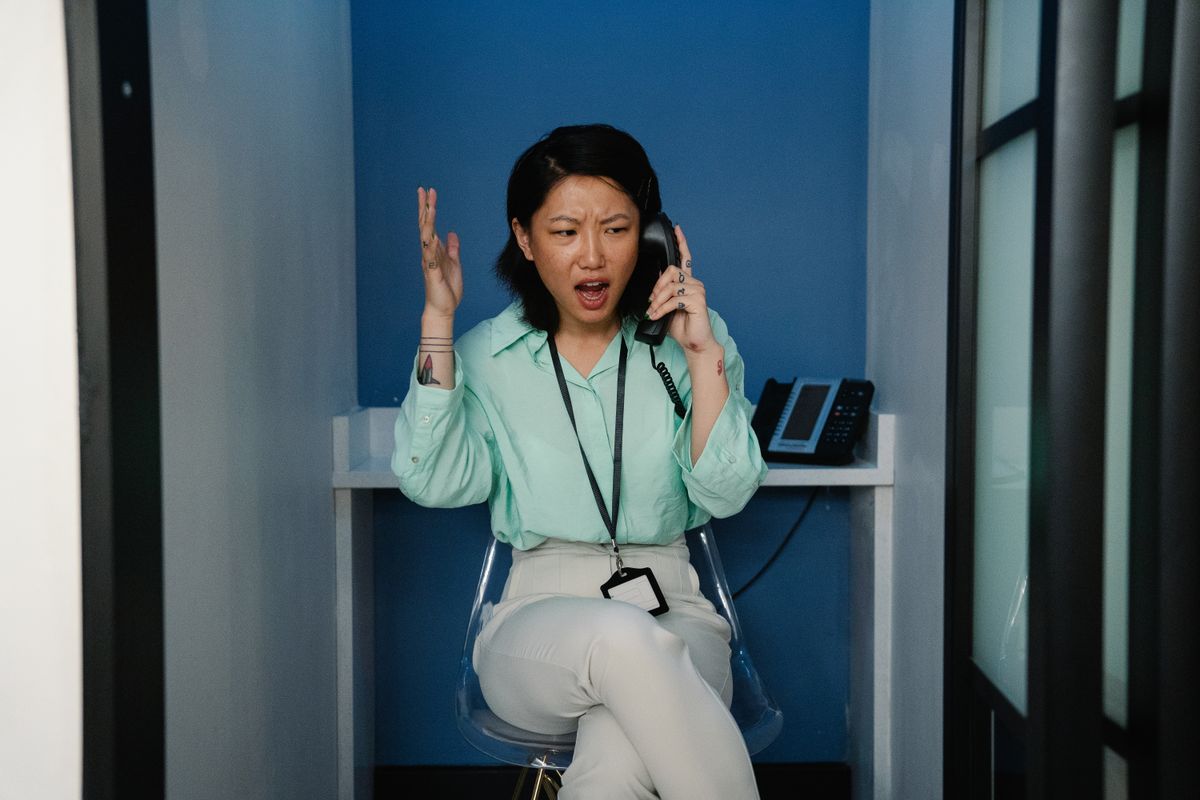
Photo: Felicity Tai on Pexels
The trigger is the call ending without an answer. The system detects the missed event the instant the line drops, so no human needs to notice it first.
Within seconds it sends a WhatsApp reply on your clinic's number: a short greeting, a question about what the caller needs, and a prompt for a preferred time. If the caller replies, the system captures intent, urgency, and the slot, then notifies the right staff member with a clean summary.
Voice AI in this workflow is bounded. It handles administrative questions, appointment requests, callback requests, simple routing, and reminders.
It does not make clinical decisions, and it does not need to. The point is to stop the patient leaving, not to replace the clinician.
Your team gets a structured handoff: caller name, reason, urgency flag, requested slot. That is the difference between a voicemail queue and a booking your receptionist can confirm in one message.
Why WhatsApp is the recovery channel, not voicemail
WhatsApp is the primary customer channel in the UAE, and clinics that pretend otherwise lose bookings. A patient who does not get a reply on WhatsApp within minutes does not sit and wait. They search for another clinic and message the next one.
A missed call can trigger either a WhatsApp or SMS follow-up depending on your clinic's approved process; for a UAE audience WhatsApp is the default and SMS is the fallback. Optimising voicemail while WhatsApp sits unanswered is the wrong queue.
Recovery is the first move in a broader stack; the WhatsApp automation stack every UAE clinic should ship first covers confirmations, reminders, and post-visit follow-up.
Compliance: PDPL, TDRA telemarketing rules, and what your automation must get right
Automated follow-up from a clinic is regulated in the UAE. Two regimes matter.
Federal Decree-Law No. 45 of 2021, the Personal Data Protection Law, governs how patient data collected during automated follow-up is stored, used, and consented to. The UAE Data Office enforces it at the federal level.
Consent, purpose limitation, and secure handling apply to every field the WhatsApp bot captures, from the caller's name to the reason they rang.
Cabinet Resolutions 56 and 57 of 2024, effective 27 August 2024, tighten the rules for outbound contact. Automated outbound calls require TDRA prior approval, must originate from local registered numbers, must check the Do Not Call Registry, and are restricted to a 09:00 to 18:00 window. DNCR breach fines start at AED 50,000 for the first offence, rise to AED 75,000 for the second, and reach AED 150,000 for the third.
Note the distinction. A patient-initiated WhatsApp reply, sent to a caller who just rang your clinic, sits in a different regulatory box than a cold outbound campaign.
Clinics licensed in the DIFC or ADGM also sit under their own layered data regimes on top of federal PDPL.
DNCR fines escalate fast for repeat breaches, so it's worth knowing the schedule before any outbound layer goes live.
| Offence | DNCR Fine |
|---|---|
| First offence | AED 50,000 |
| Second offence | AED 75,000 |
| Third offence | AED 150,000 |
Bilingual by default: Arabic, English, and the messages in between

Photo: Markus Winkler on Pexels
UAE patients write in Arabic, English, and often a mix of both in the same message. Some use Arabizi, the Latin-alphabet transliteration of Arabic. A system that only handles English will misclassify intent for a meaningful share of your inbound contacts.
Bilingual capability is a functional requirement here, not a premium tier.
The requirement extends past the bot's first reply. The intake summary landing with your reception team has to be legible in the language that staff member works in.
An untranslated Arabic summary handed to a coordinator who works in English creates the exact bottleneck the automation was meant to solve. Urgency routing depends on reading the patient's own words correctly, and a misread Arabic message describing acute symptoms can delay care.
If you are unsure whether your existing setup handles Arabic intake correctly, a 30-minute review call is usually enough to spot the gaps.
What to measure: recovery rate, filled slots, and staff time reclaimed
Three numbers matter weekly during the early rollout. The right ones surface a problem in days rather than quarters.
Call drop rate is the headline. The clinic case referenced earlier saw peak-hour drop rates reach 60 percent before automation, then effectively disappear once the system stabilised.
Watch this weekly. If it stays flat after week three, the automation is not being triggered on all missed events and the integration needs an inspection.
Recovered appointments is the number that pays for the project. Divide WhatsApp conversations that became bookings inside 24 hours by total missed calls. That ratio is your recovery rate.
Handoff quality is the operational one. If your team still phones the patient back after receiving the intake summary, the intake flow needs revision.
Missed call recovery does not sit in isolation. If you are also running AI email and ticket triage across your clinic inbox, the same intent classification should feed both queues.
Scoping the first version for your UAE clinic
Keep v1 narrow. Detect the missed call, send a WhatsApp follow-up in the caller's language, capture intent and preferred slot, deliver a structured summary to the right staff member.
That is the whole first release. Do not build the full voice agent until this loop is proven and instrumented.
Budget context matters. Lenoo AI scopes clinic automation projects for UAE businesses in the AED 10,000 to 50,000 range at entry level, sized to your actual call volume rather than an enterprise template.
Team training belongs in scope from day one. Every Lenoo AI engagement includes team training and 90 days of support, and if the build does not deliver what was agreed the investment is refunded in full.
The full guide to AI automation for UAE medical clinics covers how the pieces fit together.
Ready to scope your own? Book a free 30-minute consultation and we will map the missed call workflows your clinic should build first, and tell you honestly if any do not make business sense yet.
Related reading
FAQ
What is missed call automation for medical clinics?
It is a system that detects when a call to your clinic ends without an answer and immediately triggers a follow-up on WhatsApp or SMS. The follow-up captures what the caller needed and hands a structured summary to your staff.
Can the automation send a WhatsApp message to the caller instead of attempting a callback?
Yes, and for UAE clinics WhatsApp is the recommended default. A missed call can trigger either a WhatsApp or SMS follow-up depending on your clinic's approved process, with SMS as the fallback for numbers that do not have WhatsApp.
Do UAE telemarketing regulations apply to automated WhatsApp follow-ups sent after a missed call?
A patient-initiated reply, sent in response to a call the patient just made, sits in a different regulatory box than a cold outbound campaign. Any outbound calling layered on top must follow TDRA rules, DNCR checks, and the 09:00 to 18:00 window.
Does the system work outside clinic hours, including Saturdays and UAE public holidays?
The WhatsApp reply and intake happen automatically 24/7, so a patient who calls at 22:00 on a Saturday still gets a response and can request a slot. The staff handoff then queues for the next working session.
How does the automation handle messages written in Arabic, English, or a mix of both?
A UAE-ready system detects language automatically, replies in the same language the patient used, and can read Arabizi. The intake summary is delivered to staff in the language your team works in.
What should a UAE clinic include in the first version of a missed call automation workflow?
Four things: missed call detection, a bilingual WhatsApp reply, intent and preferred slot capture, and a structured summary to the right staff member. Measure recovery rate and handoff quality for four to six weeks before adding voice AI or more channels.
How long after going live should a clinic expect to see a measurable drop in call abandonment?
Expect a visible change within the first two to three weeks as the integration stabilises. Track call drop rate weekly during that window; if it has not improved by week three, the trigger is not firing on every missed event.


