

Your reception team is losing bookings to an unread WhatsApp inbox. UAE patients message on WhatsApp before they touch email or phone, and every minute a booking request sits waiting is a minute a rival clinic is confirming that slot.
Building WhatsApp automation for medical clinics is now the first move most UAE operators should make, ahead of any website tweak or ad campaign. This guide covers the compliance work you must do before you send a single automated message, the build order that returns money, and where clinics get stuck after launch.
Key Takeaways
- Reminders and confirmations pay off first — No-shows are the highest-frequency revenue leak, and a scheduled message with a confirm-or-reschedule button and a write-back to the booking system fixes it cleanly.
- DNCR fines escalate fast for repeat breaches — Cabinet Resolutions 56 and 57 of 2024, effective 27 August 2024, set fines of AED 50,000, AED 75,000 and AED 150,000 for a first, second and third breach, and require TDRA approval, locally registered numbers, DNCR checks and a 09:00 to 18:00 contact window.
- Arabizi has to be built in from day one — Patients mix Arabic, English and Arabizi (Arabic written in Latin characters) inside the same message, and a flow that only parses English intent will misroute the reply and drop the booking silently.
- Five flows, and skipping the order costs you — The build sequence is compliance, then appointment reminders, then an FAQ bot, then results notifications, then recall. Jumping to recall before compliance risks a fine; jumping to results before reminders are stable means the write-back breaks on the highest-stakes message type.
- No EMR link means duplicate work for reception — Without API or webhook integration to the booking system, every confirmation that lands in WhatsApp but not the calendar becomes a manual reconciliation and a source of conflicting slots.
Why WhatsApp Is the Primary Patient Channel in the UAE
WhatsApp is where your patients already are, and its share of daily UAE conversation runs higher than any other channel across nationalities and age brackets.
Industry sources put the platform above 3 billion users worldwide, and the cost of leaving that channel unautomated shows up at peak booking hours. Reception is handling six live chats, a queue at the desk and two ringing phones, and something drops. What drops is usually the new-patient enquiry that came in three minutes ago and is now considering a competitor.
This is why our pillar guide on AI automation for UAE medical clinics puts WhatsApp at the top of the build sequence, and why WhatsApp automation for medical clinics has become the highest-impact first-quarter project in the UAE market.
The Ministry of Human Resources and Emiratisation publishes the labour laws and regulations that any HR automation has to work inside.
The Compliance Layer That Must Come Before Anything Else
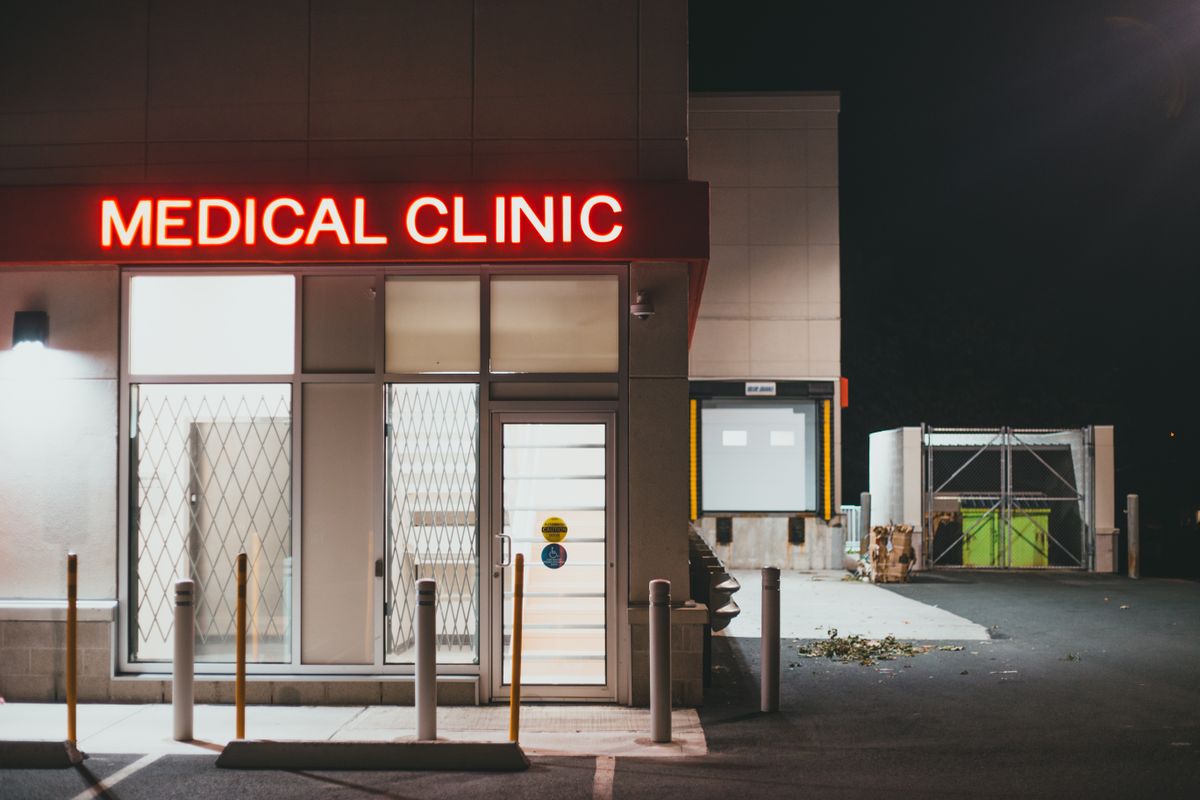
Photo: Erik Mclean on Pexels
You cannot send a single automated WhatsApp message to a UAE patient without the PDPL consent layer and TDRA approval in place first. Get that layer wrong and every downstream template is unlawful.
Federal Decree-Law No. 45 of 2021, the PDPL, requires explicit consent before you use a patient's phone number for automated outreach. Cabinet Resolutions 56 and 57 of 2024, effective 27 August 2024, added a telemarketing regime that clinical outreach falls under.
They require TDRA prior approval for outbound messaging, locally registered numbers, Do Not Call Registry checks, and a 09:00 to 18:00 contact window.
Automated WhatsApp campaigns are in scope, not only voice calls. The DNCR fines make the enforcement teeth visible: a first breach is AED 50,000, a second AED 75,000, a third AED 150,000. Clinics licensed inside DIFC or ADGM also sit under those free zones' own data protection regimes on top of the federal PDPL, so establish which framework applies before you buy any tool.
The Automation Stack, Ranked by Return
Appointment reminders and confirmations belong first, and it is not close. Missed appointments are the highest-frequency revenue leak, and automation solves them cleanly.
The pattern is simple: a scheduled message, a confirm-or-reschedule button, a write-back to the booking system. Every later flow in the WhatsApp automation for medical clinics stack runs on those same rails.
Automated FAQ handling sits second. Directions, opening hours, insurance networks, service scope, doctor availability windows: your reception team answers the same fifteen questions every day, in the same fifteen ways. That is a bot's job.
Third is lab and test results notifications, which removes a stressful phone-chase for both sides. Fourth is post-visit follow-up and review requests handled on autopilot, which compounds your Google presence over months. Fifth, once the first four are stable, is patient recall and reactivation that pulls lapsed patients back with a message referencing their last visit.
Ranked by return, the five flows build on each other in a fixed order, and each one depends on the last being stable.
| Order | Flow | What it does |
|---|---|---|
| 1st | Appointment reminders and confirmations | Scheduled message, confirm-or-reschedule button, write-back to booking system |
| 2nd | FAQ bot | Answers directions, hours, insurance networks, service scope, doctor availability |
| 3rd | Lab and test results notifications | Removes the stressful phone-chase for results |
| 4th | Post-visit follow-up and review requests | Compounds Google presence over months |
| 5th | Patient recall and reactivation | Brings back lapsed patients, referencing their last visit |
Bilingual Automation: Arabic, English, and the Mix In Between
An automation that only handles one language will fail silently at scale here. Patients write in Arabic, in English and often in both inside the same message.
A flow that only parses English intent will misroute the Arabic reply and drop the booking before anyone notices. Arabizi, Arabic written in Latin characters and numerals, is common in informal patient messages and must be in your intent-detection logic from day one. Treating it as an edge case is how you end up with a bot that works in demos and fails in production.
Bilingual handling has to run through templates, consent capture wording, escalation messages and staff-facing summaries, not just the opening greeting. Tools built on a single-language base need expensive retrofitting for the UAE market, so confirm genuine Arabic and English capability across the full patient journey before you sign a contract.
Connecting WhatsApp to Your Clinic's Existing Systems

Photo: Polina Tankilevitch on Pexels
Integration with your booking system is where WhatsApp automation earns its keep. A tool that cannot write back to the calendar makes reception's life worse, not better.
Every confirmation that lands in the chat but not in the calendar becomes a manual reconciliation, and every conflicting slot becomes an apology to a patient. EMR and HIS integration through an API or webhook lets appointment data, patient history flags and reminder timing flow from the clinical system of record into the messaging layer. Your calendar stays the source of truth and the WhatsApp thread becomes a projection of it.
UAE clinic documents tend to arrive as photos and PDFs with Arabic and English mixed on one page, so the automation must route and log those correctly rather than drop them.
WhatsApp is one channel, not the whole picture. Our companion piece on AI email and ticket triage for medical clinics covers the inbox side of the same patient communication stack, and both channels need to share a single patient record so a message on one does not contradict a reply on the other.
If you want a straight read on which flows fit before you invest, take a free 30-minute call and we will map the order with you.
Where Clinics Stall After Launch
After go-live, the human handoff is what usually breaks first. Every automated flow needs a clean escalation when a patient's question steps outside the bot's scope.
Bots that trap patients in a loop while a clinician is one door away cost more goodwill than they save time. Launching outbound templates without TDRA approval is the second stall: template registration is a pre-launch requirement, not a fix you make after a warning letter.
Third is the single-language build against a bilingual patient base, which shows up in production data two weeks in. Fourth is training the tool without training the team. Reception staff who do not know what the bot handles will override it at the first unusual message, and that override reflex erases most of the return.
From First Automation to a Full Clinic Stack
Start with one high-frequency, low-risk flow. Appointment reminders prove value quickly and set the foundation everything else runs on.
Once that is stable for a month, add the FAQ bot, then results notifications, then recall. The correct sequence is compliance setup, then reminder flows, then an FAQ bot, then results notifications, then recall campaigns.
Jumping to recall before compliance is in place is a good way to write a fine cheque. Jumping to results before reminder flows are stable is how you learn your write-back is broken with the highest-stakes message type in the clinic.
For a specific view on where to start with your own WhatsApp automation for medical clinics rollout, book a free 30-minute consultation and we will identify the top two or three flows that fit your clinic, with an honest read on what not to build yet. If the business case is not there we will say so.
Related reading
FAQ
Is WhatsApp automation for medical clinics compliant with UAE data protection law?
It can be, once the consent and approval layer is built correctly. Federal Decree-Law No. 45 of 2021, the PDPL, requires explicit consent before you use a patient's phone number for automated outreach, and Cabinet Resolutions 56 and 57 of 2024 add TDRA approval, Do Not Call Registry checks and a 09:00 to 18:00 contact window on top.
DIFC and ADGM licensed clinics carry additional obligations from those free zones' own regimes.
Do Cabinet Resolutions 56 and 57 of 2024 apply to appointment reminders and other clinical WhatsApp messages?
Yes. The rules cover outbound automated messaging broadly, not only voice calls, and clinical outreach is in scope. Build TDRA template approval into the launch plan.
What is the first WhatsApp automation a UAE clinic should build?
Appointment reminders and confirmations. No-shows are the highest-frequency revenue leak, and the fix is technically straightforward. The flow also sets the foundation every later automation needs.
How do you handle patients who write in Arabic, English or a mix of both in the same message?
Intent detection has to be bilingual from the first build and needs to anticipate Arabizi. Templates, consent wording, escalation messages and staff-facing summaries all run through both languages so nothing drops when a patient switches mid-sentence.
Can WhatsApp automation connect to a clinic's existing EMR or appointment scheduling system?
Yes, and if it cannot, do not buy it. Integration through an API or webhook lets the booking system stay the source of truth while WhatsApp becomes a projection of it, which is the only setup that avoids duplicate records and conflicting confirmations.
What happens when a patient's question is too complex for the automated flow to handle?
A well-built flow hands off to a staff member with conversation context attached before the patient gets frustrated. A bot that cannot escalate cleanly costs more goodwill than it saves labour.
Does a clinic need TDRA approval before sending automated WhatsApp messages to patients?
Yes. Under Cabinet Resolutions 56 and 57 of 2024, prior TDRA approval is required for outbound messaging campaigns, alongside locally registered numbers and DNCR checks.


