

Quote automation for trading companies closes the gap between when a UAE buyer sends an RFQ and when your reply lands. The system reads the inquiry, matches products against your catalog, applies the right price, and sends a branded quote before a sales rep has opened the email. This article walks through the operational sequence UAE distributors use to answer every RFQ first, without adding headcount and without ripping out the systems they already run.
Key Takeaways
- Speed decides the sale, not price — Buyers send the same RFQ to three or four suppliers within the same minute, and the accurate quote that lands first usually closes the deal, even on orders like 40 pallets of a single SKU.
- WhatsApp is where the RFQs actually arrive — Buyers write in Modern Standard Arabic, Emirati dialect, English, or a mix of both in the same message, and email-only automation covers only a minority of that volume.
- Admin work eats nearly 40% of managers' time — Deloitte's 2025 Global Human Capital Trends research found managers spend close to 40% of their time on administrative work and firefighting; automating quote generation strips out that data-entry layer so reps spend more time on calls that close deals.
- Clean inventory data decides quote accuracy — Accurate quotes depend on accurate stock counts, and once an order is confirmed, the same data spine typically feeds order-status tracking and, later, automated invoice or payment-reminder follow-up.
- Start with one product category, not everything — Automate your most repetitive SKU category first, then write down pricing tier rules explicitly, including segment pricing and volume-break triggers, since automation can't infer rules that only lived in a senior rep's head.
The First Quote Usually Wins the Order
Speed decides more Dubai trades than price does. When a buyer needs 40 pallets of a specific SKU, they send the same request to three or four suppliers in the same minute, and the accurate quote that lands first usually closes the deal. Every hour a quotation sits unanswered is an hour the customer is being pitched by someone faster.
This is a shift in expectation, not a preference. Same-day used to be professional; in 2026 it signals a supplier asleep at the desk.
Quote response is one of many pressure points in a trading operation. The full guide to AI automation for trading and distribution companies in the UAE maps every touchpoint from inquiry to fulfilment, and quoting is the loudest because customers watch it directly.
Clinics licensed in Dubai answer to the Dubai Health Authority for how patient information is collected, stored and communicated.
Where UAE Buyers Actually Send Their RFQs

Photo: Tima Miroshnichenko on Pexels
WhatsApp. Not email.
WhatsApp is the primary customer channel here, and a buyer messaging your sales line expects a reply in minutes. Optimising email templates while WhatsApp sits at 47 unread is fixing the wrong queue.
The RFQs themselves are messy. One buyer writes in Modern Standard Arabic, another in Emirati dialect, a third in English, a fourth mixes both in the same paragraph. Bilingual handling is table stakes, not a feature to shortlist.
Product references are messier still. Buyers describe items the way they remember them: partial names, colloquial descriptions, an old code from a previous supplier. Matching that language to your database is where most quote errors are born, and inquiries do not respect business hours; the buyer texting at 22:47 is working, and the supplier whose system replies at 22:48 gets the call the next morning.
What Quote Automation Actually Does, Step by Step
The workflow is short and every step used to be manual. An inquiry lands on WhatsApp, email, or a web form. The system parses the products, matches them against your live catalog and current pricing, applies the customer's tier, generates a branded PDF, and sends it back through the same channel.
Each quote moves through a tracked lifecycle: inquiry received, quote sent, under negotiation, approved, order confirmed. Nothing sits unlogged in a rep's inbox.
A matched multi-product quote (say, a total around AED 18,450) can land in the buyer's WhatsApp minutes after the inquiry, with the right tier already applied. That last step matters most: on the fortieth quote of the day, tier mistakes are the most common human error, and they cost the margin the tier was built to protect.
What Manual Quoting Actually Costs Your Sales Team
Do the arithmetic on your own team. Every manual quote means opening the ERP, checking current stock, finding the price sheet, applying the right tier, formatting the PDF, and sending it. Ten minutes on a good day, twenty when the buyer's product list has ambiguous items, multiplied across a team receiving dozens of RFQs daily.
Errors compound the cost. A tired rep pricing product line 40 at 17:45 does not always catch the outdated price, the tier mismatch, or the typo in the total. When the buyer accepts, you honour the quote, and that is a margin leak no dashboard flags.
Deloitte's 2025 Global Human Capital Trends research found that managers spend nearly 40% of their time on administrative work and firefighting. Repetitive quoting sits squarely in that category, and removing it does not remove salespeople from selling; it removes the data-entry layer that was preventing them from selling.
Side by side, the manual and automated paths diverge at almost every step of building a quote.
In Abu Dhabi the equivalent regulator is the Department of Health, and its licensing conditions differ from Dubai's in the detail.
| Aspect | Manual Quoting | Automated Quoting |
|---|---|---|
| Steps involved | Open ERP, check stock, find price sheet, apply tier, format PDF, send | Parse RFQ, match catalog, apply price and tier, generate PDF, send |
| Time per quote | 10 minutes on a good day, 20 with ambiguous items | Minutes after the inquiry arrives |
| Tier handling | Rep applies tier manually; mistakes common at volume | Tier applied automatically from the customer record |
| Common errors | Outdated price, tier mismatch, typo in the total | Flags out-of-stock or uncatalogued items for review |
Connecting Quote Automation to the Systems You Already Use
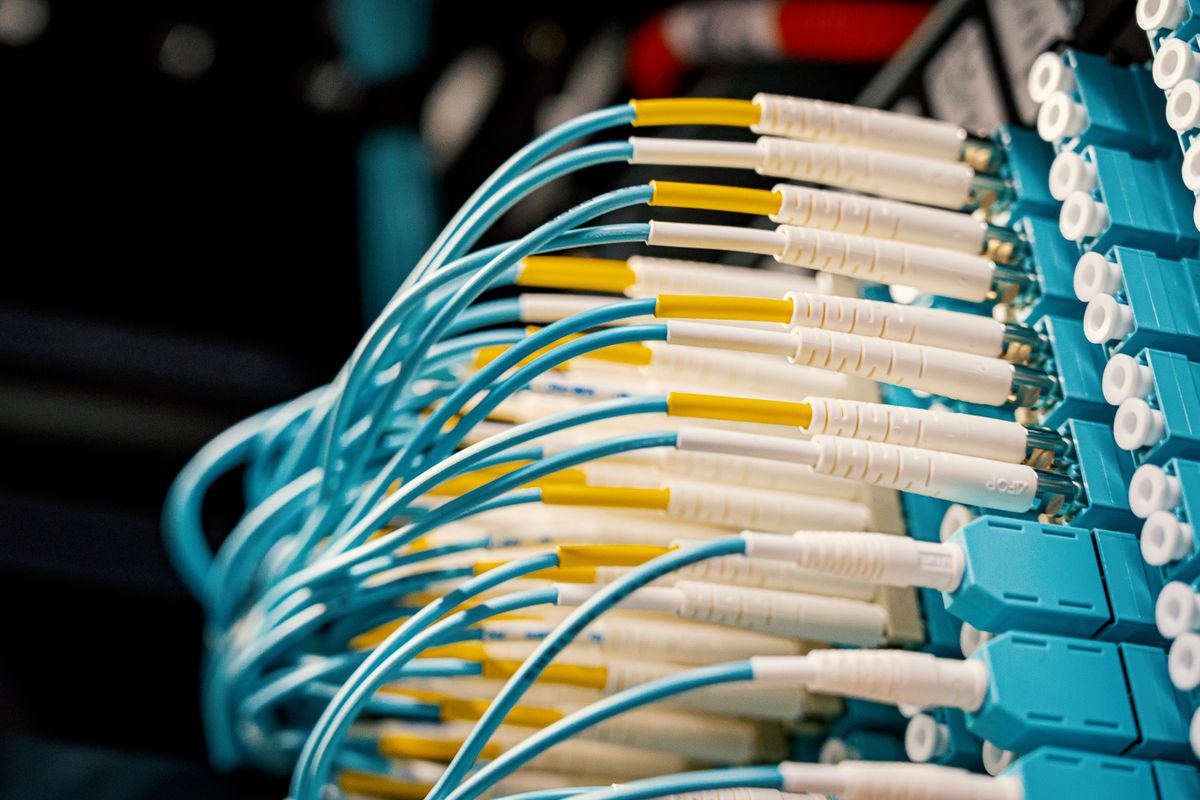
Photo: Brett Sayles on Pexels
Quote automation is a layer, not a replacement. It connects to Gmail, Outlook, WhatsApp Business, Salesforce, HubSpot, and the accounting software finance already runs. Nothing needs a data migration.
The real integration work is not the software plumbing; it is the data underneath. Accurate quotes require accurate stock counts, so how clean your inventory is decides how trustworthy the quotes are. Serious quote automation projects usually run alongside inventory automation for trading and distribution companies, because the two share a data spine.
The other end matters too. Once a quote becomes an order, the buyer starts asking where it is, and the same salesperson who just closed the deal now spends an afternoon answering status messages. Teams that solved this upstream usually did it by automating the same status question that gets asked fifty times a day.
Where to Start: The Highest-Return Move for a UAE Distributor
Pick your single most repetitive product category. The one where most of the RFQs look almost identical: same SKUs, same quantities, same customer types. Automate that slice before touching the edge cases; the learning cycle is shorter and the wins are visible in weeks.
Set up WhatsApp intake first if that is where your RFQs live. Email automation without WhatsApp coverage in the UAE market is technically a project and practically a miss.
Then write down your pricing tier rules explicitly: which segment gets which price, what triggers a volume break, when a rep may override. Automation is unforgiving about implicit rules, and this exercise almost always surfaces decisions that were quietly living inside one senior rep's judgment.
Once quotes are accepted and orders move, collections becomes the next drag. Teams that have already automated quoting typically move next to an AI payment reminder sequence so the cash lands without a person writing the same follow-up email a hundred times.
For an outside read on where your quoting bottlenecks are, book a free 30-minute call with Lenoo AI. The call is no-pitch: identify top opportunities, give an honest recommendation.
Evaluating Quote Automation for a UAE Trading Operation
Shortlisting criteria for the UAE market are narrower than the generic ones vendors publish. The non-negotiables: bilingual Arabic and English handling that actually understands mixed messages, WhatsApp Business integration (not just email), catalog-matching accuracy on your real product references, and clean connections to whatever ERP or accounting system you already run.
Data handling must comply with Federal Decree-Law No. 45 of 2021, the UAE Personal Data Protection Law.
Before signing anything, ask where customer inquiry data is stored, where it is processed, and who the sub-processors are. A vendor unable to answer that in one email should not be shortlisted.
Budget realistically. Automation projects at this scope typically fall in the AED 10,000 to 50,000 band for a focused deployment with a clean catalog, or AED 50,000 to 200,000 when work spans multiple integrations and deeper catalog cleaning. Cheaper is usually a template; more expensive at this stage often means someone is selling complexity you do not need yet.
Frame the decision honestly. The point is not to remove salespeople; it is to remove the reformatting-a-PDF part of their job so each rep closes more deals per week without you hiring another one.
If you want that honest read on your own setup, book a free 30-minute consultation with Lenoo AI. If automation does not make business sense for you right now, the recommendation will say so.
Related reading
- AI Appointment Booking
- Automated Reporting for Construction Companies
- Car Dealerships Appointment Booking Automation
FAQ
Can quote automation handle RFQs that arrive in Arabic, English, or a mix of both?
Yes. Buyers routinely switch mid-message and drop in colloquial product names alongside SKUs, so any tool shortlisted for a UAE operation should demonstrate bilingual parsing on your real RFQ samples, not marketing screenshots.
Does quote automation work with WhatsApp, or only with email?
It works with WhatsApp Business, email (Gmail, Outlook), and web forms in a single pipeline. For UAE distributors this matters because WhatsApp is where most RFQs arrive; email-only automation covers a minority of the volume.
How long does it take to get quote automation running for a trading company in UAE?
It depends on how clean your catalog and pricing data already is. A focused deployment on one product category can be live in a few weeks; a broader rollout with catalog cleanup and multi-system integration takes longer, and most of the elapsed time is data preparation, not software configuration.
Do I need to replace my ERP or accounting software to start automating quotes?
No. Quote automation sits as a layer on top of what you already run, connecting to Salesforce, HubSpot, and mainstream accounting platforms. Anyone pitching a full-stack replacement to solve the quoting problem is over-selling.
What happens when a product requested in an RFQ is out of stock or not in the catalog?
The system should flag the item for human review rather than guess. A well-designed workflow surfaces ambiguous or unavailable lines to a salesperson with context so a real decision can be made instead of quoting something you cannot deliver.
Is automated quoting compliant with UAE data protection law under Federal Decree-Law No. 45 of 2021?
It can be, and it must be. Compliance depends on where inquiry data is stored, where it is processed, which sub-processors touch it, and how long it is retained; ask for these answers in writing before signing, and note that DIFC and ADGM add their own layered requirements on top.
How does the system apply different pricing tiers for different customer segments automatically?
It reads the customer identity from the inbound channel (phone number, email domain, or CRM record), looks up the mapped segment, and applies the tier your commercial team has defined. That works because the tier rules were documented explicitly before implementation, since automation cannot infer rules that lived in a senior rep's head.


