

Most automated business reporting projects fail the same way. The pipeline runs, the numbers refresh, the report lands in an inbox at 06:00, and nobody opens it.
The automation worked. The reporting did not.
That gap is what this piece is about. In the UAE, where WhatsApp carries most operational communication and teams read Arabic and English in the same thread, a report that ignores how managers actually consume information gets ignored right back.
Key Takeaways
- A refreshed report is not a read report — Automated reporting delivers data-driven insights without managers having to seek them out, but a pipeline that runs perfectly on schedule still fails if the output lands in an inbox nobody opens.
- Managers lose nearly 40% of their time to admin — Deloitte's 2025 Global Human Capital Trends found managers spend close to 40% of their time on admin and firefighting, time a well-designed daily summary shifts from the manager's morning to the automation.
- WhatsApp beats email for daily updates — WhatsApp is the primary business channel in the UAE, and a morning summary pushed there gets opened, while the same content emailed sits under longer threads by the time the manager checks.
- PDPL governs any report with personal data — Federal Decree-Law No. 45 of 2021, in force since 2 January 2022, covers any report carrying employee performance data, customer records, or personal identifiers, with DIFC and ADGM layering their own regimes on top for entities registered there.
- Start with one department before scaling — Phase one is one department, one daily summary, one delivery channel, usually operations or finance because the data sources are well-defined, before moving toward multi-department rollouts and bilingual output.
What Automated Business Reporting Actually Means
Automated business reporting brings data-driven insights to users in a timely way, without the users having to seek out the information themselves. That is the working definition, and it separates the category from every dashboard nobody logs into.
Three things get confused. A live dashboard is a place you visit to check numbers. A scheduled report is a fixed export sent on a cadence, usually as PDF or slides.
A daily briefing summary is a compressed digest pushed to where the reader already is, showing only what changed and what needs attention.
Output format matters as much as the automation. A report can refresh perfectly at 06:00 GST every morning and still be useless if it takes twelve scrolls to reach the number the manager cares about.
For UAE operations teams, generic Western SaaS templates rarely fit. The data environment includes trade licences, VAT-tagged invoices, Emirates ID records, and documents that mix Arabic and English on the same page. Templates built for someone else's stack drop half of them.
The Hidden Cost of Reports Nobody Opens
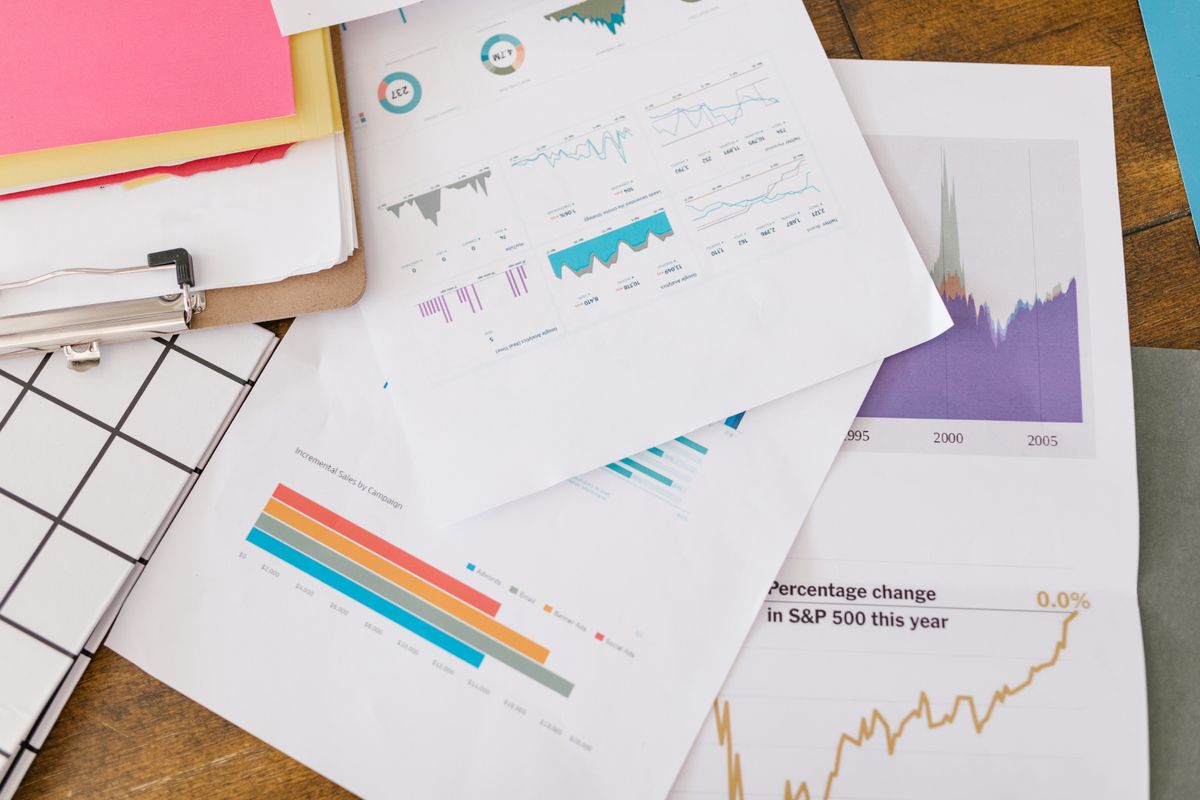
Photo: RDNE Stock project on Pexels
Managers spend nearly 40% of their time on admin and firefighting, per Deloitte's 2025 Global Human Capital Trends. A well-designed daily summary moves routine status-checking from the manager's morning to the automation's.
Static reports prepared once a month, once a week, or once a day become outdated before they land. The automation solves freshness. It does not solve readability.
A weekly PDF that reflects Tuesday's data on Friday's screen is a document, not a decision aid.
The failure mode is double. Reports go unread. Decisions get made on instinct.
The lag matters at scale. The UAE Ministry of Economy counts 558,000 registered companies, most of them small and mid-size, with margins tightening across sectors.
When a competitor makes a pricing decision by 09:00 because their WhatsApp summary flagged a stock movement overnight, and you make the same decision at 15:00 because your dashboard requires logging in, that lag is a competitive liability.
What a Daily Automated Summary Looks Like When It Actually Gets Read
Briefing over dashboard: one screen, a small number of metrics that changed overnight, exceptions flagged, no charts requiring scrolling before breakfast.
Signal-to-noise filtering is the hardest part of automated business reporting design. A summary must suppress unchanged metrics and surface only variance above a threshold the manager has agreed in advance.
If yesterday's revenue matched forecast, the report does not need to say so at length. It needs to say what did not match, and by how much.
Timing carries as much weight as content. The UAE working week runs Sunday through Thursday, and a summary pushed at 07:30 GST reaches the manager before the first meeting.
A summary generated at 15:00 arrives after priorities are already set for the day. At that point it is a status report, not a decision tool.
Language is not a localisation add-on. A UAE team has managers who read Arabic, English, or both in one message. Bilingual output from day one is the baseline.
Connecting Your Systems: The Data Layer That Makes It Work
Automated business reporting is only as good as its inputs. The common UAE data sources are POS systems, ERP and accounting platforms carrying VAT-compliant line items, CRM pipelines, WhatsApp Business API logs, and logistics tracking feeds.
A tool-agnostic approach matters. The reporting layer should read what you already have, in the format it is stored, without demanding a rebuild first.
Operational calendar items belong in these summaries: trade licence renewal dates, Emirates ID expiry dates for staff, and VAT return windows. They quietly become fires when nobody surfaces them.
The knowledge layer sits alongside the reporting layer. When a summary flags a variance the manager wants to understand, an internal AI assistant that answers follow-up questions across the same data pool closes the loop.
UAE Compliance: What Automated Reports Must Get Right
Federal Decree-Law No. 45 of 2021, the UAE PDPL, in force since 2 January 2022, governs any report that includes employee performance data, customer records, or personal identifiers. The UAE Data Office, established under Federal Decree-Law No. 44 of 2021, is the federal regulator.
DIFC and ADGM operate their own data regimes layered on top of federal law. If your entity is registered in a free zone, confirm which regime governs your data before piping personal information through automated pipelines.
Data minimisation is a design decision. Only pull the fields the report actually uses. Automated pipelines that over-collect create the most common PDPL exposure.
Audit trails belong in the build spec: log what data was pulled, when, and who received the output. Building that in from the start costs almost nothing.
If you want a second pair of eyes on where PDPL intersects with a reporting workflow you have in mind, book a free 30-minute consultation.
WhatsApp, Email, or Dashboard: Delivering Your Automated Reports

Photo: Tiger Lily on Pexels
WhatsApp is the primary business channel in the UAE. A morning summary pushed there gets opened; the same content emailed sits under longer threads by the time the manager checks.
Live dashboards are the right call for real-time monitoring. Sales floor performance, dispatch operations where you need to see where crews are and what is next, or stock levels where you want the alert before you run out, not after all reward a live view.
Email remains appropriate for formal reports with attachments: monthly P&L packs, board decks, audit files. Daily operational summaries are consumed in seconds, on a phone; email is the wrong container.
The right architecture usually mixes all three. The daily WhatsApp summary flags an exception, one tap opens the dashboard view, and the month-end pack goes to email.
Each channel earns its place for a different kind of report, not by personal preference.
| Channel | Best For | Why |
|---|---|---|
| Daily operational summaries | Primary business channel, read in seconds on a phone | |
| Dashboard | Real-time monitoring | Sales floor, dispatch, and stock levels need a live view |
| Formal reports with attachments | Right for monthly P&L packs, board decks, audit files |
Measuring Whether Your Reporting System Is Actually Working
Adoption is measurable from day one. WhatsApp read receipts tell you who opened the summary and when. Email click-throughs on embedded dashboard links give you the same signal for email-delivered reports.
Decision-to-data time is the sharper metric. Track how long after a summary lands the manager makes a decision related to what it flagged. A shortening gap week over week is the clearest evidence the format is working.
The wider stakes are visible in the aggregate numbers. Per MIT Media Lab's Project NANDA, 95% of enterprise AI pilots produce no measurable P&L return.
Automated business reporting that sits unread is that same failure at smaller scale. Catching it early, at the daily summary layer, is cheaper than after you have wired the same broken format into every department.
Quarterly format reviews close the loop. Rebuild the summary based on which metrics triggered visible action and which were ignored. What managers act on tells you more than what they say they want in a workshop.
How UAE Teams Start: A Phased Build That Proves Value First
Phase one is one department, one daily summary, one delivery channel. Operations or finance is the usual entry point, because the data sources are well-defined and the manager's appetite for daily numbers is highest.
Budget signal for UAE SMEs: a first automated reporting system typically sits in the AED 10,000 to 50,000 range. Multi-department rollouts, custom bilingual output, and deeper integrations push toward the AED 50,000 to 200,000 band.
For teams ready to automate beyond reporting, into scheduling, dispatch, inventory, and the wider set of admin workflows, the fuller framework sits in our operations and back-office automation guide.
Training belongs in the build. Automated summaries change what managers are expected to know, when, and how they are expected to respond. Every Lenoo AI engagement includes team training and 90 days of support for exactly this reason.
If you want an honest read on which reporting workflows are worth automating, book a free 30-minute consultation. No pitch. We listen first and give you a next step with cost and timeline.
FAQ
What is automated business reporting and how does it differ from a live dashboard?
Automated business reporting delivers insights on a schedule, in a format built for consumption. A dashboard is a place users visit to see the numbers. For daily operational updates, the push format wins adoption.
Which UAE data protection laws apply when automating internal business reports?
Federal Decree-Law No. 45 of 2021, the UAE Personal Data Protection Law, applies to any automated report containing employee, customer, or other personal data. If your entity sits in DIFC or ADGM, a separate layered regime also applies.
Can automated daily summaries be delivered via WhatsApp for UAE operations teams?
Yes, and for daily operational updates it is usually the right channel. Read rates on morning summaries pushed there significantly outperform email. Use the WhatsApp Business API at scale for compliant, traceable delivery.
How much does it cost to set up automated business reporting for a UAE SME?
A first automated reporting system for a UAE SME typically sits in the AED 10,000 to 50,000 range. Multi-department rollouts and deeper integrations push into the AED 50,000 to 200,000 band.
Does automated reporting support Arabic output and bilingual summaries?
It should, from day one. UAE teams routinely include readers who prefer Arabic, English, or both in one message. Building bilingual output into the template at the start costs less than retrofitting later.
What data sources can feed into an automated reporting system in the UAE?
Common sources are POS systems, ERP and accounting platforms carrying VAT-compliant line items, CRM pipelines, WhatsApp Business API logs, and logistics tracking feeds. A tool-agnostic layer reads what you already run without forcing a stack change.
How do I know whether my automated reports are being read and acted on?
Track two things. Read rates tell you if the report is being opened, and decision-to-data time tells you if it is being used.