

The gap between "I'd like to book a room" and "here's my deposit" is where most UAE hotels lose direct revenue. This is what hotels appointment booking automation looks like when it's built for the way UAE guests actually book: an agent that closes the gap on WhatsApp, at 02:00, in Arabic or English, before your guest starts scrolling Booking.com.
Key Takeaways
- Overnight WhatsApp inquiries are where UAE hotels lose bookings — A guest messaging at 23:00 about a room for next weekend gets no reply, checks two competitors by 08:00, and books one of them. A booking widget with no WhatsApp agent behind it misses that inquiry entirely.
- A real booking agent closes the deal, not just answers questions — It checks live availability and rate against the PMS, sends a quote and deposit link in the same thread, then confirms and blocks the calendar once payment lands. A FAQ bot that answers what time is check-in and hands off is a different product.
- Automated messages fall under UAE Cabinet Resolutions 56 and 57 — The rules require TDRA prior approval, respecting the Do Not Call Registry, and messaging only between 09:00 and 18:00. Repeat DNCR breaches escalate from AED 50,000 to AED 75,000 to AED 150,000, so compliance has to be built in, not patched on later.
- Guests mix Arabic, English and Arabizi in a single message — A guest can open in Arabic, switch to English mid-sentence, then close in Arabic again asking for a discount. A bolted-on translation layer treats each message as a fresh problem and loses context, so the agent has to track intent across all three registers as one conversation.
- Cost scales with scope, from AED 10,000 to AED 200,000 — A focused single-channel WhatsApp agent typically runs AED 10,000 to 50,000. A multi-channel build with deeper PMS integration and staff training runs AED 50,000 to 200,000, and every engagement includes team training plus 90 days of support.
Why UAE Hotel Calendars Leak Bookings Before They Start
Direct booking loss in UAE hotels is a response-time problem, not a marketing problem. A guest messages your WhatsApp at 23:00 asking about a Deluxe room for next weekend.
Nobody replies overnight. By 08:00 they've checked two competitors and booked one.
Your funnel didn't break at the website. It broke in the message queue. Inquiries arrive around the clock; the front desk covers a shift, and repetitive back-and-forth on availability, rates, and cancellation policy eats staff attention that should be closing warm leads.
The problem compounds during Eid weeks and the Dubai winter season, when inquiry spikes are highest and shifts are already stretched. Optimising a website booking widget while your WhatsApp thread sits unread is fixing the wrong channel.
Population and business-count figures for the emirate come from the Dubai Statistics Center rather than from vendor market reports.
What a Hotels Appointment Booking Automation Agent Actually Does

Photo: Andrea Piacquadio on Pexels
It closes the loop. From first inquiry to calendar block, inside the guest's chosen channel, without a handoff to email or a website form.
The agent captures inquiries on WhatsApp, website chat, or email at any hour, then checks live availability against your property management system and pulls the current rate for the date range. It sends a quoted offer and a deposit or payment link inside the same conversation thread. Once payment lands, it confirms, blocks the calendar, and starts pre-arrival messaging.
A FAQ chatbot answers "what time is check-in?" and hands off. A booking agent takes the reservation. That distinction is what separates a support cost from a revenue channel.
WhatsApp-First: The Channel UAE Hotel Guests Actually Use to Book
In the UAE, WhatsApp is the booking channel. Guests message it the way guests in other markets email, and they expect to finish the reservation without ever leaving the thread.
Software built for email-first or website-first markets treats WhatsApp as a notification channel: send a link, ask the guest to click, finish the booking on a page. UAE guests won't. They'll bounce.
The right approach is set out in the WhatsApp automation stack every hotel in the UAE should ship first, and the short version is that the reservation, the deposit, and the confirmation all happen in the message thread. A WhatsApp chatbot that only answers FAQs is a different product. Ask any vendor to demo a full reservation, taken inside WhatsApp, without a redirect.
Handling Arabic and English in the Same Booking Conversation
UAE guests write in Arabic, English, and Arabizi, and they mix all three in one message. Your agent needs to parse intent, not just detect a language.
Here's what that looks like in practice. A guest opens in Arabic asking about a family suite, switches to English to specify a sea view and two adults, two kids, then finishes in Arabic asking for a discount code.
A translation layer bolted onto an English-first model treats each message as a fresh translation problem and loses conversational context. A bilingual-native agent tracks intent across all three registers as one continuous conversation. If a UAE provider can't demonstrate mixed-language parsing in the same thread, cross them off.
The Automation Stack: PMS Integration, Channel Logic, and Escalation Rules
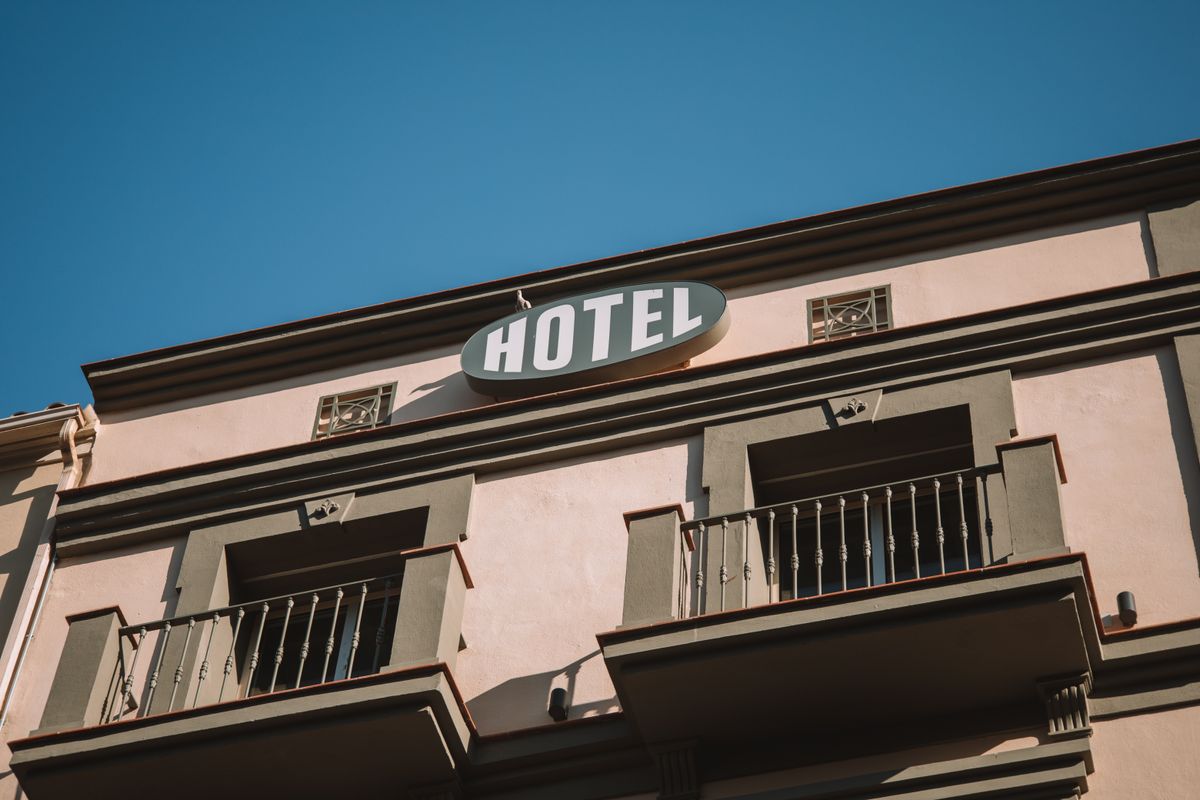
Photo: Joaquin Carfagna on Pexels
The technical stack has four layers, and each one has to be right or the whole thing leaks.
PMS integration comes first. The agent needs live availability and rate data from your property management system, and a channel manager sync to prevent double bookings across Booking.com, Expedia, and direct channels. Without that, you'll oversell rooms and refund faster than you can book them.
Routing logic decides what the agent handles and what it escalates. Standard requests (availability, rate, room type, breakfast included, late check-out) resolve autonomously, and anything with complaint language triggers an immediate handoff to the front desk, a pattern covered in how hotels triage complaints in Arabic and English within minutes. The same stack extends downstream to post-stay review requests, which Google review automation for hotels walks through end to end.
If you want an outside read on where your booking stack leaks today, a 30-minute call with Lenoo AI will map the fixes in order of ROI.
UAE Compliance Every Automated Booking Communication Must Follow
Every message your agent sends touches UAE data and telecoms law. Build compliance in before go-live, not after the first complaint.
Federal Decree-Law No. 45 of 2021, the PDPL, covers the guest data your agent collects at booking. The UAE Data Office is the federal regulator, established under Federal Decree-Law No. 44 of 2021.
If your property sits inside DIFC or ADGM, or takes bookings from guests in those free zones, the federal rules stack with each zone's own regime.
Cabinet Resolutions 56 and 57 of 2024, effective 27 August 2024, govern automated outbound communications. Requirements include TDRA prior approval, honouring the Do Not Call Registry, and keeping the permitted calling window at 09:00 to 18:00. DNCR breach fines are AED 50,000 for a first offence, AED 75,000 for a second, and AED 150,000 for a third.
Design opt-in language, retention limits, and suppression lists into the agent from day one.
DNCR penalties scale steeply with each repeat breach, so it pays to get suppression lists right the first time.
| Offence | DNCR Breach Fine |
|---|---|
| First offence | AED 50,000 |
| Second offence | AED 75,000 |
| Third offence | AED 150,000 |
What UAE Hotels Should Expect: Timeline, Cost, and What Is Included
A realistic UAE deployment runs in phases and lands in one of two budget bands, depending on scope.
Phase one is discovery and PMS mapping: what system you use, what your channel manager touches, where your booking data lives. Phase two builds the agent and trains it on your bilingual content, your rate cards, and your policies. Phase three rolls out in stages, starting with WhatsApp because that's your highest-volume queue, then extending to website chat and email once WhatsApp is stable.
For budget, a focused single-channel WhatsApp agent typically sits in the AED 10,000 to 50,000 band. A multi-channel deployment with deeper PMS integration, escalation logic, and staff training sits in the AED 50,000 to 200,000 band. Every Lenoo AI engagement includes team training and 90 days of support, because your team needs to know when to step in and how to hand back to the agent without breaking the thread.
For the full picture of automation across a UAE hotel operation, see AI automation for hotels in the UAE: the complete guide. When you're ready to work out which two or three booking automation steps your property should build first, book a free 30-minute consultation and Lenoo AI will tell you honestly if any of them aren't worth the investment yet.
FAQ
Does a UAE hotels appointment booking automation agent work natively inside WhatsApp, or does it redirect guests to a website?
The right ones work natively inside WhatsApp. A guest completes availability check, quote, deposit, and confirmation in the same thread. If a vendor's demo redirects to a browser to finish the booking, that isn't a WhatsApp booking agent, it's a WhatsApp notification tool.
Can the AI handle a guest who switches between Arabic and English in the same booking conversation?
Yes, if it's bilingual-native. It should parse intent across Arabic, English, and Arabizi as one conversation, not treat each message as a fresh translation. A bolted-on translation layer loses context and answers the wrong question, which is why a live demo with mixed-language input is worth asking for.
How does automated booking connect to an existing property management system without double-booking across OTAs?
The agent reads live availability from your PMS and writes back through a channel manager, which pushes the block out to Booking.com, Expedia, and any other OTA in near real time. Without the channel manager sync, you will oversell. It's the single most important piece of the stack after the PMS connection itself.
What do Cabinet Resolutions 56 and 57 of 2024 mean for automated messages a hotel sends to guests?
They require TDRA prior approval, respect for the Do Not Call Registry, and outbound messaging inside the 09:00 to 18:00 window. DNCR breach fines are AED 50,000, AED 75,000, and AED 150,000 for first, second, and third offences. Configure opt-in and suppression from day one.
What does it cost to deploy a hotel booking automation agent in the UAE, and what does that price include?
A focused single-channel WhatsApp agent typically sits between AED 10,000 and AED 50,000. A multi-channel build with deeper PMS integration and staff training sits between AED 50,000 and AED 200,000. Every Lenoo AI engagement includes team training and 90 days of support.
How long before a hotel AI booking agent is live and handling real inquiries?
Timelines depend on PMS complexity and how ready your bilingual content is. The staged rollout starts with WhatsApp because it's the highest-volume channel, so you can be live on that first while other channels are being built.
What happens when a guest's request is too complex for the AI, and how does escalation to staff work?
Complaint language, unusual room configurations, negotiations over rates outside your published bands, and any keyword you flag trigger an immediate handoff to the front desk. Staff pick up the same thread and continue. When it's resolved, they hand back to the agent without breaking context.


